Palynological Characteristics of Neogene Deposits from Bełchatów Lignite Mine (Central Poland)
Thang Van Do, Ewa Durska

TL;DR
This study analyzes pollen and spores from a Polish lignite mine to reconstruct ancient plant communities and climate changes during the Neogene period.
Contribution
The paper presents new palynological data from four lithological units in the Bełchatów Lignite Mine, identifying 78 sporomorph taxa and three distinct palynological zones.
Findings
Three palynological zones were identified, reflecting shifts in vegetation from swamp and riparian forests to cooler conditions and later recovery.
The Early Miocene was subtropical-humid, followed by fluctuating humidity in the late Early Miocene and a warm-temperate climate in the Late Miocene.
Angiosperm and gymnosperm pollen dominated, while plant spores were rare across all samples.
Abstract
The Bełchatów Lignite Mine (BLM) in central Poland, one of Europe’s largest Neogene lignite deposits, provides key insights into palaeofloral evolution. Located in the Kleszczów Graben, the BLM consists of four distinct lithological units: subcoal, coal, clayey-coal, and clayey-sandy units. The study presents a palynological investigation of 31 samples from all units, identifying 78 sporomorph taxa, including 10 plant spores, 15 gymnosperm pollen, and 53 angiosperm pollen taxa. Pollen grains from angiosperms and gymnosperms were consistently observed in all samples, while plant spores were scarce. The analysis reveals three distinct palynological zones, reflecting shifts in vegetation. The first zone is characterized by swamp, riparian, and mixed mesophilous forests, dominated by Taxodium/Glyptostrobus, Ulmus, Carya, Engelhardia, Pterocarya, and Quercus. In the second zone, slightly…
Genes, proteins, chemicals, diseases, species, mutations and cell lines named across the full text — each resolved to its canonical identifier and authoritative record.
Click any figure to enlarge with its caption.
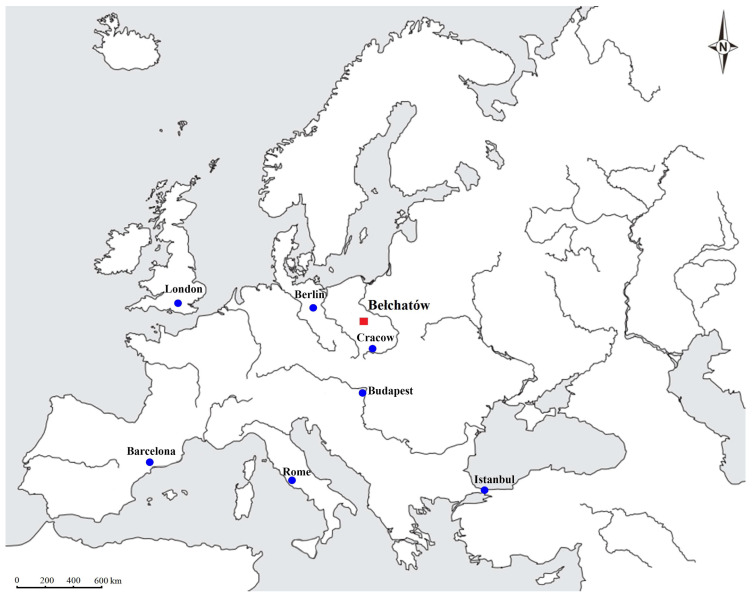 Figure 1
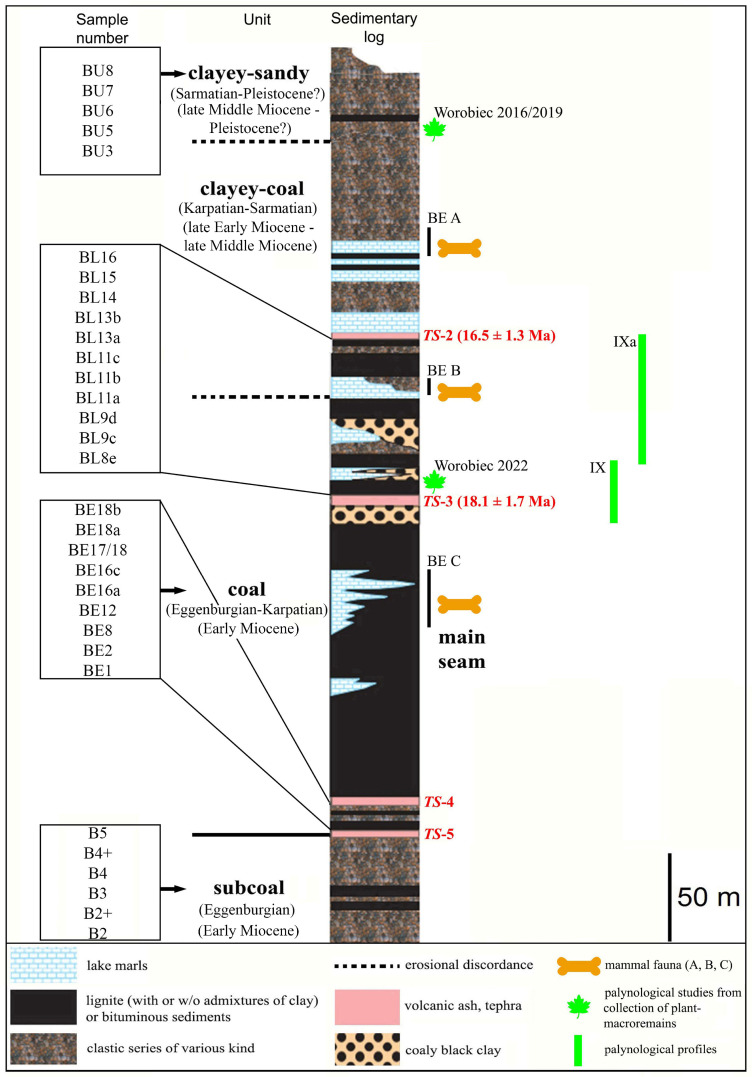 Figure 2
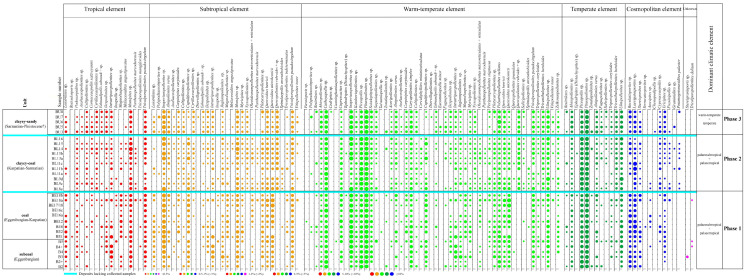 Figure 3
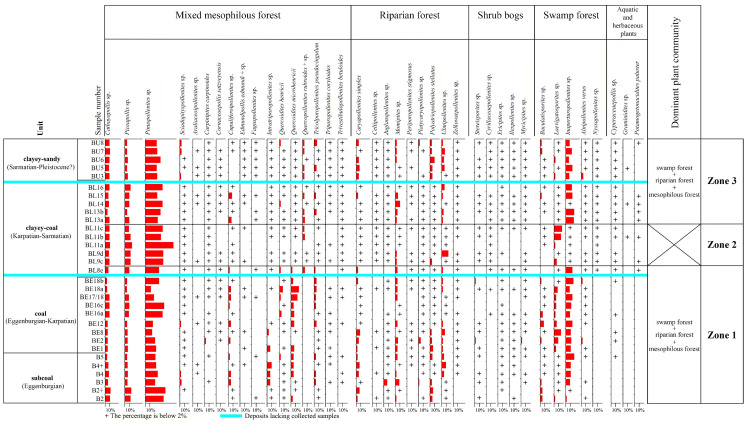 Figure 4
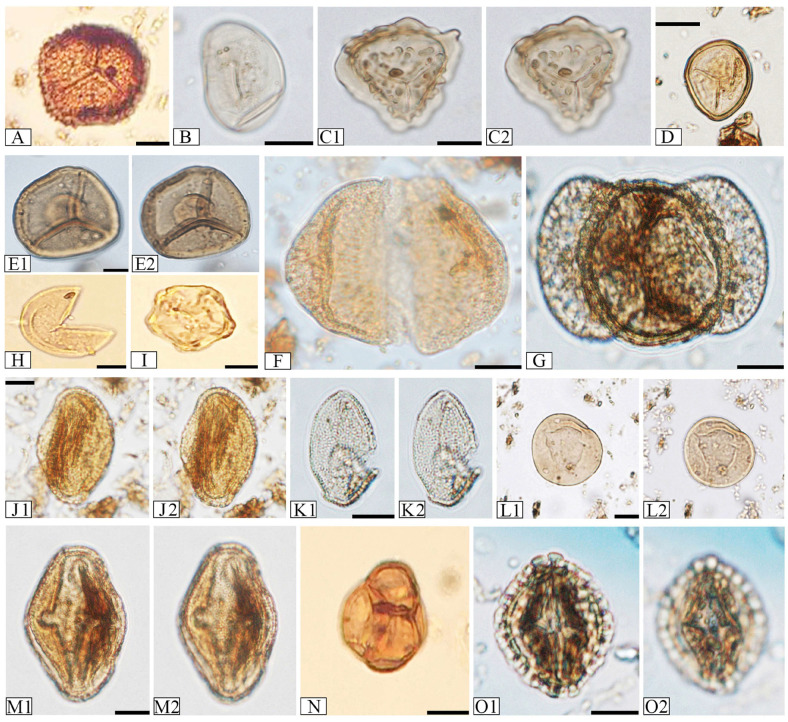 Figure 5
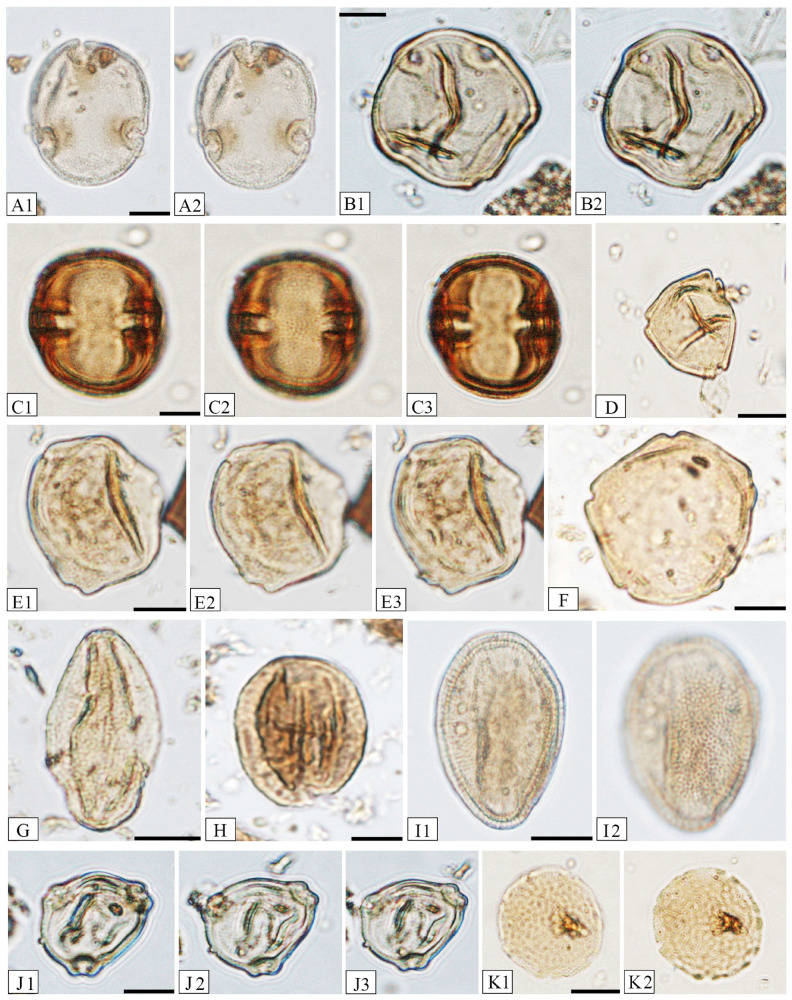 Figure 6
Peer Reviews
No public reviews on file for this paper yet. If you reviewed it on a platform where reviews are public (OpenReview, ICLR, NeurIPS, ICML), you can paste yours below so the community can read it here.
Videos
No videos yet. Explain this paper in a talk, walkthrough, or lecture? Add one.
Taxonomy
TopicsBotany and Plant Ecology Studies · Lichen and fungal ecology · Geology and Paleoclimatology Research