Triterpene and Caffeoylquinic Acid Constituents Contribute to the Cognitive-Enhancing, but Not Anxiolytic, Effects of a Water Extract of Centella asiatica in Aged Mice
Wyatt Hack, Lucas Kuhnau, Jesus Martinez, Luke C. Marney, Jaewoo Choi, Arshia R. Sohal, Seiji Koike, Thuan Nguyen, Claudia S. Maier, Amala Soumyanath, Nora E. Gray

TL;DR
A water extract of Centella asiatica improves learning and cognitive flexibility in aged mice, but these effects are likely due to specific compounds like triterpene and caffeoylquinic acid, not anxiolytic effects.
Contribution
This study identifies triterpene and caffeoylquinic acid as key contributors to the cognitive benefits of Centella asiatica extract in aged mice.
Findings
Triterpene and caffeoylquinic acid improved learning in aged mice of both sexes.
Triterpene alone enhanced cognitive flexibility in aged mice of both sexes.
No anxiolytic effects were observed with any treatment.
Abstract
Background/objectives: A water extract of the plant Centella asiatica (CAW) has been shown to improve cognitive deficits in aged mice when administered for 5 weeks in drinking water. However, the contribution of the constituent compounds within CAW to the beneficial effects of the extract remains unelucidated. This study evaluated the effects of triterpene (TT) and caffeoylquinic acids (CQA) found within CAW, on learning, cognitive flexibility, memory, and anxiety-like behaviors in aged C57BL6 mice. Methods: Eighteen-month-old male and female C57BL6 mice were administered either TT, CQA, or the combination (TT+CQA) in their drinking water for a total of 5 weeks, at concentrations corresponding to their presence in CAW. During the final two weeks of treatment learning, executive function, memory, and anxiety were assessed. Results: Aged mice of both sexes showed significant improvement…
Genes, proteins, chemicals, diseases, species, mutations and cell lines named across the full text — each resolved to its canonical identifier and authoritative record.
Click any figure to enlarge with its caption.
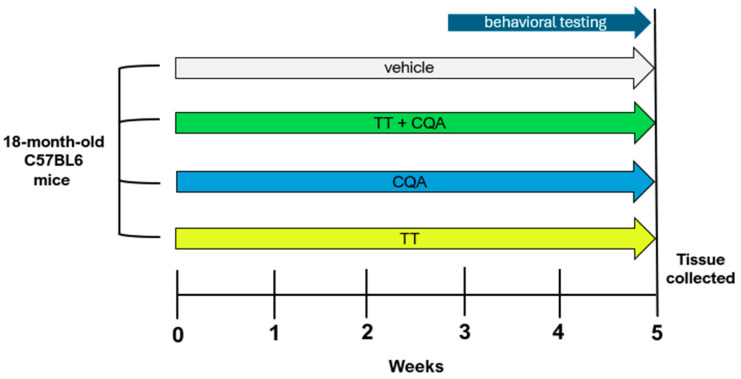 Figure 1
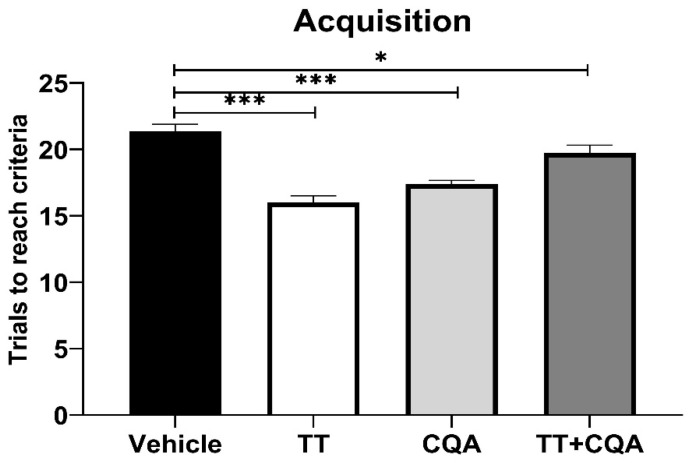 Figure 2
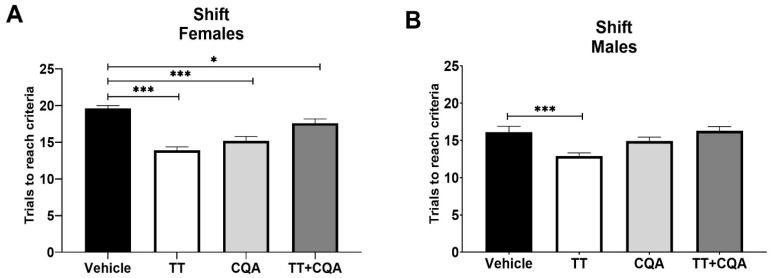 Figure 3
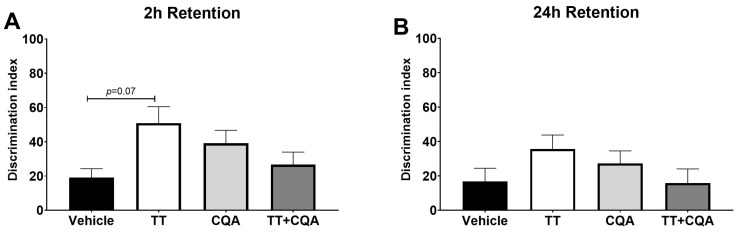 Figure 4
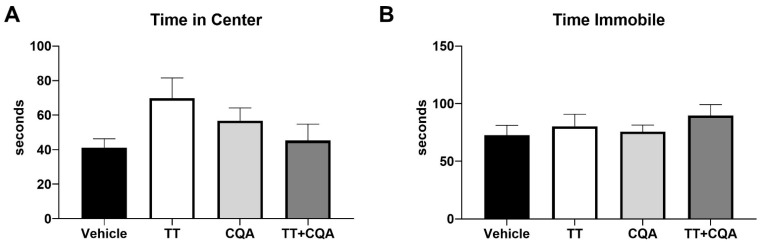 Figure 5
Peer Reviews
No public reviews on file for this paper yet. If you reviewed it on a platform where reviews are public (OpenReview, ICLR, NeurIPS, ICML), you can paste yours below so the community can read it here.
Videos
No videos yet. Explain this paper in a talk, walkthrough, or lecture? Add one.
Taxonomy
TopicsMedicinal Plants and Neuroprotection · Neuroinflammation and Neurodegeneration Mechanisms · Cholinesterase and Neurodegenerative Diseases