Chicoric Acid and Chlorogenic Acid: Two Hydroxycinnamic Acids Modulate the Glucose 6-Phosphatase Activities in Pancreatic INS1 Beta-Cells—Novel Data in Favor of Two Putative Conformations of the G6Pase Within the ER Membrane
Didier Tousch, Melodie Thomasset, Karine Ferrare, Anne-Dominique Lajoix, Jacqueline Azay-Milhau, Patrick Poucheret

TL;DR
This study explores how two plant compounds affect the G6Pase enzyme in pancreatic beta-cells, suggesting the enzyme may have two different forms depending on glucose levels.
Contribution
The study proposes a novel bi-conformational model of G6Pase activity in beta-cells based on CRA and CGA effects.
Findings
CRA and CGA show inverse effects on G6Pase activity in INS1-beta-cells under varying glucose concentrations.
Data supports the existence of two putative G6Pase enzyme forms in the ER membrane.
The findings suggest an adaptive model of G6Pase modulation in response to glucose levels.
Abstract
Chicoric and chlorogenic acids (CRA and CGA), two caffeic acid derivatives found in a large variety of plants, particularly in Asteraceae, are known to modulate glucose-6-phosphatase (G6Pase) in hepatic and muscle cells. The aim of the present study is to use CRA/CGA to explore the modulation role and molecular mechanism of endocrine pancreatic beta-cells’ insulin secretion. The G6Pase enzyme activity influenced by caffeic and derivatives alone or in combination was assessed on microsomal fractions of INS1-beta-cells and hepatocytes. Overall, our results show inverse effects of CGA/CRA, allowing us to investigate the G6Pase activity modulation under low and high glucose concentrations. Our data strongly suggests the existence of two putative forms of the G6Pase enzyme. Based on these observations, we formulate the hypothesis of an adaptative bi-conformational model of G6Pase enzyme…
Genes, proteins, chemicals, diseases, species, mutations and cell lines named across the full text — each resolved to its canonical identifier and authoritative record.
Click any figure to enlarge with its caption.
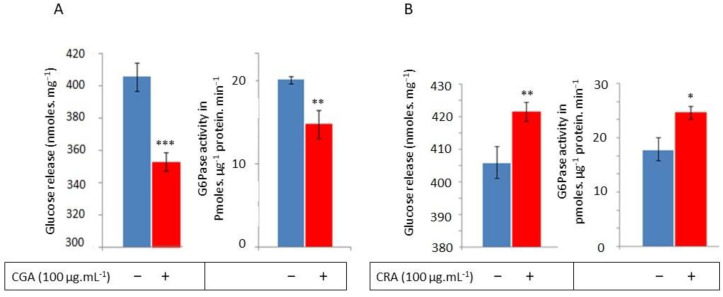 Figure 1
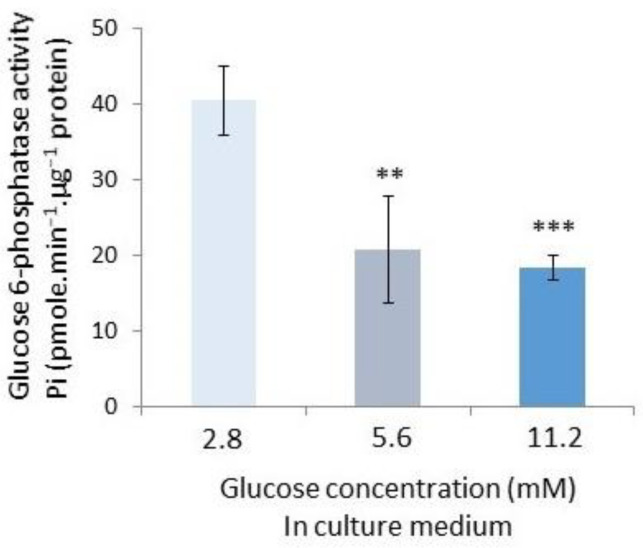 Figure 2
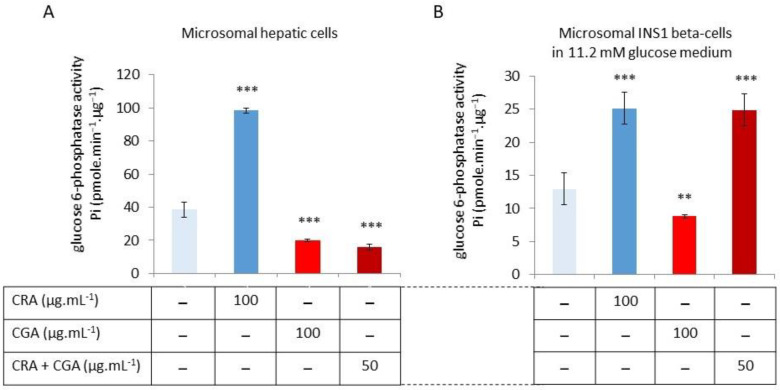 Figure 3
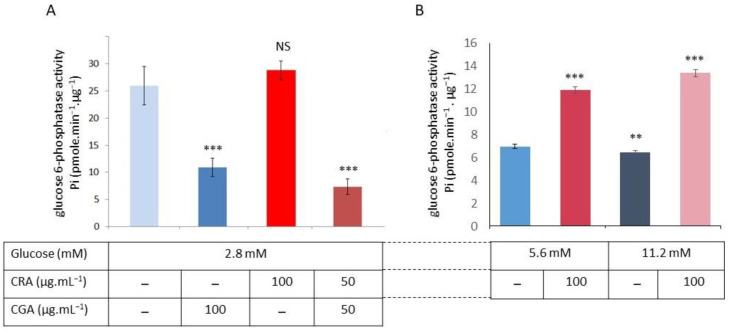 Figure 4
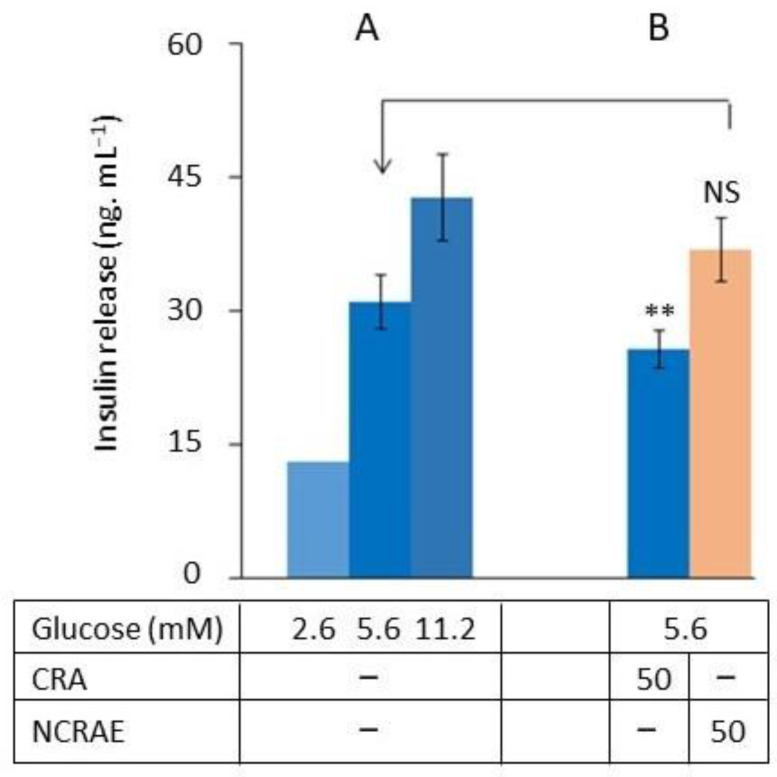 Figure 5
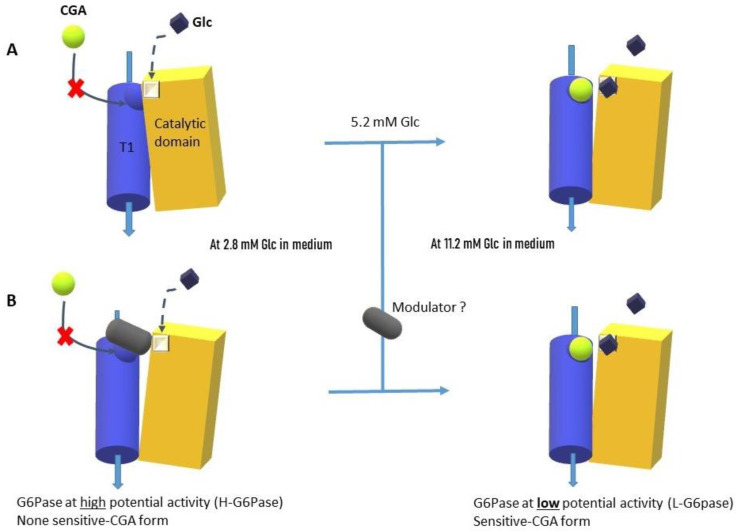 Figure 6
Peer Reviews
No public reviews on file for this paper yet. If you reviewed it on a platform where reviews are public (OpenReview, ICLR, NeurIPS, ICML), you can paste yours below so the community can read it here.
Videos
No videos yet. Explain this paper in a talk, walkthrough, or lecture? Add one.
Taxonomy
TopicsGlycogen Storage Diseases and Myoclonus · Pancreatic function and diabetes · Metabolism, Diabetes, and Cancer