A Plant-Derived Antifungal Agent, Poacic Acid, Inhibits Germination and Tube Growth of Lily Pollen
Nanami Kobayashi, Yoshikazu Ohya, Yasuko Hayashi, Shuh-ichi Nishikawa

TL;DR
Poacic acid, a natural antifungal compound, inhibits lily pollen germination and tube growth by affecting membrane traffic and actin organization, not by blocking callose synthesis.
Contribution
The study reveals a new mechanism of action for poacic acid on plant cells, distinct from its antifungal effects.
Findings
Poacic acid inhibits lily pollen germination and tube growth at lower concentrations than those affecting yeast.
It disrupts membrane traffic and actin cytoskeleton in pollen tubes without inhibiting callose synthesis.
Poacic acid also inhibits Arabidopsis thaliana pollen tube and root growth.
Abstract
Poacic acid is a novel natural antifungal agent. It inhibits the growth of fungal cells, including budding yeast Saccharomyces cerevisiae, by inhibiting the synthesis of β-1,3-glucan, which is a major component of the fungal cell wall. Although poacic acid is expected to be a candidate pesticide owing to its antifungal activity, its effects on plant cells have not been investigated. In this study, we analyzed the effects of poacic acid on lily (Lilium longiflorum) pollen. Poacic acid inhibited lily pollen germination and tube growth at concentrations lower than those that inhibited budding yeast growth. While poacic acid did not inhibit callose (β-1,3-glucan) synthesis in pollen tubes, it inhibited membrane traffic, including endocytosis and secretion, and the organization of the actin cytoskeleton within pollen tubes. Since these processes have been shown to play essential roles in…
Genes, proteins, chemicals, diseases, species, mutations and cell lines named across the full text — each resolved to its canonical identifier and authoritative record.
Click any figure to enlarge with its caption.
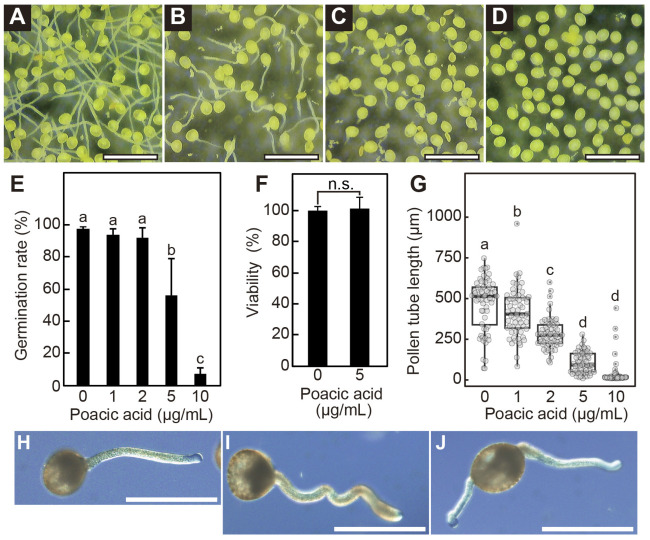 Figure 1
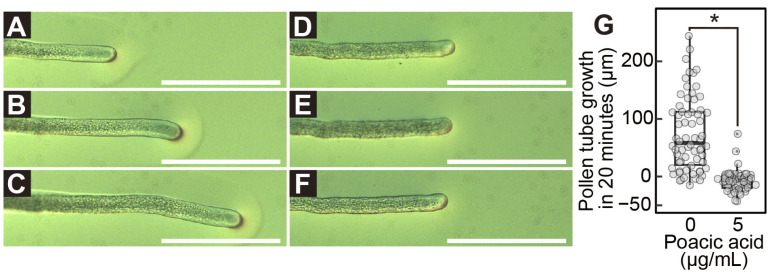 Figure 2
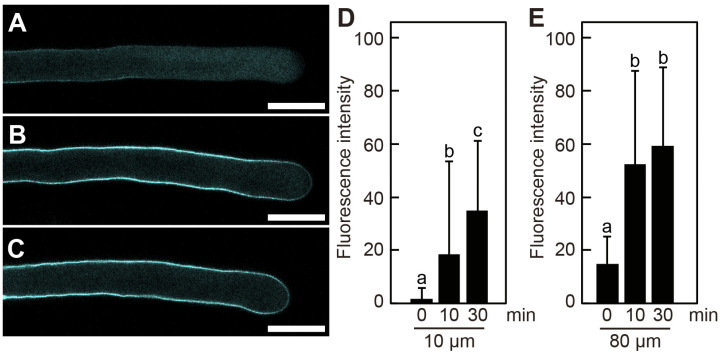 Figure 3
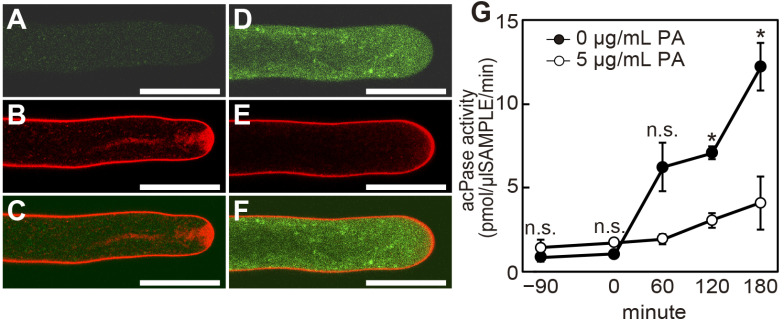 Figure 4
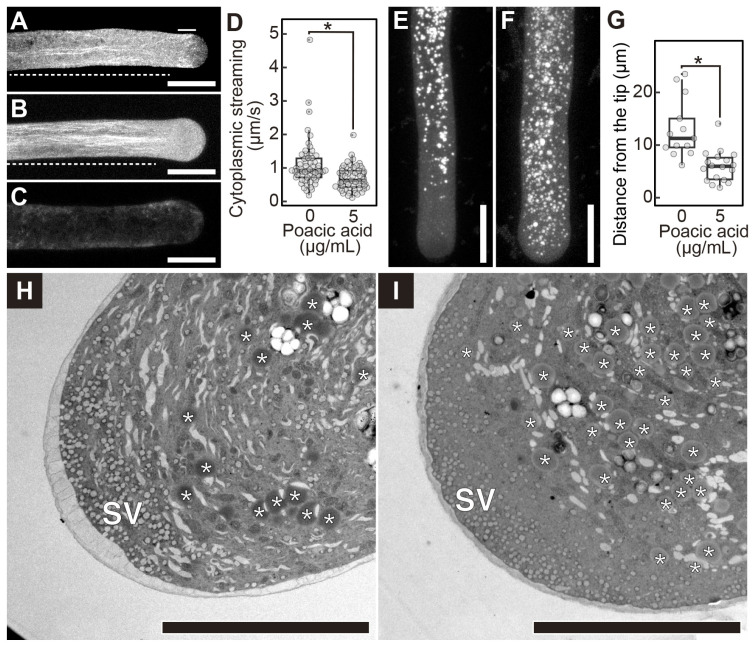 Figure 5
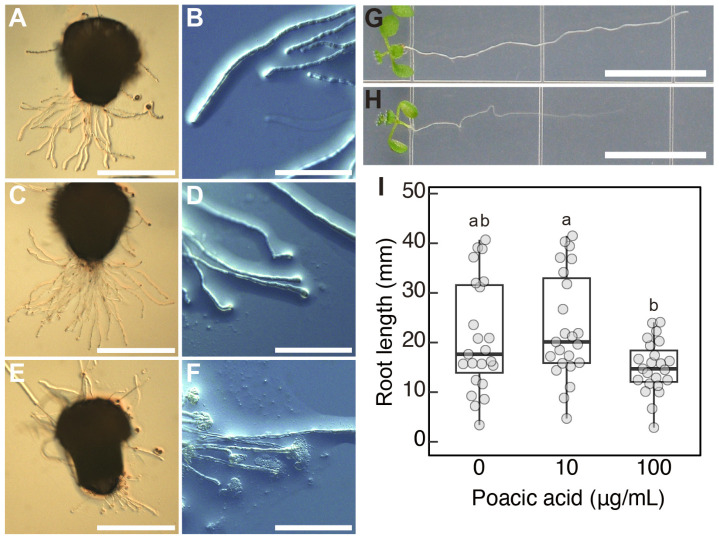 Figure 6
Peer Reviews
No public reviews on file for this paper yet. If you reviewed it on a platform where reviews are public (OpenReview, ICLR, NeurIPS, ICML), you can paste yours below so the community can read it here.
Videos
No videos yet. Explain this paper in a talk, walkthrough, or lecture? Add one.
Taxonomy
TopicsPlant Reproductive Biology · Plant Pathogens and Fungal Diseases · Plant pathogens and resistance mechanisms