Coupling Rare-Earth Complexes with Carbon Dots via Surface Imprinting: A New Strategy for Spectroscopic Cu2+ Sensors
Zuoyi Liu, Bo Hu, Minjia Meng

TL;DR
A new sensor using rare-earth complexes and carbon dots was developed to detect copper ions in water with high sensitivity and selectivity.
Contribution
A novel surface-imprinted ratiometric fluorescent sensor combining carbon dots and Eu(III) complexes for selective Cu2+ detection is introduced.
Findings
The sensor achieved a detection limit of 2.79 nM and a linear range of 10–100 nM for Cu2+.
The sensor demonstrated a rapid response time of 3.0 minutes and strong resistance to interference from other ions.
Validation in real water samples confirmed its practical applicability and accuracy compared to ICP-MS analysis.
Abstract
A surface molecularly imprinted ratiometric fluorescent sensor (Eu/CDs@SiO2@IIPs) was constructed for the selective and visual detection of Cu2+. The sensor integrates blue-emitting carbon dots as an internal reference and a custom-designed Eu(III) complex, Eu(MAA)2(2,9-phen), as both the functional and fluorescent monomer within a surface-imprinted polymer layer, enabling efficient ratiometric fluorescence response. This structural design ensured that all fluorescent monomers were located at the recognition sites, thereby reducing background fluorescence interference and enhancing the accuracy of signal changes. Under optimized conditions, the sensor exhibited a detection limit of 2.79 nM, a wide linear range of 10–100 nM, and a rapid response time of 3.0 min. Moreover, the uncoordinated nitrogen atoms in the phenanthroline ligand improved resistance to interference from competing…
Genes, proteins, chemicals, diseases, species, mutations and cell lines named across the full text — each resolved to its canonical identifier and authoritative record.
Click any figure to enlarge with its caption.
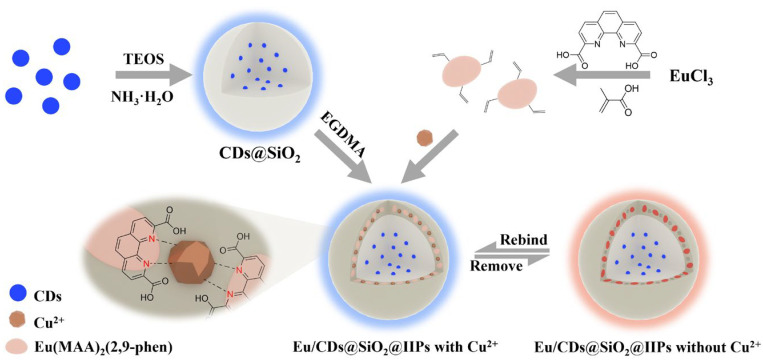 Figure 1
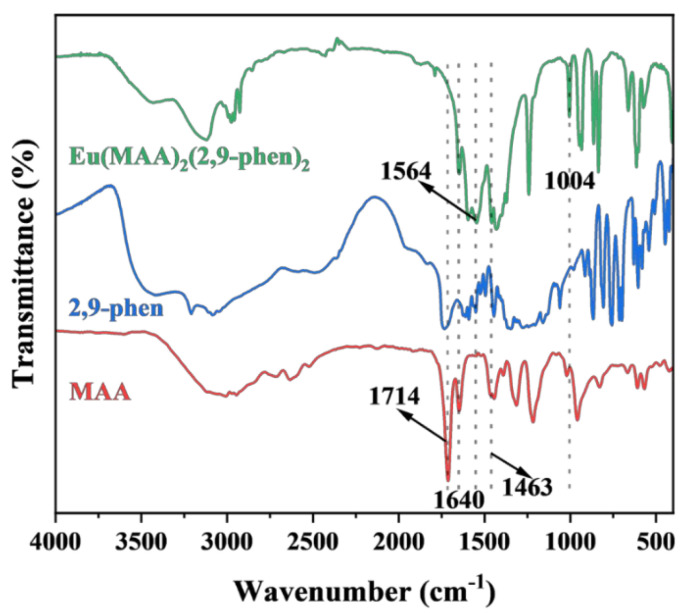 Figure 2
 Figure 3
 Figure 4
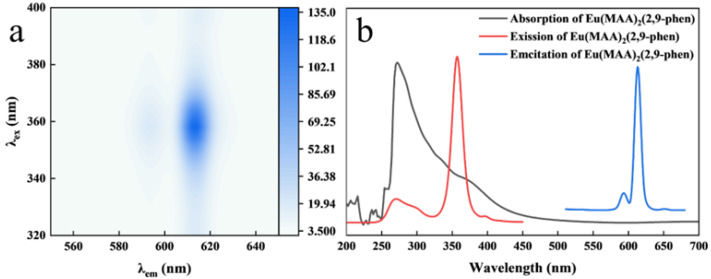 Figure 5
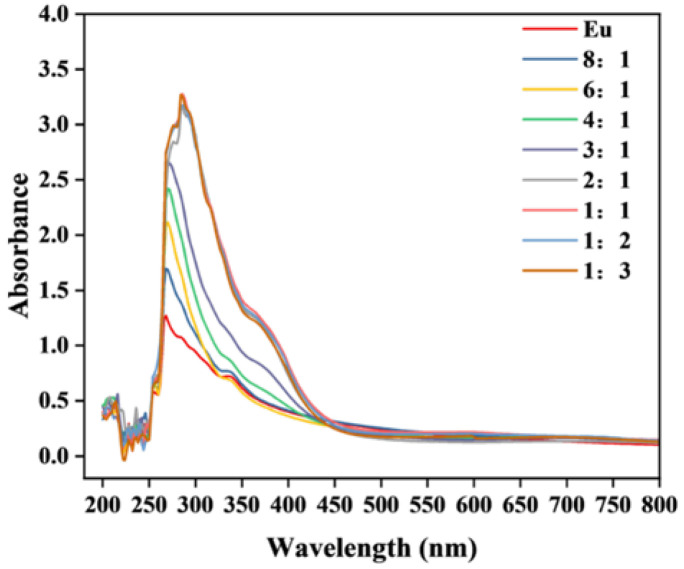 Figure 6
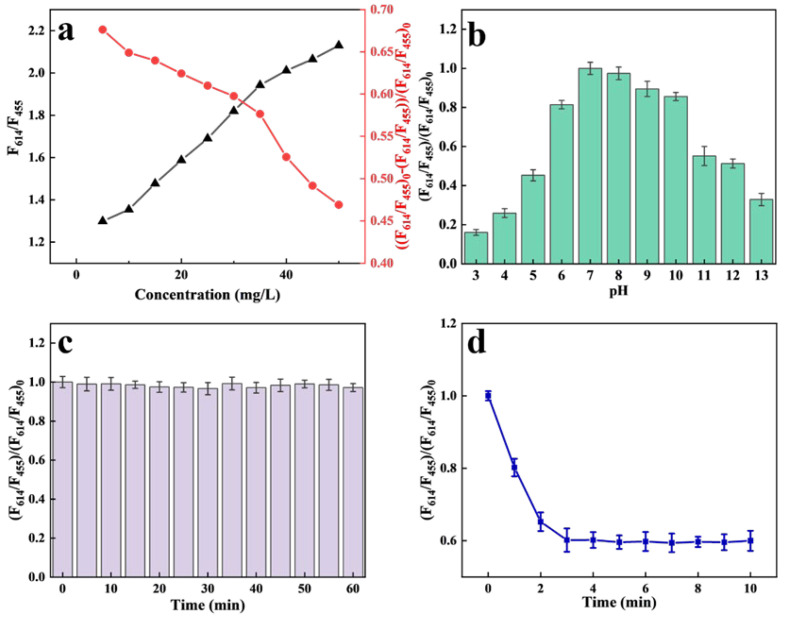 Figure 7
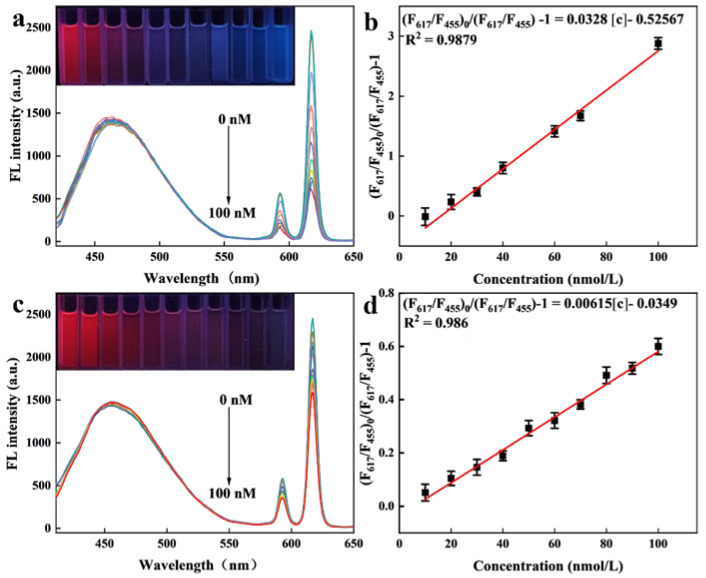 Figure 8
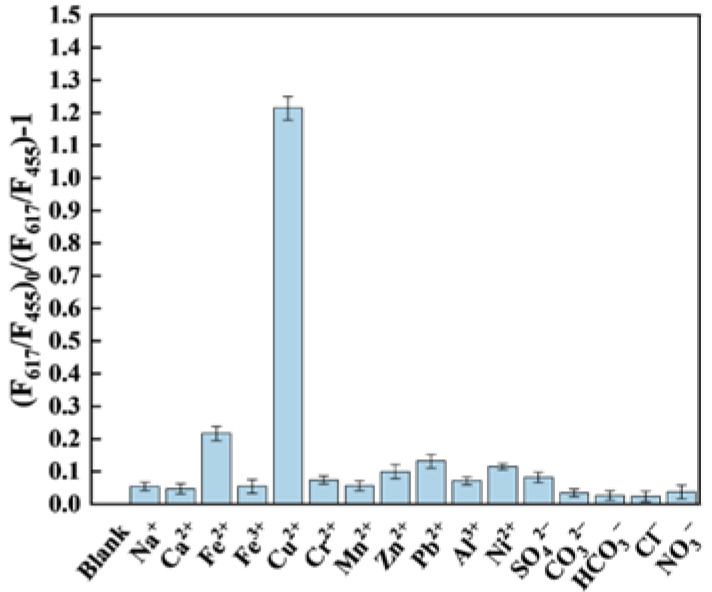 Figure 9
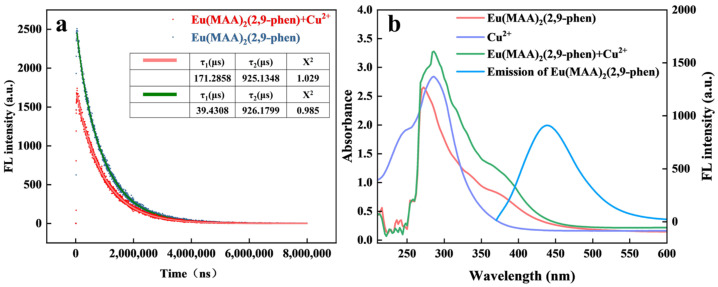 Figure 10
Peer Reviews
No public reviews on file for this paper yet. If you reviewed it on a platform where reviews are public (OpenReview, ICLR, NeurIPS, ICML), you can paste yours below so the community can read it here.
Videos
No videos yet. Explain this paper in a talk, walkthrough, or lecture? Add one.
Taxonomy
TopicsCarbon and Quantum Dots Applications · Analytical chemistry methods development · Molecular Sensors and Ion Detection