Methods for Conjugating Antibodies with Quantum Dots
Pavel Sokolov, Alexander Knysh, Irina Kriukova, Pavel Samokhvalov, Yury V. Kistenev

TL;DR
This review discusses methods for attaching antibodies to quantum dots to detect disease markers with high sensitivity and specificity.
Contribution
The paper provides a comprehensive analysis of current antibody conjugation methods with quantum dots and highlights future research directions.
Findings
Quantum dot–antibody conjugates offer high sensitivity and specificity for detecting disease markers.
Site-specific and site-nonspecific conjugation methods are reviewed with a focus on structural features.
Applications in diagnosis, environmental monitoring, and food safety are highlighted.
Abstract
Nanomaterials are increasingly used in the development of detection systems for various disease biomarkers as tools for reliable early diagnosis, which is a key factor in reducing mortality and increasing treatment effectiveness. The use of quantum dot–antibody conjugates allows for optical detection of various disease markers in biological fluids, tissues, and individual cells with high sensitivity and specificity. The sensitivity and specificity of detection are determined not only by the outstanding optical properties of fluorescent quantum dots but also by the type of antibodies used for binding target analytes and the methods of their conjugation with quantum dots. This review deals with methods of site-specific and site-nonspecific conjugation of quantum dots with antibodies, including full-length and single-domain antibodies, as well as antibody fragments, with a special focus on…
Genes, proteins, chemicals, diseases, species, mutations and cell lines named across the full text — each resolved to its canonical identifier and authoritative record.
Click any figure to enlarge with its caption.
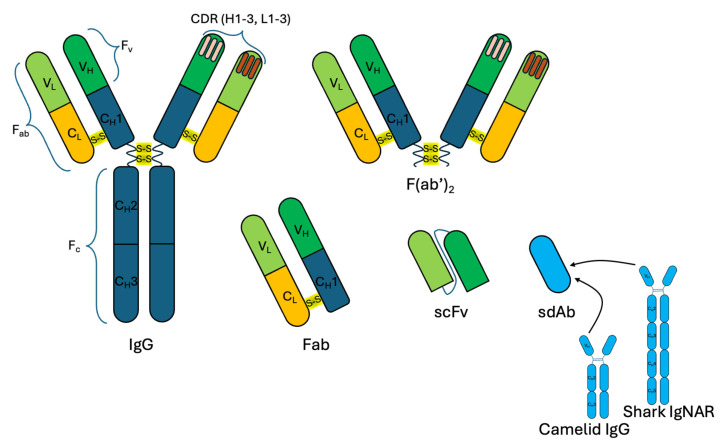 Figure 1
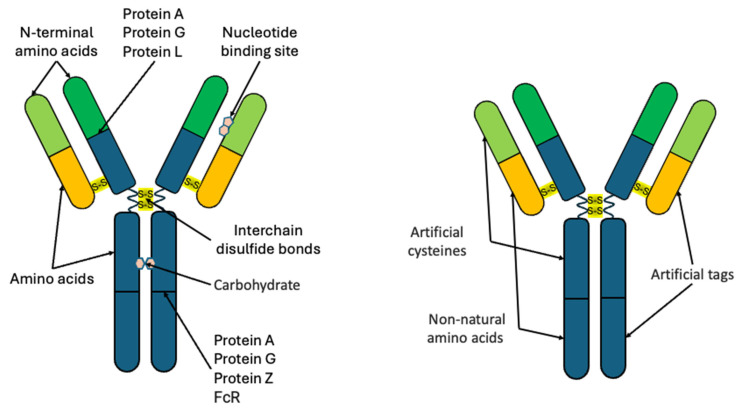 Figure 2
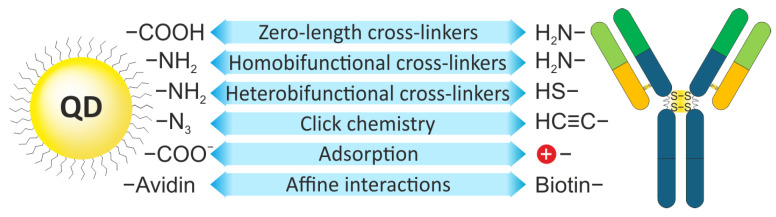 Figure 3
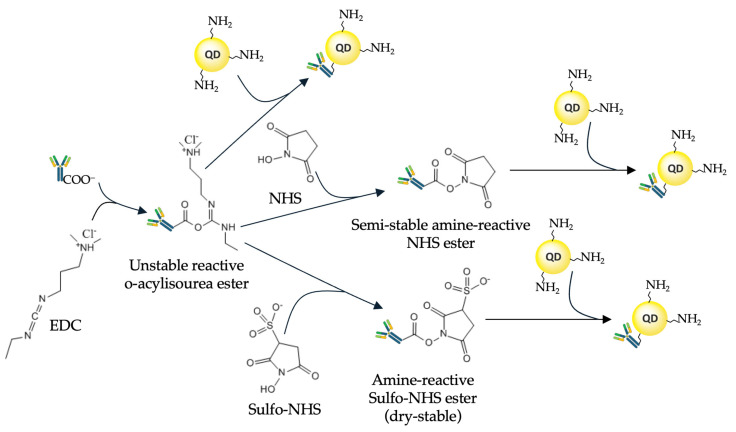 Figure 4
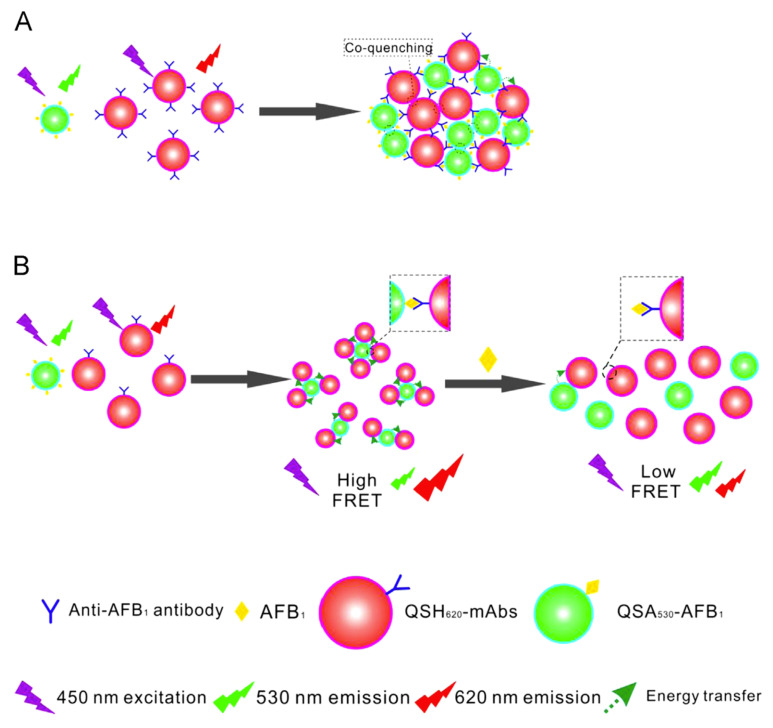 Figure 5
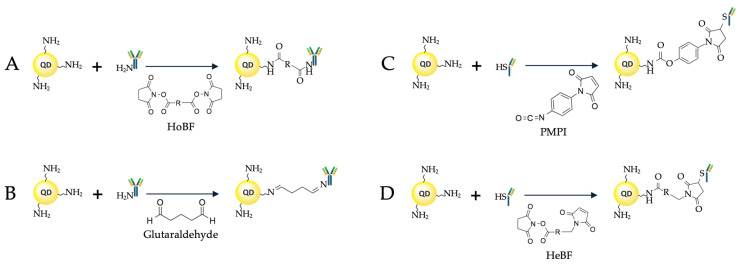 Figure 6
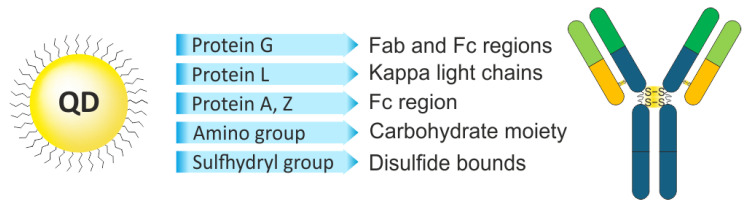 Figure 7
Peer Reviews
No public reviews on file for this paper yet. If you reviewed it on a platform where reviews are public (OpenReview, ICLR, NeurIPS, ICML), you can paste yours below so the community can read it here.
Videos
No videos yet. Explain this paper in a talk, walkthrough, or lecture? Add one.
Taxonomy
TopicsMonoclonal and Polyclonal Antibodies Research · Advanced Biosensing Techniques and Applications · Advanced biosensing and bioanalysis techniques