hERG Channel Blockade and Antagonistic Interactions of Three Steroidal Alkaloids from Fritillaria Species
Hui Lu, Tingting Hao, Zixuan Zhang, Chenxin Jiang, Jianwei Xu, Antony Stalin, Wei Zhao

TL;DR
This study examines how three alkaloids from Fritillaria species affect hERG channels and finds that they can block these channels but also show antagonistic interactions.
Contribution
The first study to investigate the combination effects of alkaloids from one herb on hERG channels.
Findings
Peiminine and sipeimine block hERG currents with IC50s of 36.8 ± 2.5 μM and 47.6 ± 9.8 μM, similar to peimine.
Peiminine shows a preference for open or inactivated hERG channel states.
Antagonistic effects among the three alkaloids may reduce potential cardiotoxicities.
Abstract
The bulb of Fritillaria species called “Bei Mu” is a well-known traditional Chinese medicine. We have reported some potential off-target effects of “Bei Mu” due to peimine’s blockade of hERG (human Ether-a-go-go-Related Gene) channels. This research investigated the modulatory effects of three major alkaloid analogs of “Bei Mu” and their cooperative effects on hERG channels using manual whole-cell patch-clamp techniques. Results showed that peiminine and sipeimine blocked hERG currents with IC50s of 36.8 ± 2.5 μM and 47.6 ± 9.8 μM, which were close to that of peimine (26.1 ± 3.5 μM). Peiminine-induced blockade increased with increasing depolarizing strengths, durations, and frequencies, which suggested a preferential binding to open or inactivated states. The reduced blockade by the less inactivating S631A mutation supported peiminine‘s inactivation preference. Molecular docking and…
Genes, proteins, chemicals, diseases, species, mutations and cell lines named across the full text — each resolved to its canonical identifier and authoritative record.
Click any figure to enlarge with its caption.
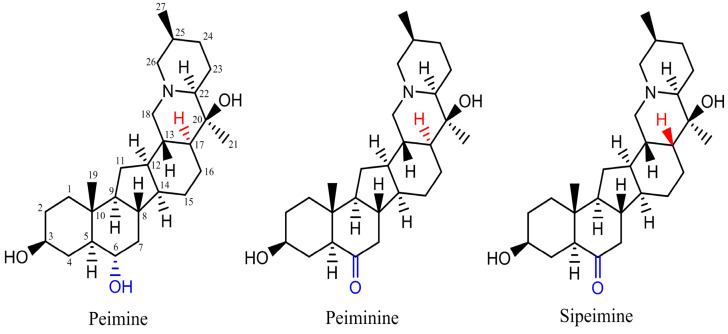 Figure 1
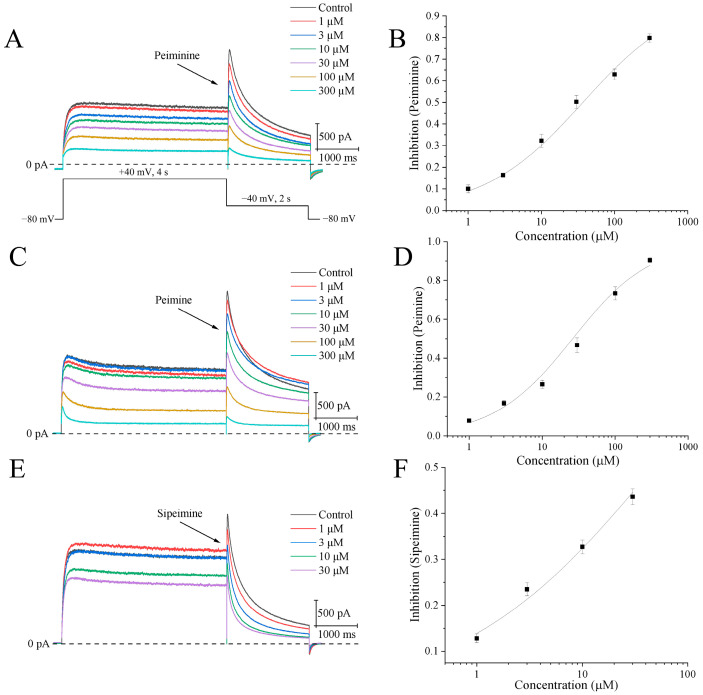 Figure 2
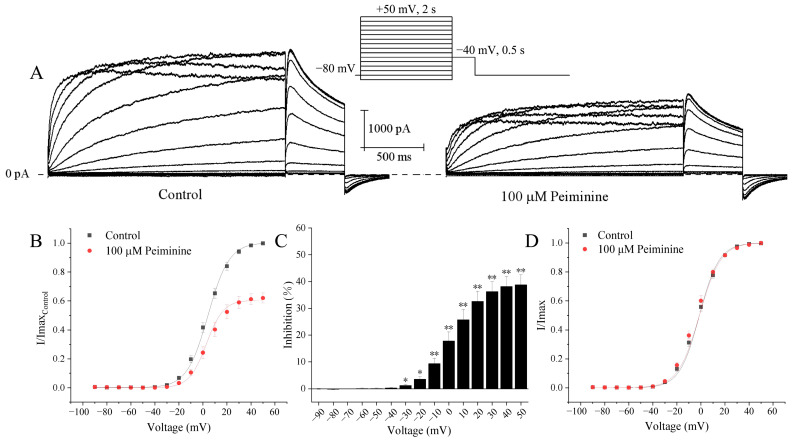 Figure 3
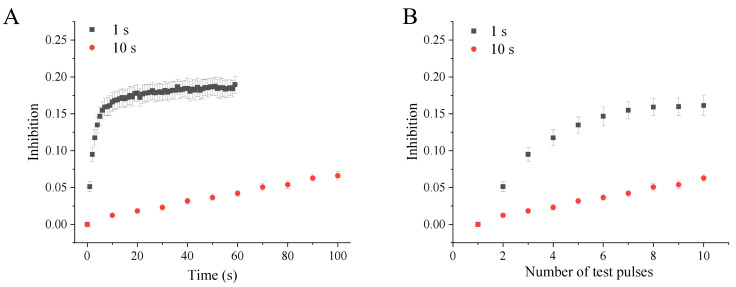 Figure 4
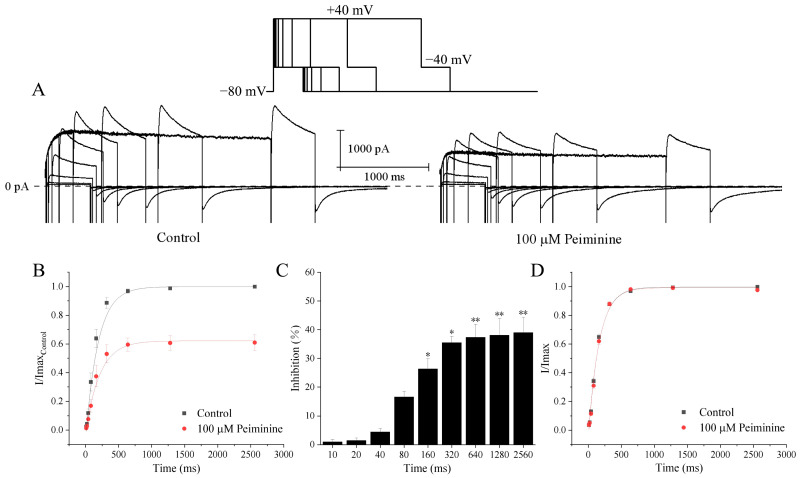 Figure 5
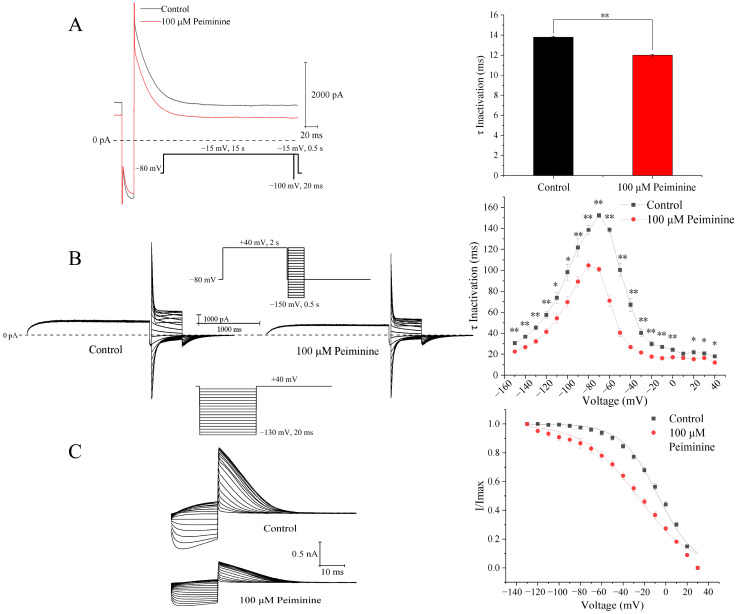 Figure 6
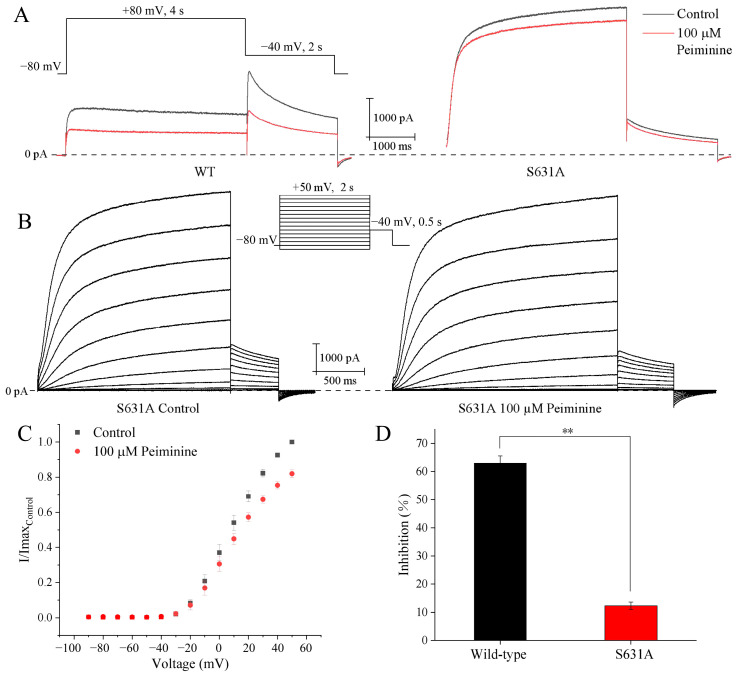 Figure 7
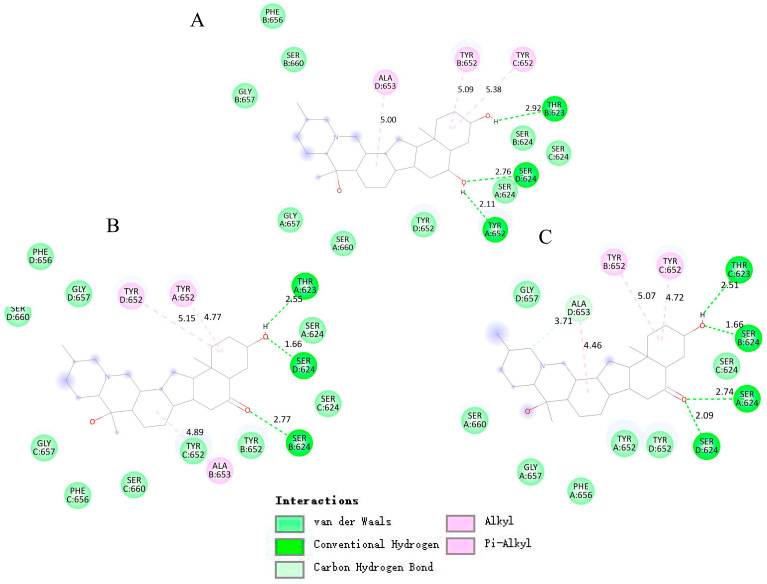 Figure 8
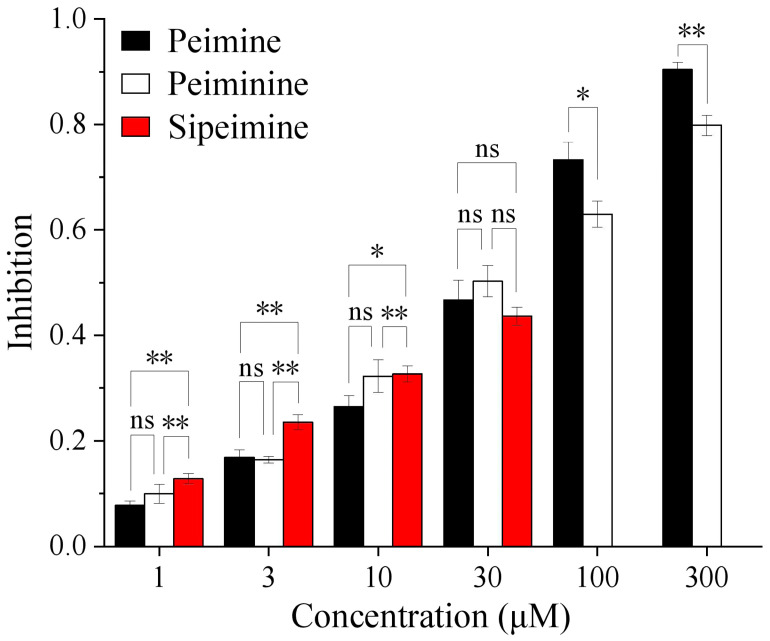 Figure 9
 Figure 10
 Figure 11
 Figure 12
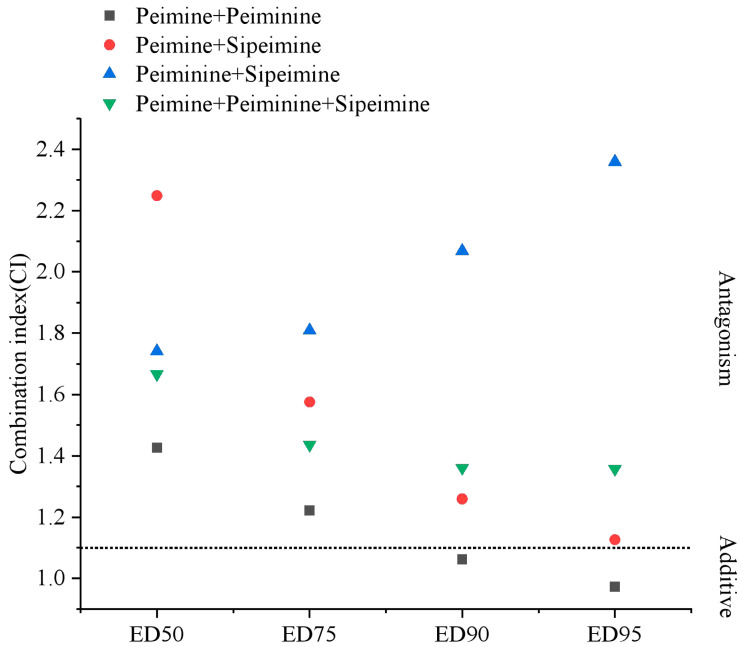 Figure 13
Peer Reviews
No public reviews on file for this paper yet. If you reviewed it on a platform where reviews are public (OpenReview, ICLR, NeurIPS, ICML), you can paste yours below so the community can read it here.
Videos
No videos yet. Explain this paper in a talk, walkthrough, or lecture? Add one.
Taxonomy
TopicsPhytochemical Studies and Bioactivities · 14-3-3 protein interactions · Protein Kinase Regulation and GTPase Signaling