HX-Linear and Nonlinear Optical Responsiveness of Rationally Designed Heteroleptic d8-Metallo-dithiolene Complexes
Salahuddin S. Attar, Flavia Artizzu, Luca Pilia, Angela Serpe, Alessia Colombo, Claudia Dragonetti, Francesco Fagnani, Dominique Roberto, Daniele Marinotto, Paola Deplano

TL;DR
This paper studies metal complexes that change color and optical properties when exposed to HCl and ammonia, showing potential for use as chemical sensors.
Contribution
The study introduces heteroleptic d8-metallo-dithiolene complexes with reversible optical responsiveness to HCl and ammonia.
Findings
Exposure to HCl vapors causes a visible color change in cellulose films of complex 1.
Complexes embedded in a polymer matrix show reversible SHG switching with HCl and ammonia.
DFT calculations reveal structure–property relationships in the complexes.
Abstract
This work presents the HX-responsiveness of the following heteroleptic donor–M–acceptor dithiolene complexes: Bu4N[MII(L1)(L2)] [M = Ni(1), Pd(2), Pt(3)], where L1 is the chiral acceptor ligand [(R)-α-MBAdto = chiral (R)-(+)α-methylbenzyldithio-oxamidate] and L2 is the donor ligand (tdas = 1,2,5-thiadiazole-3,4-dithiolato). Addition of hydrohalic acids induces a strong bathochromic shift and visible color change, which is fully reversed by ammonia (NH3). Moreover, the sensing capability of 1 was further evaluated by deposition on a cellulose substrate. Exposure to HCl vapors induces an evident color change from purple to green, whereas successive exposure to NH3 vapors fully restores the purple color. Remarkably, cellulose films of 1 were revealed to be excellent optical sensors against the response to triethylamine, which is a toxic volatile amine. Moreover, the HCl-responsiveness of…
Genes, proteins, chemicals, diseases, species, mutations and cell lines named across the full text — each resolved to its canonical identifier and authoritative record.
Click any figure to enlarge with its caption.
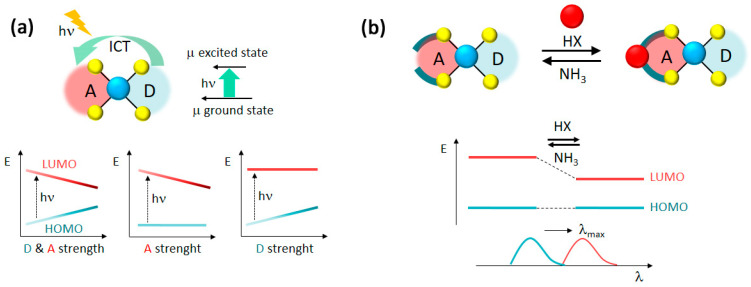 Figure 1
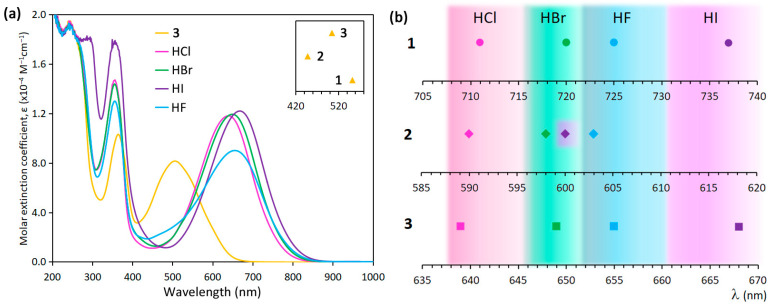 Figure 2
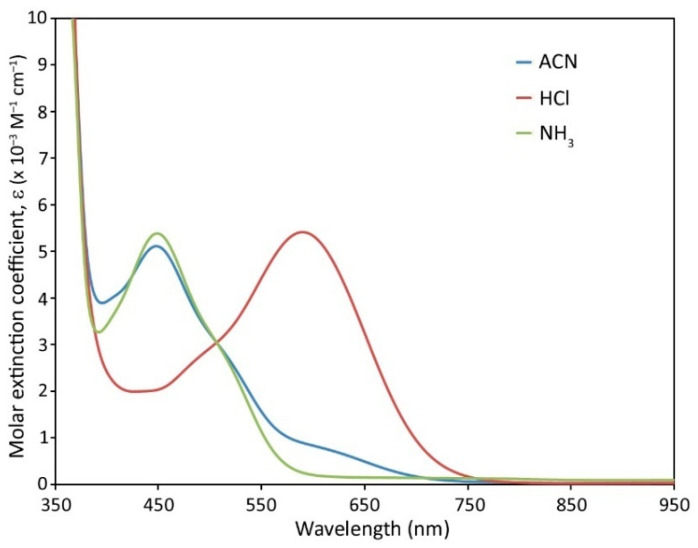 Figure 3
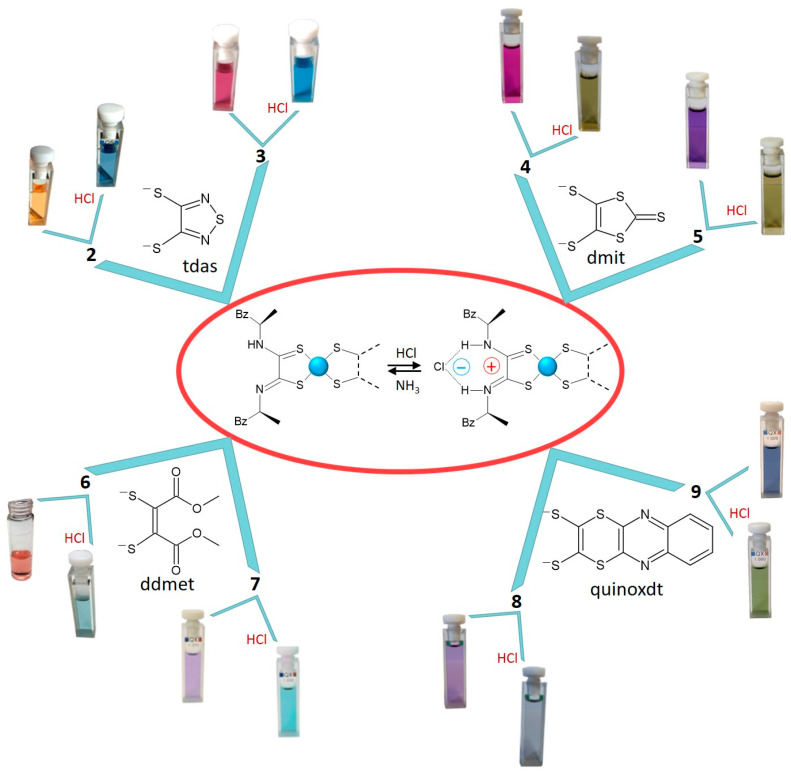 Figure 4
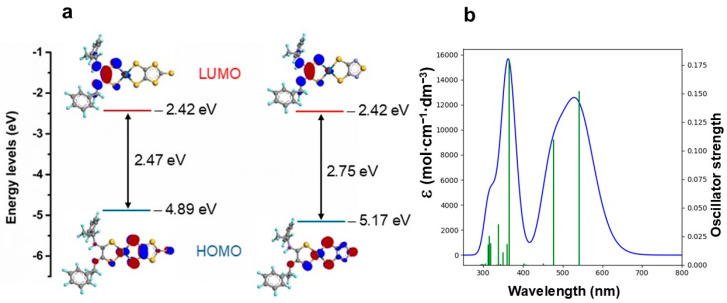 Figure 5
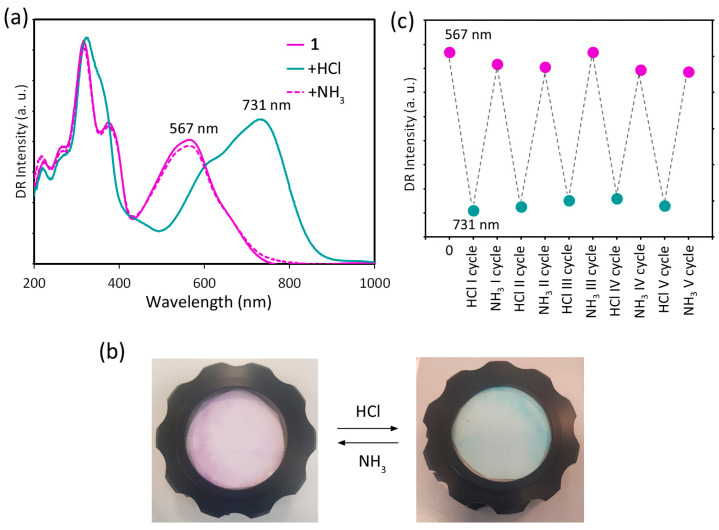 Figure 6
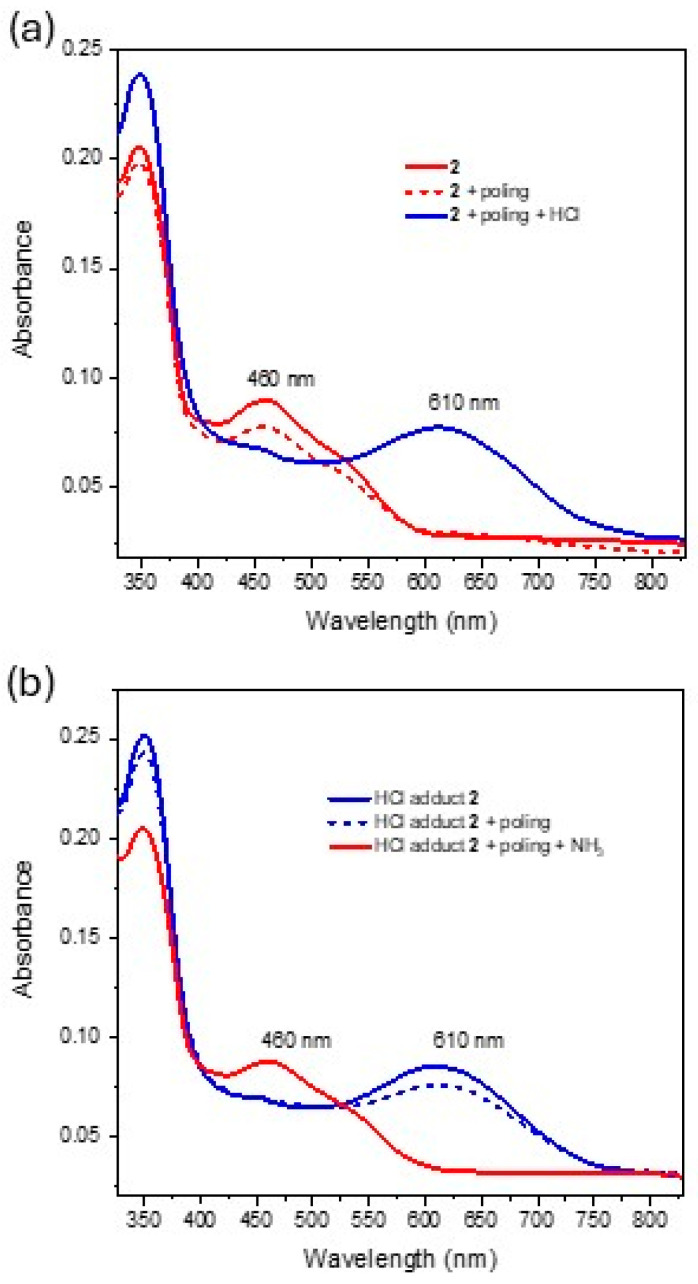 Figure 7
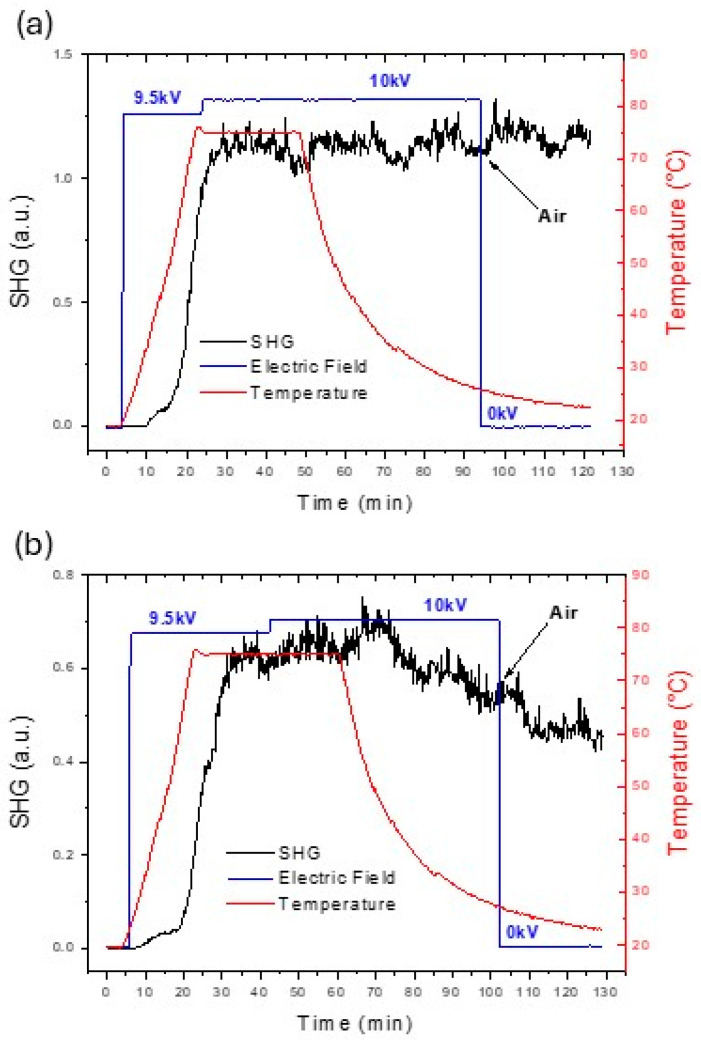 Figure 8
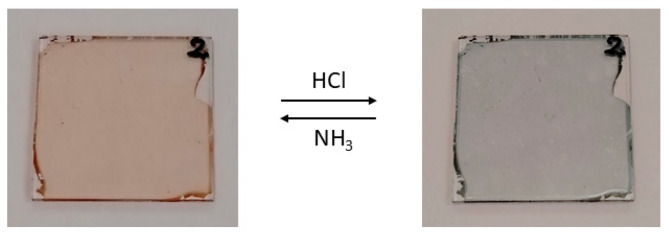 Figure 9
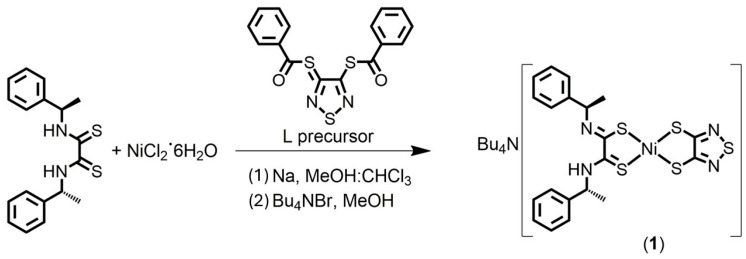 Figure 10
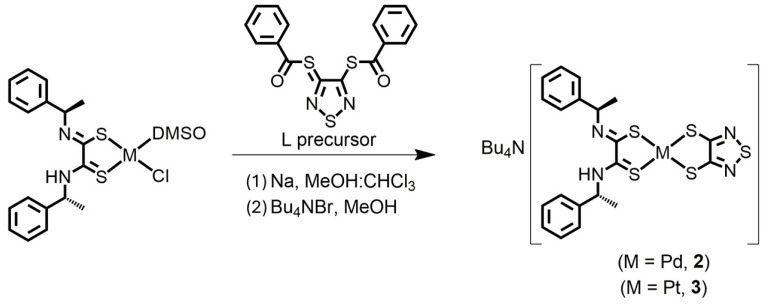 Figure 11
Peer Reviews
No public reviews on file for this paper yet. If you reviewed it on a platform where reviews are public (OpenReview, ICLR, NeurIPS, ICML), you can paste yours below so the community can read it here.
Videos
No videos yet. Explain this paper in a talk, walkthrough, or lecture? Add one.
Taxonomy
TopicsOrganic and Molecular Conductors Research · Nonlinear Optical Materials Research · Perovskite Materials and Applications