Bioavailability and Metabolic Fate of (Poly)phenols from Hull-Less Purple Whole-Grain Barley in Humans
María-Engracia Cortijo-Alfonso, Silvia Yuste, Mariona Martínez-Subirà, Marian Moralejo, Carme Piñol-Felis, Alba Macià, Laura Rubió-Piqué

TL;DR
This study explores how (poly)phenols from a new type of purple barley are absorbed and processed in the human body, revealing their potential health benefits.
Contribution
The study provides the first human data on the bioavailability and metabolism of (poly)phenols from hull-less purple whole-grain barley.
Findings
Eleven (poly)phenolic compounds were identified in plasma and 80 in urine after consuming purple barley biscuits.
Microbial-derived catabolites like valerolactones and benzoic acids were excreted in urine between 8 and 24 hours.
Glycosylated anthocyanins and flavone conjugates were absorbed within 1–2 hours of consumption.
Abstract
Background and Objectives: Anthocyanin-rich barley varieties have recently gained attention due to their high (poly)phenolic content and potential health benefits, yet human data on their bioavailability remain scarce. This study aimed to characterize the absorption, metabolism, and excretion of (poly)phenolic compounds from a novel hull-less purple whole-grain barley (WGB) genotype. Methods: Eleven healthy volunteers consumed 140 g of purple WGB biscuits, and plasma and urine samples were collected over 6 h and 48 h, respectively. Results: UPLC-MS/MS analysis revealed a broad range of metabolites, with 11 (poly)phenolic compounds identified in plasma and 80 in urine. The biscuits were particularly rich in flavones (217 mg/140 g, mainly chrysoeriol derivatives), followed by hydroxycinnamic acids (~54 mg, mainly 4′-hydroxy-3′-methoxycinnamic acid), anthocyanins (44.8 mg), and…
Genes, proteins, chemicals, diseases, species, mutations and cell lines named across the full text — each resolved to its canonical identifier and authoritative record.
Click any figure to enlarge with its caption.
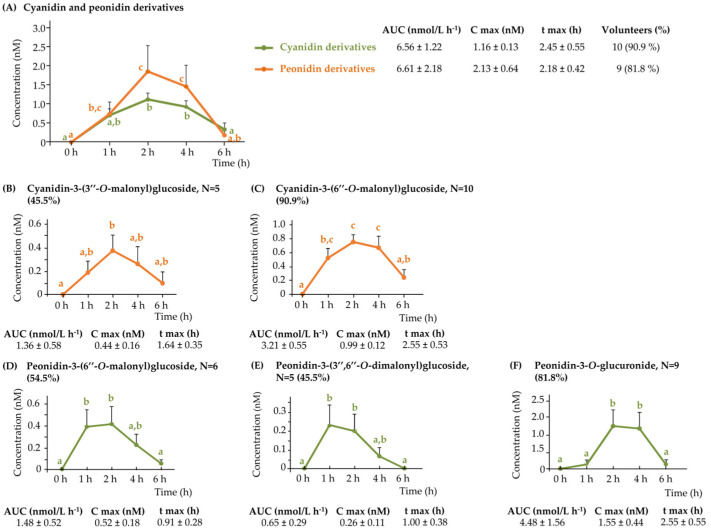 Figure 1
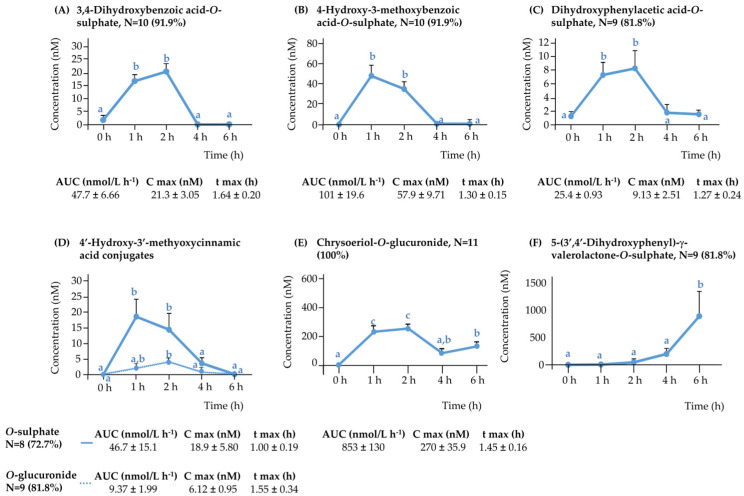 Figure 2
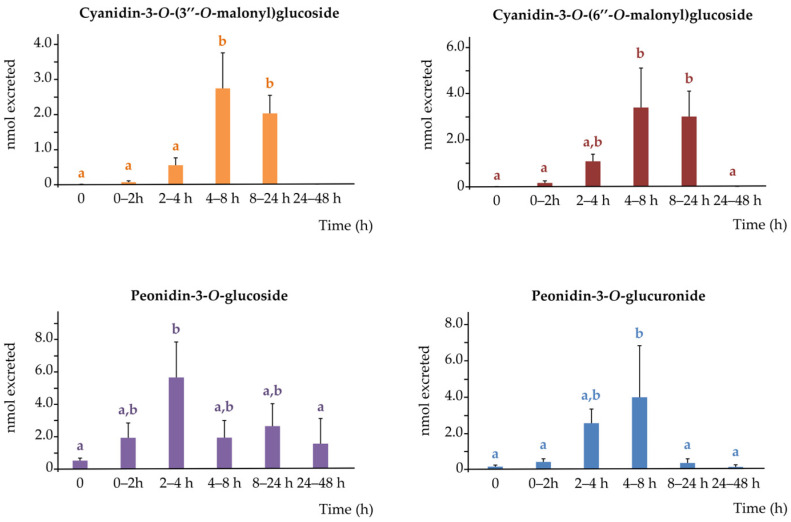 Figure 3
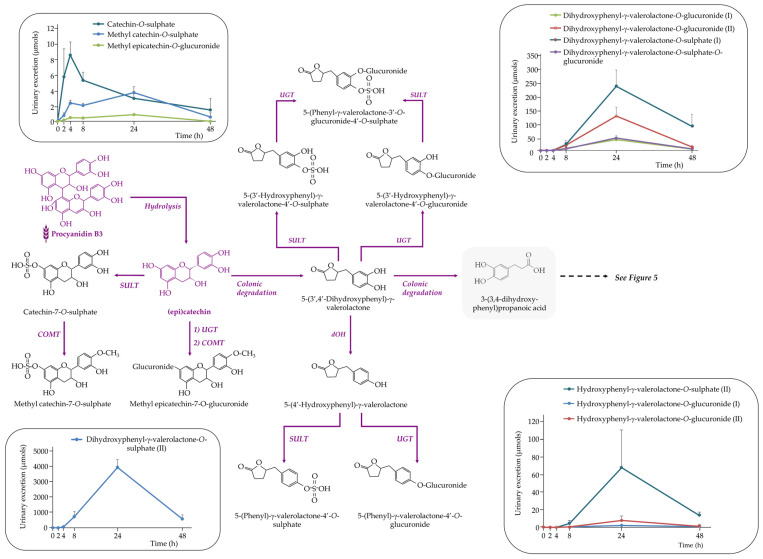 Figure 4
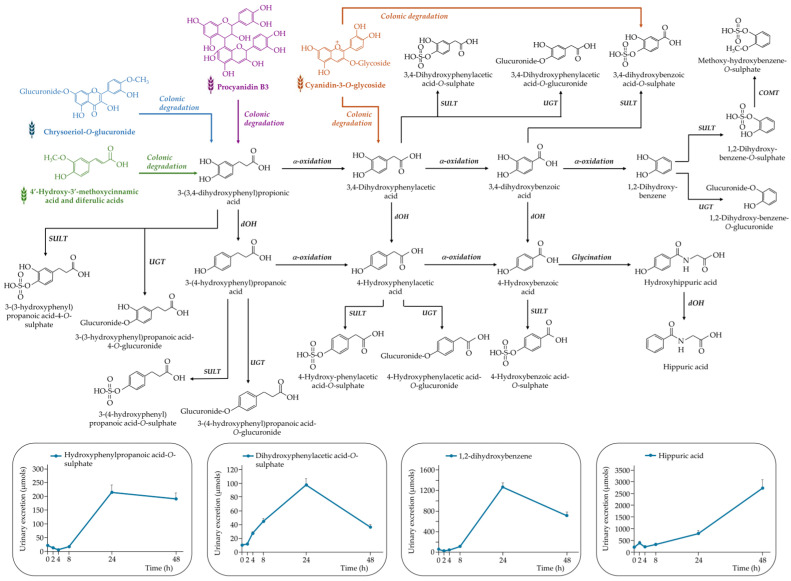 Figure 5
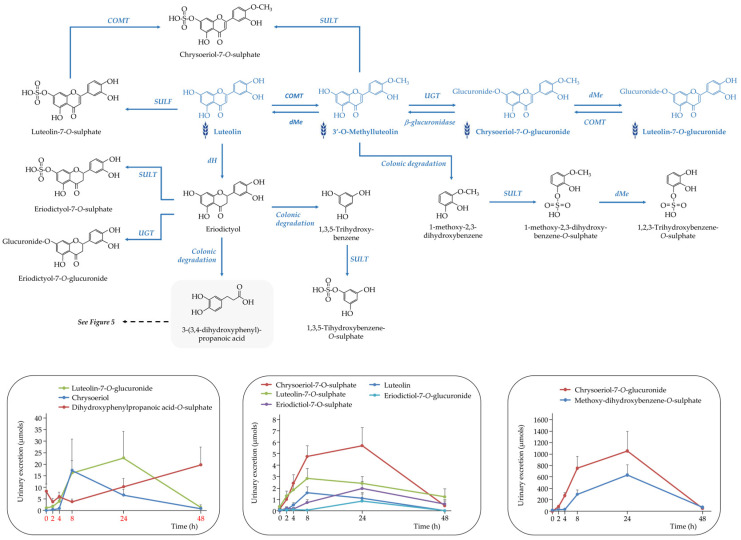 Figure 6
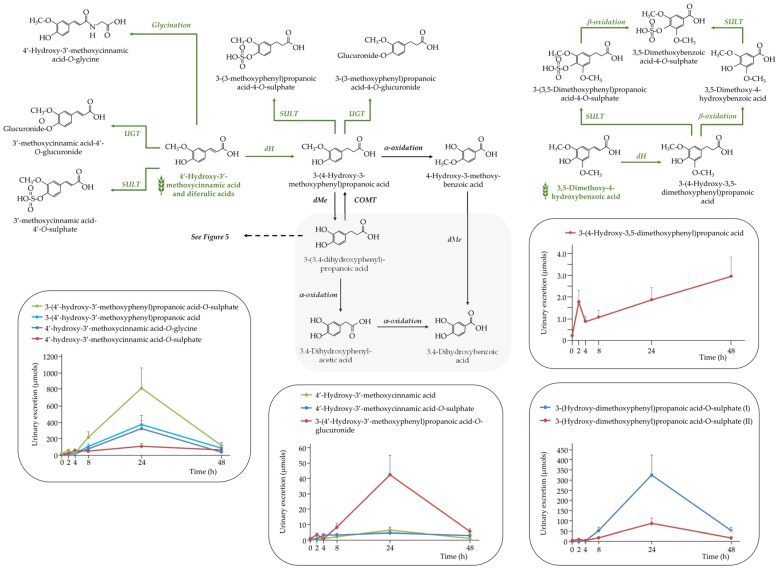 Figure 7
Peer Reviews
No public reviews on file for this paper yet. If you reviewed it on a platform where reviews are public (OpenReview, ICLR, NeurIPS, ICML), you can paste yours below so the community can read it here.
Videos
No videos yet. Explain this paper in a talk, walkthrough, or lecture? Add one.
Taxonomy
TopicsPhytochemicals and Antioxidant Activities · Horticultural and Viticultural Research · Microbial Metabolites in Food Biotechnology