Characterization and Phylogenetic Analysis of MADS-Box Gene Family in Magnoliids: Insights into the Evolution of Floral Morphogenesis in Angiosperms
Haowei Chen, Haoyue Qu, Junmei Zhou, Junjie Pan, Zhoutao Wang, Liangsheng Zhang, Xiuxiu Li, Kejun Cheng

TL;DR
This study explores the evolution of MADS-box genes in magnoliids, revealing insights into how flowers evolved in flowering plants.
Contribution
The study identifies MADS-box gene expansion mechanisms and floral homeotic genes in magnoliids, linking them to ancestral angiosperm models.
Findings
MADS-box gene expansion in magnoliids is primarily due to whole-genome duplication events.
Floral homeotic MADS-box genes in Liriodendron chinensis and Chimonanthus praecox are orthologous to ABCDE model genes.
Expression patterns of MADS-box genes support the 'shifting−fading borders' model in basal angiosperms.
Abstract
Magnoliids represent one of the most basal lineages within angiosperms, and their ancestral floral morphology provides crucial insights into the evolution of flowers in angiosperms. MCM1-AGAMOUS-DEFICIENS-SRF (MADS)-box transcription factors play crucial roles in specifying floral organs. To understand their evolutionary history and functional divergence in magnoliids, we identified MADS-box genes, and conducted phylogenetic and expression analysis in 33 magnoliids and 8 other angiosperm plants. A total of 1310 MADS-box genes were identified and classified into Type I and Type II. The expansion of MADS-box genes in magnoliids mainly arose from whole-genome duplication events. In Liriodendron chinensis and Chimonanthus praecox, we identified floral homeotic MADS-box genes that are orthologous to the ABCDE model genes of floral organ identity determination. The broad expression pattern of…
Genes, proteins, chemicals, diseases, species, mutations and cell lines named across the full text — each resolved to its canonical identifier and authoritative record.
Click any figure to enlarge with its caption.
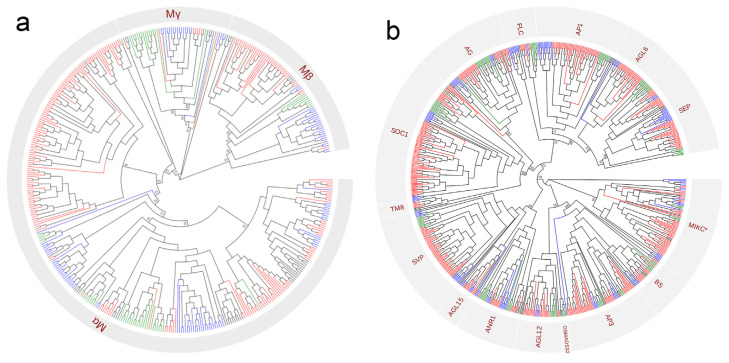 Figure 1
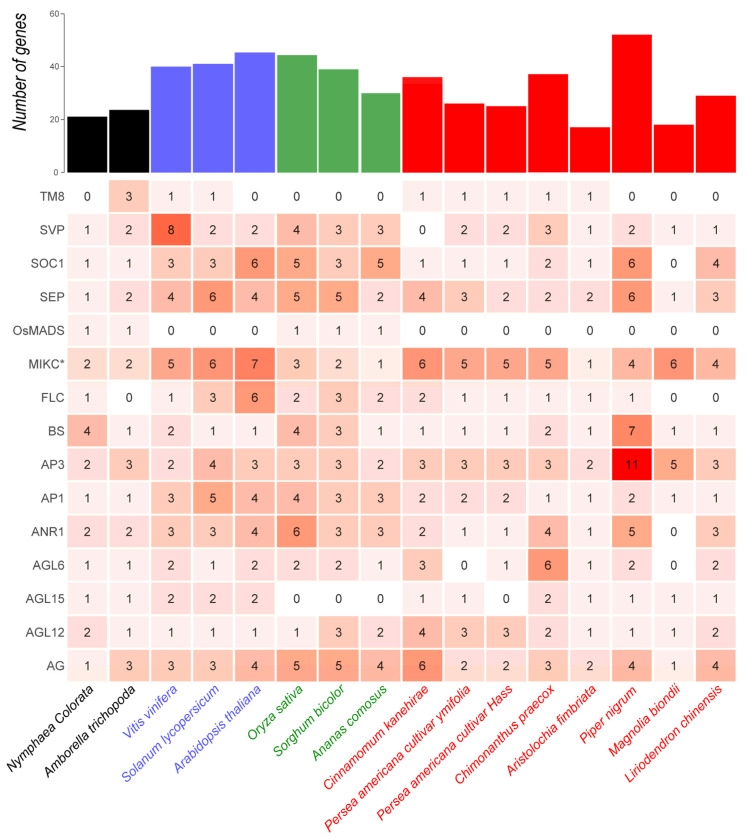 Figure 2
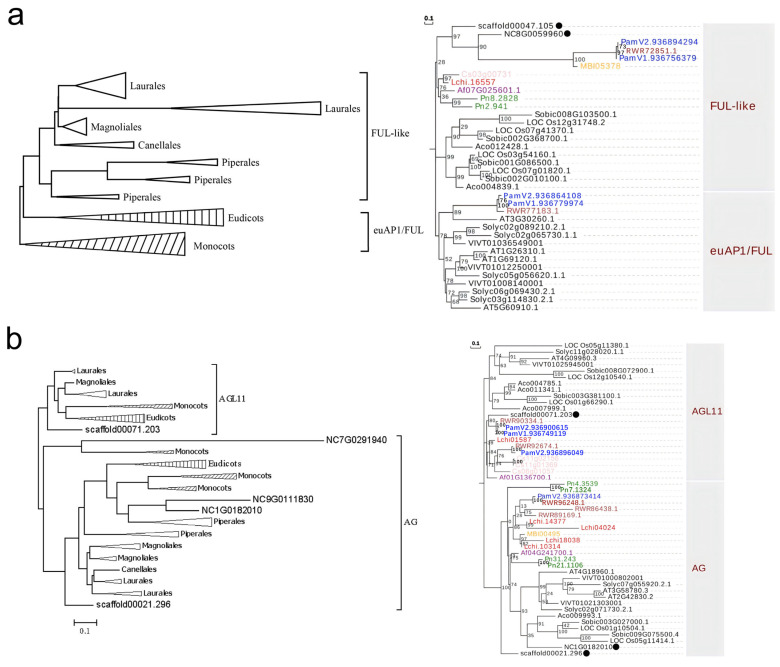 Figure 3
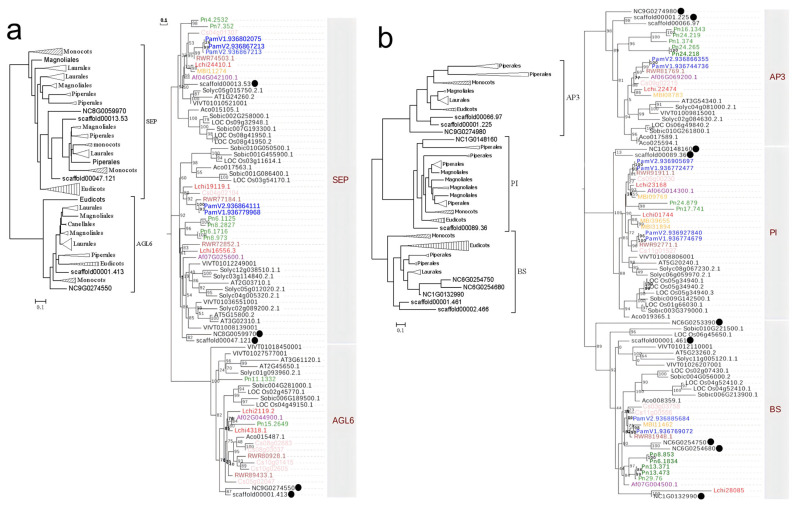 Figure 4
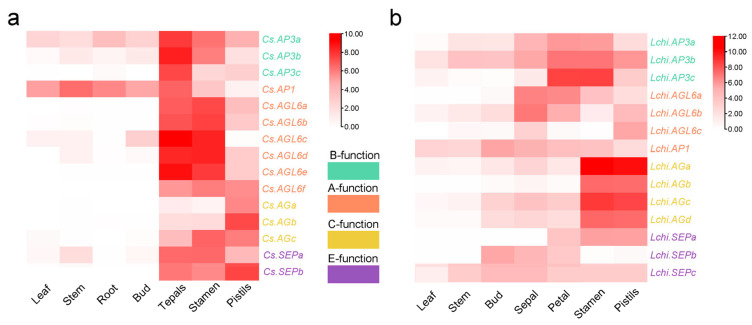 Figure 5
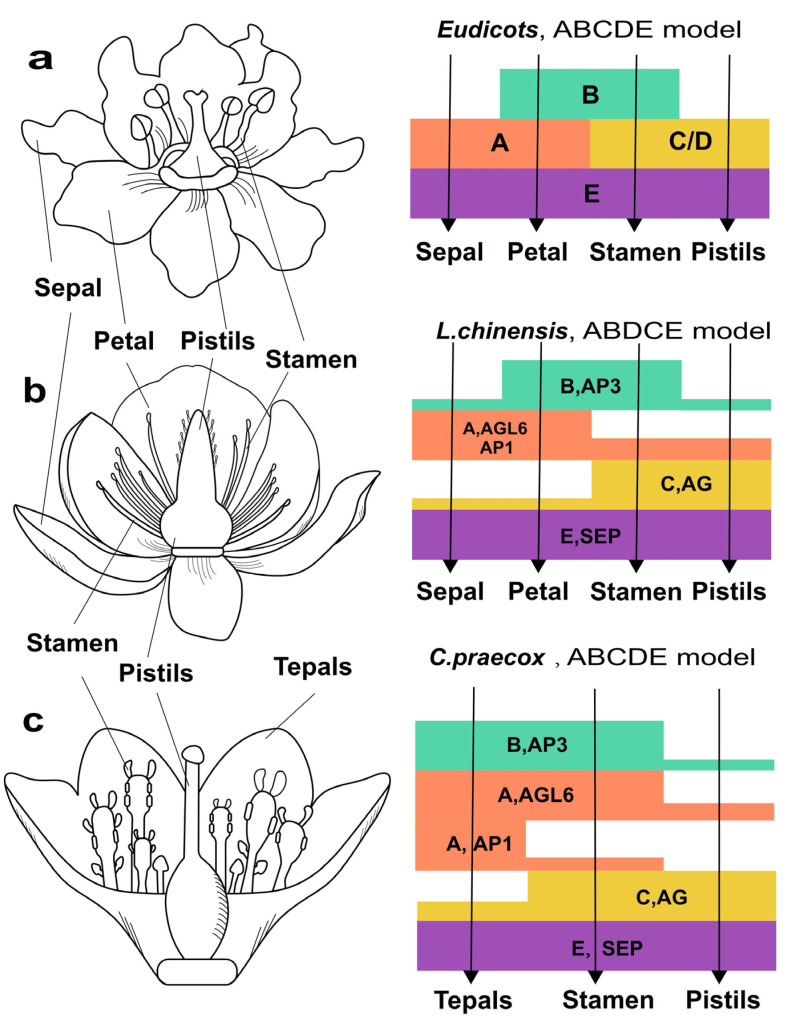 Figure 6
Peer Reviews
No public reviews on file for this paper yet. If you reviewed it on a platform where reviews are public (OpenReview, ICLR, NeurIPS, ICML), you can paste yours below so the community can read it here.
Videos
No videos yet. Explain this paper in a talk, walkthrough, or lecture? Add one.
Taxonomy
TopicsPlant Molecular Biology Research · Plant and Fungal Species Descriptions · Plant Diversity and Evolution