Optimization of the Macrocyclic Tetrapeptide [D-Trp]CJ-15,208 to Prevent Stress-Induced Relapse of Cocaine-Seeking Behavior
Jane V. Aldrich, Dmitry Y. Yakovlev, Jeremy S. Coleman, Sanjeewa N. Senadheera, Heather M. Stacy, Shainnel O. Eans, Brian I. Knapp, Jean M. Bidlack, Jay P. McLaughlin

TL;DR
Scientists optimized a drug to block stress-triggered relapse in cocaine addiction by improving its brain-penetrating properties.
Contribution
The study introduces optimized macrocyclic tetrapeptide analogs with enhanced potency and lower required doses for KOR antagonism.
Findings
Substituted analogs of [D-Trp]CJ-15,208 showed significant KOR antagonism in vivo after oral administration.
Lower doses of [D-Phe4]CJ-15,208 and [D-Trp(formamide)]CJ-15,208 effectively prevented stress-induced cocaine-seeking behavior in mice.
The optimized peptides demonstrated improved efficacy compared to the original compound.
Abstract
Kappa opioid receptor (KOR) antagonists may have therapeutic potential to prevent stress-induced relapse in abstinent individuals with cocaine use disorder (CUD). The macrocyclic peptide [D-Trp]CJ-15,208 (cyclo[Phe-D-Pro-Phe-D-Trp]) is an orally bioavailable, brain–penetrant selective KOR antagonist that prevents stress-induced reinstatement of cocaine-seeking behavior in a mouse model of CUD. We synthesized and evaluated analogs of this lead compound with substitutions for the D-Trp residue to identify analogs that exhibit more potent central KOR antagonism following oral administration. The peptides were synthesized by a combination of solid phase and solution peptide synthetic methodologies, and their pharmacological activity was evaluated both in vitro (for KOR affinity, selectivity and antagonism) and in vivo (for antinociception and KOR antagonism), with promising analogs…
Genes, proteins, chemicals, diseases, species, mutations and cell lines named across the full text — each resolved to its canonical identifier and authoritative record.
Click any figure to enlarge with its caption.
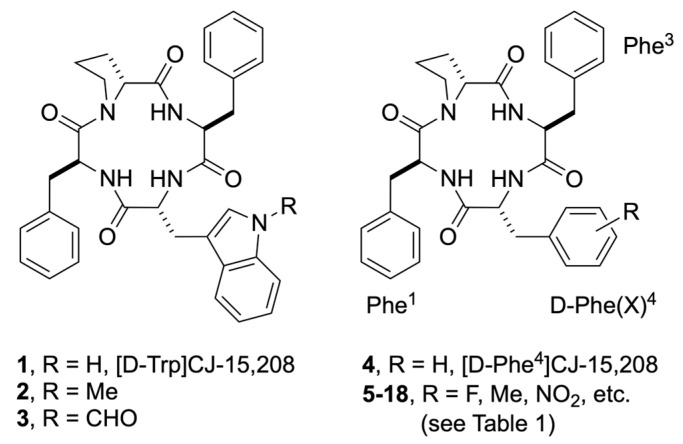 Figure 1
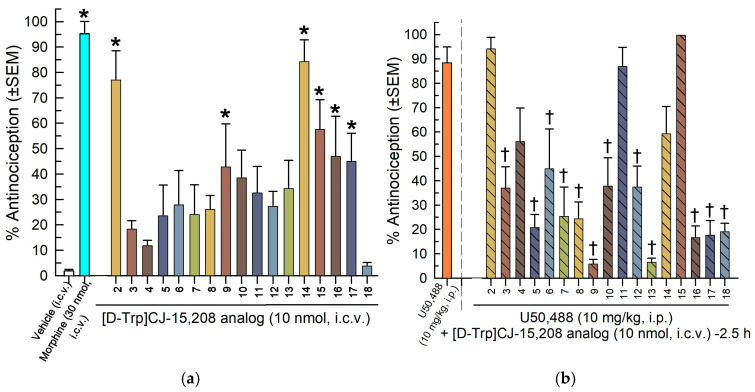 Figure 2
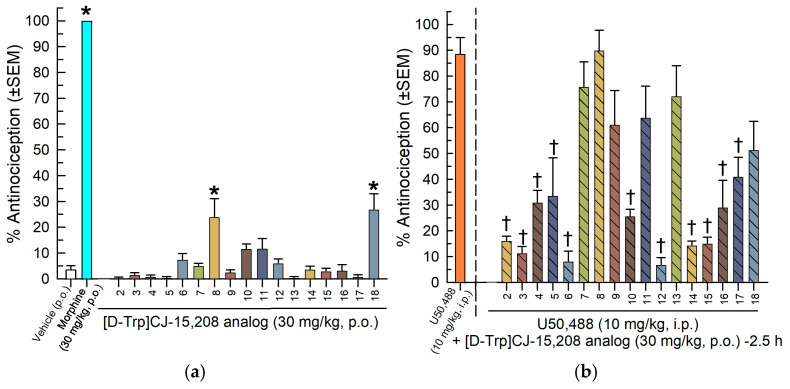 Figure 3
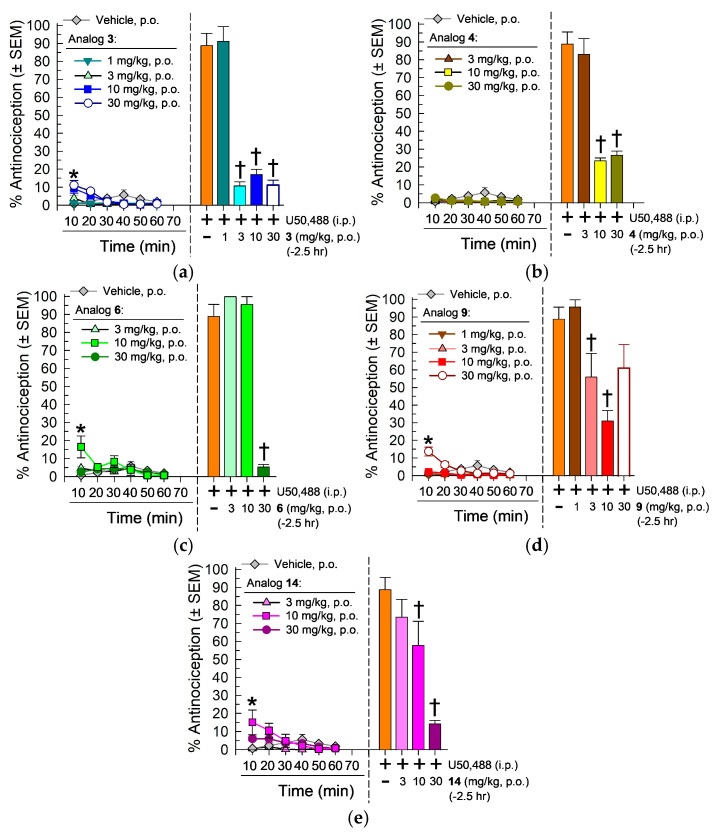 Figure 4
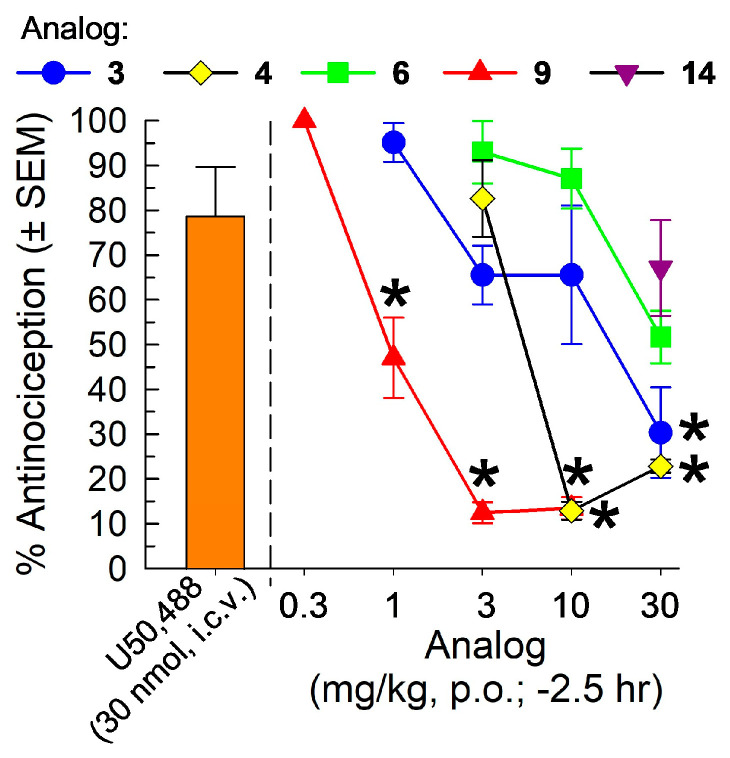 Figure 5
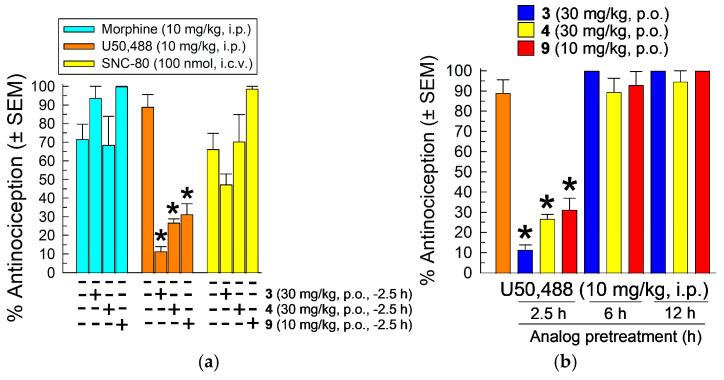 Figure 6
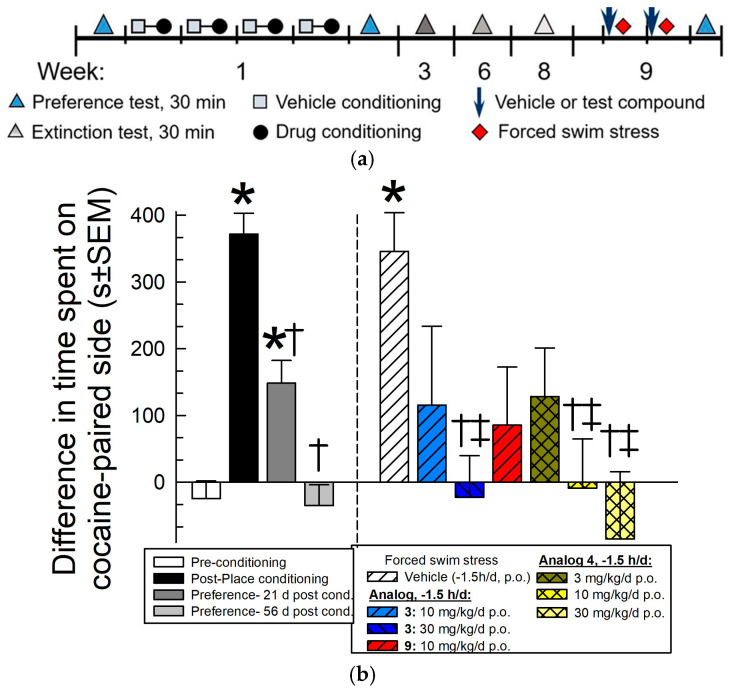 Figure 7
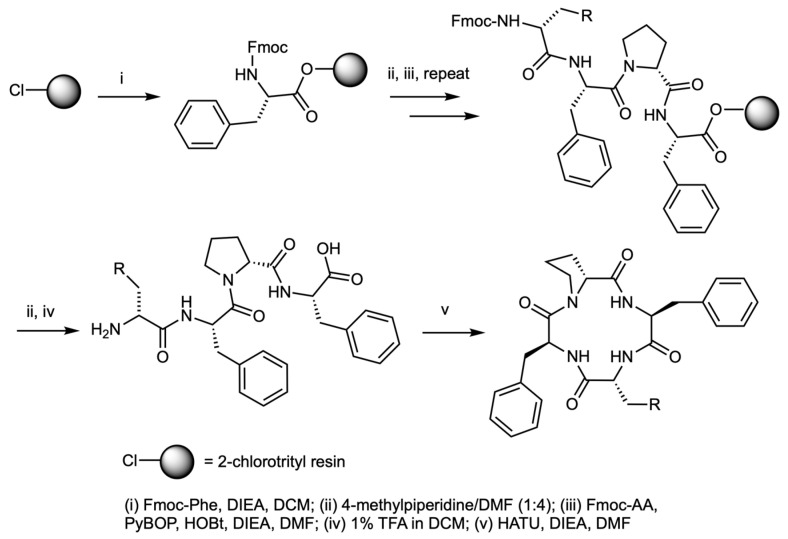 Figure 8
Peer Reviews
No public reviews on file for this paper yet. If you reviewed it on a platform where reviews are public (OpenReview, ICLR, NeurIPS, ICML), you can paste yours below so the community can read it here.
Videos
No videos yet. Explain this paper in a talk, walkthrough, or lecture? Add one.
Taxonomy
TopicsNeurotransmitter Receptor Influence on Behavior · Neuropeptides and Animal Physiology · Receptor Mechanisms and Signaling