High-throughput single-virion DNA-PAINT reveals structural diversity, cooperativity, and flexibility during selective packaging in influenza
Christof Hepp, Qing Zhao, Nicole Robb, Ervin Fodor, Achillefs N Kapanidis

TL;DR
This study uses a new imaging technique to reveal how influenza virus segments are packaged, showing cooperative interactions and structural diversity in virus particles.
Contribution
A multiplexed DNA-PAINT method was developed to analyze genome packaging in thousands of individual influenza virus particles.
Findings
Influenza genome assembly involves multiple pathways guided by interacting segment pairs.
Segment pair interactions influence spatial configurations preserved in mature virions.
The method enables quantification of whole segment interactions, not just sequence motifs.
Abstract
Influenza A, a negative-sense RNA virus, has a genome that consists of eight single-stranded RNA segments. Influenza co-infections can result in reassortant viruses that contain gene segments from multiple strains, causing pandemic outbreaks with severe consequences for human health. The outcome of reassortment is likely influenced by a selective sequence-specific genome packaging mechanism. To uncover the contributions of individual segment pairings to selective packaging, we set out to statistically analyse packaging defects and inter-segment distances in individual A/Puerto Rico/8/34 (H1N1) (PR8) virus particles. To enable such analysis, we developed a multiplexed DNA-PAINT approach capable of assessing the segment stoichiometry of >10 000 individual virus particles in one experiment; our approach can also spatially resolve the individual segments inside complete virus particles with…
Genes, proteins, chemicals, diseases, species, mutations and cell lines named across the full text — each resolved to its canonical identifier and authoritative record.
Click any figure to enlarge with its caption.
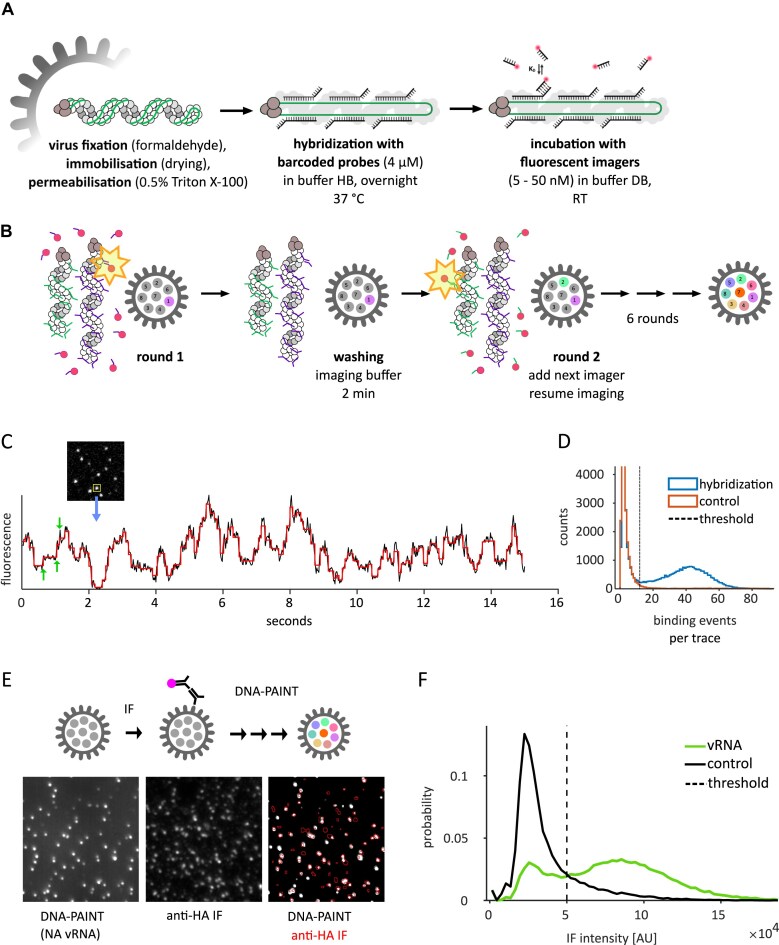 Figure 1
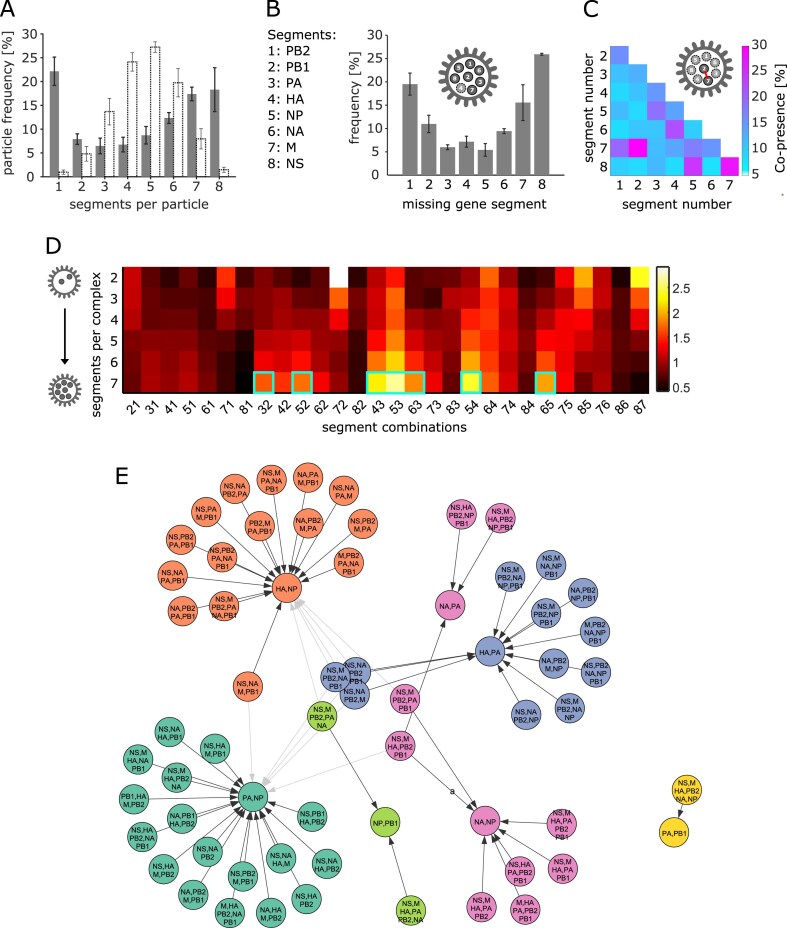 Figure 2
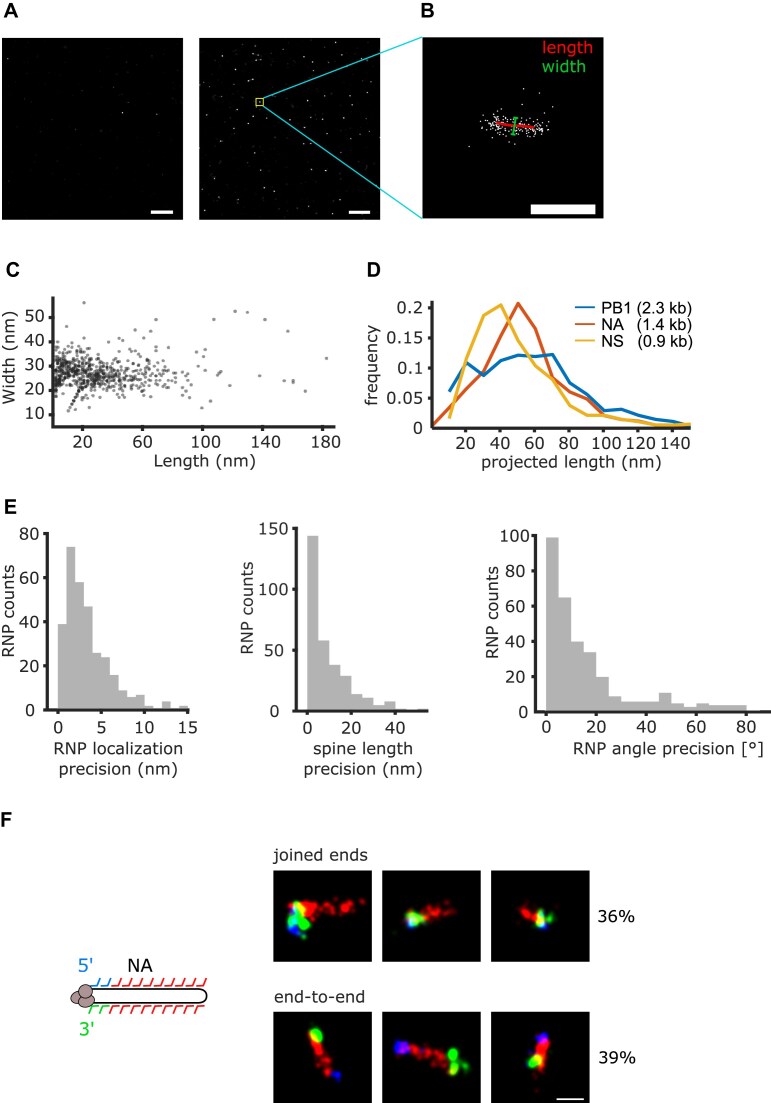 Figure 3
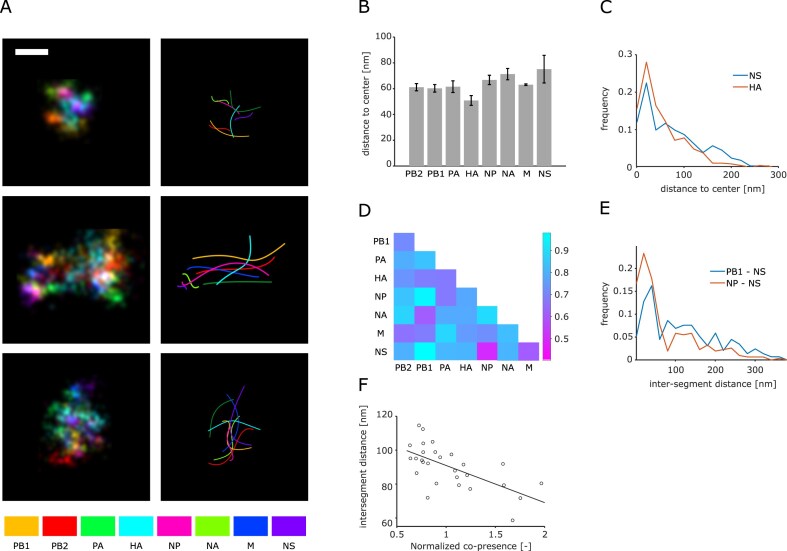 Figure 4
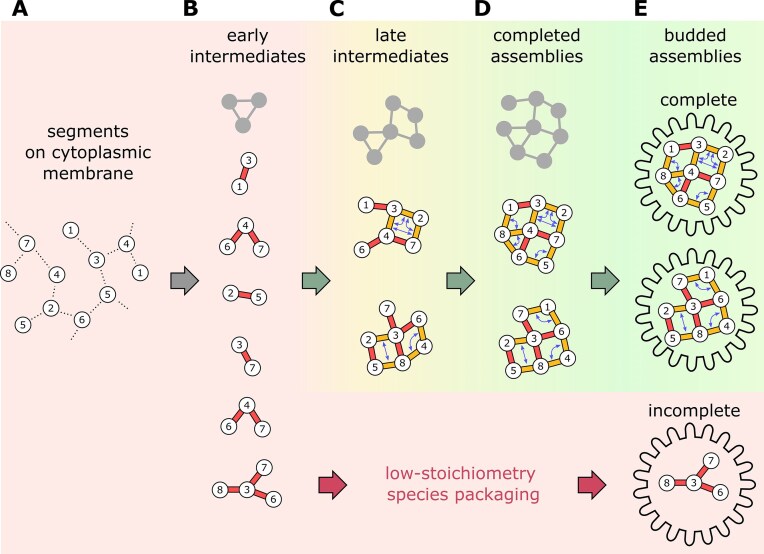 Figure 5
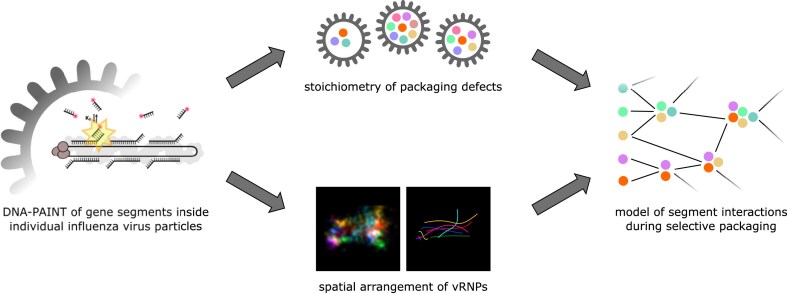 Figure 6
Peer Reviews
No public reviews on file for this paper yet. If you reviewed it on a platform where reviews are public (OpenReview, ICLR, NeurIPS, ICML), you can paste yours below so the community can read it here.
Videos
No videos yet. Explain this paper in a talk, walkthrough, or lecture? Add one.
Taxonomy
TopicsBacteriophages and microbial interactions · RNA and protein synthesis mechanisms · RNA Research and Splicing