Sweet Taste Adaptation to Sugars, Sucralose, and Their Blends: A Human and Rodent Perspective
Stephanie I. Okoye, Minjae Kim, Sara Petty, Myunghwan Choi, Marta Yanina Pepino

TL;DR
The study shows that blending sucralose with sugars reduces the decline in perceived sweetness over time, both in humans and mice.
Contribution
The novel finding is that sweetener composition, not habitual LCS use, affects sweet taste adaptation, with blends reducing adaptation.
Findings
Sucralose alone caused stronger adaptation than when blended with sugars in both humans and mice.
Glucose and fructose showed adaptation, but to a lesser extent than sucralose.
Blending sucralose with small amounts of sugars reduces adaptation at perceptual and cellular levels.
Abstract
Background: Sweet taste adaptation, the decline in perceived sweetness with repeated exposure, may influence dietary behavior and differs across sweeteners. Low-calorie sweeteners (LCSs) such as sucralose strongly activate the T1R2+T1R3 receptor and are generally associated with greater adaptation than sugars, although this effect can be reduced with sweetener blends. Aim: We investigated whether habitual LCS consumption affects sweet taste perception and whether blending sucralose with small amounts of sugars attenuates adaptation using sensory tests in humans and in vivo calcium imaging in a rodent model. Methods: In study 1, habitual (HC; n = 39) and non-habitual (NHC; n = 42) LCS consumers rate sweetness of sucralose (0.6 mM), glucose (800 mM), fructose (475 mM), and blends with low glucose (111 mM) or fructose (45 mM) across repeated trials (1–10) using a generalized labeled…
Genes, proteins, chemicals, diseases, species, mutations and cell lines named across the full text — each resolved to its canonical identifier and authoritative record.
Click any figure to enlarge with its caption.
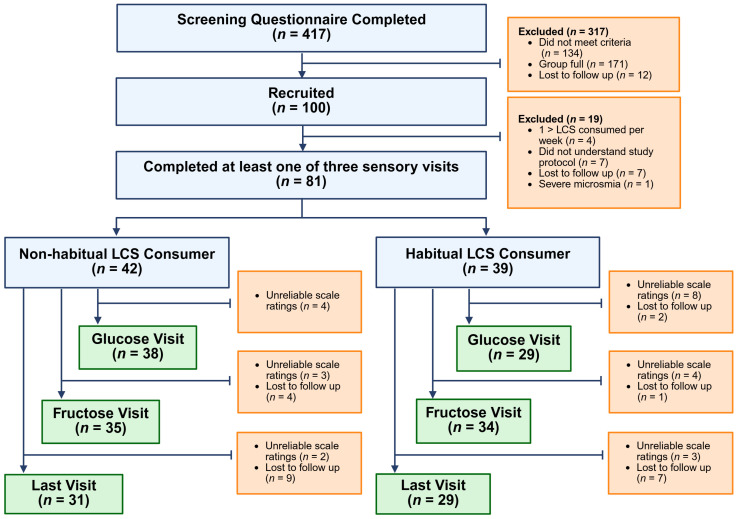 Figure 1
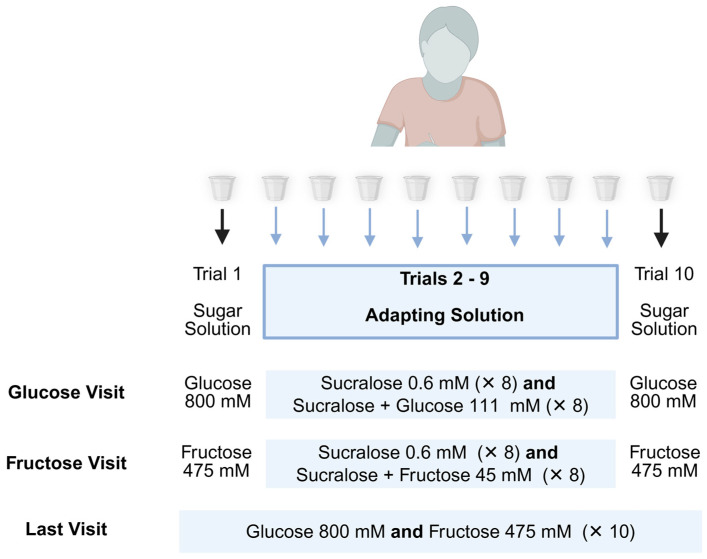 Figure 2
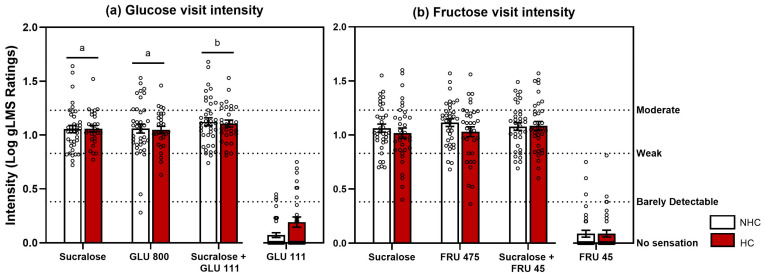 Figure 3
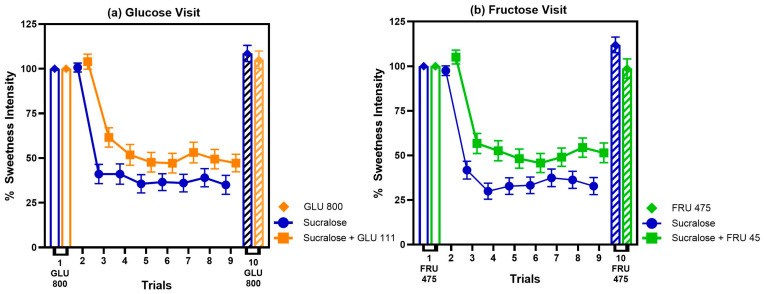 Figure 4
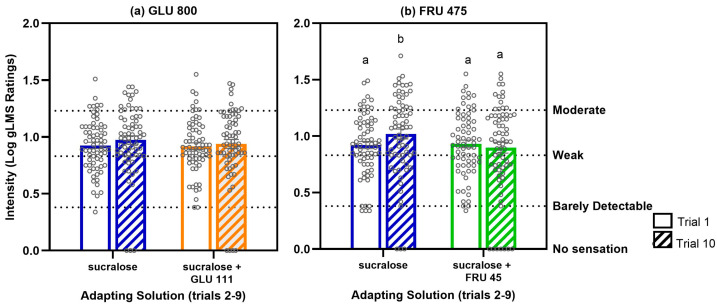 Figure 5
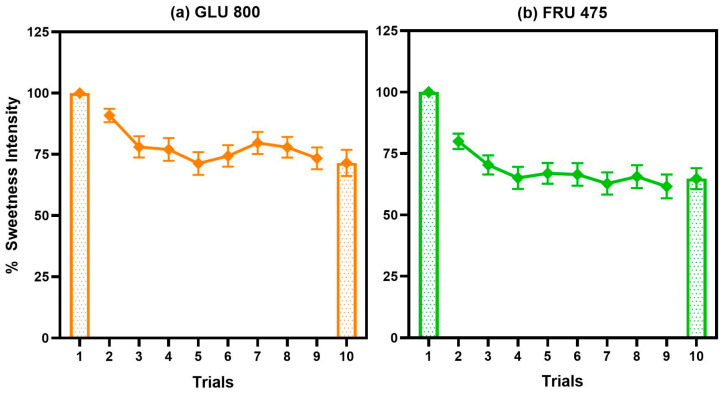 Figure 6
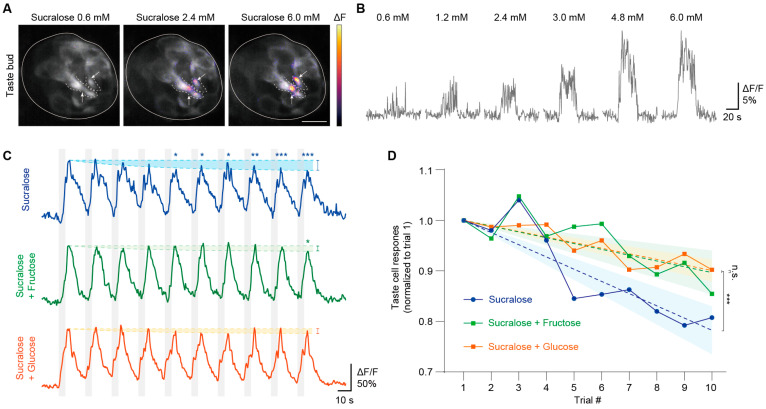 Figure 7
Peer Reviews
No public reviews on file for this paper yet. If you reviewed it on a platform where reviews are public (OpenReview, ICLR, NeurIPS, ICML), you can paste yours below so the community can read it here.
Videos
No videos yet. Explain this paper in a talk, walkthrough, or lecture? Add one.
Taxonomy
TopicsBiochemical Analysis and Sensing Techniques · Olfactory and Sensory Function Studies · Regulation of Appetite and Obesity