GLR Channels Are Involved in the Mechanism of Chloroplast Avoidance Response in Lemna trisulca
Weronika Krzeszowiec, Halina Gabryś

TL;DR
This study shows that GLR channels, specifically NMDA-type ones, are involved in chloroplast avoidance responses in water plants, and their activity is influenced by pH.
Contribution
The paper identifies a role for GLR NMDA channels in chloroplast movement and reveals pH-dependent activity in plant phototropin signaling.
Findings
MK-801 inhibits chloroplast avoidance controlled by phototropin2 under alkaline conditions.
CNQX does not affect chloroplast movement in any pH condition.
GLR NMDA channels are involved in the phot2 signaling pathway.
Abstract
(1) Background: The complete signalling pathway leading to light-induced chloroplast movement in plant cells is not yet fully understood. The process may involve GLR channels, which have previously been shown to participate in light signalling in plants. Therefore, using in vivo photometry we analysed chloroplast movements in the water plant Lemna trisulca treated with GLR channel inhibitors, MK-801 and CNQX. (2) Results: MK-801, a non-competitive antagonist that blocks NMDA channels was found to inhibit the avoidance response of chloroplasts controlled by phototropin2. This inhibition depends on pH and requires alkaline conditions. On the contrary, CNQX, a competitive receptor antagonist that blocks AMPA channels did not change the parameters of chloroplast movements in either mild alkaline or acidic conditions. (3) Conclusions: Our study reveals that GLR NMDA channels play a role in…
Genes, proteins, chemicals, diseases, species, mutations and cell lines named across the full text — each resolved to its canonical identifier and authoritative record.
Click any figure to enlarge with its caption.
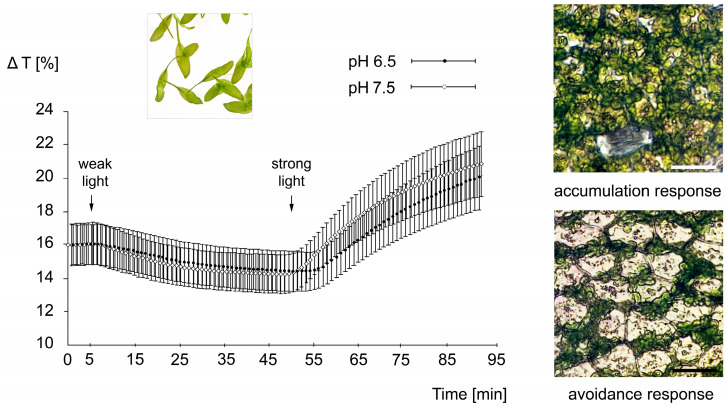 Figure 1
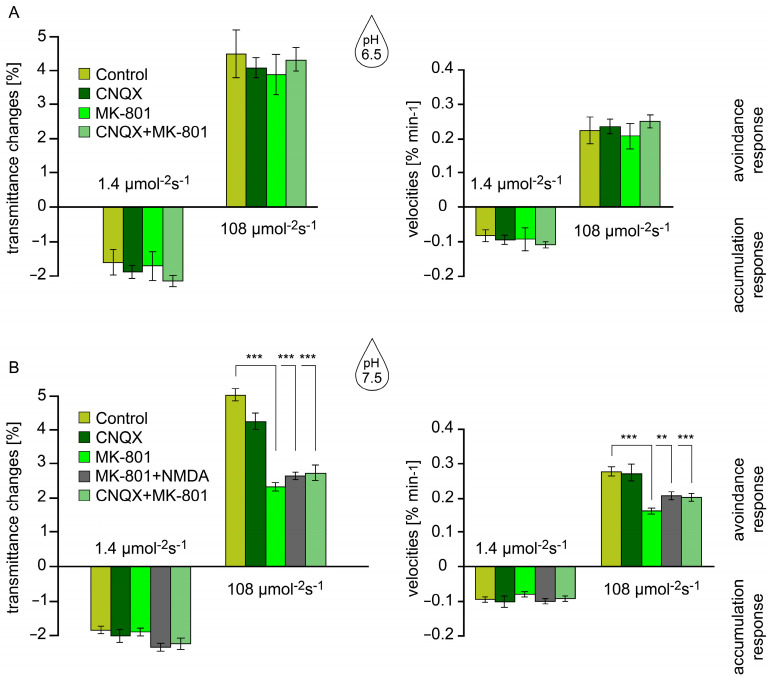 Figure 2
Peer Reviews
No public reviews on file for this paper yet. If you reviewed it on a platform where reviews are public (OpenReview, ICLR, NeurIPS, ICML), you can paste yours below so the community can read it here.
Videos
No videos yet. Explain this paper in a talk, walkthrough, or lecture? Add one.
Taxonomy
TopicsPlant and Biological Electrophysiology Studies · Light effects on plants · Photoreceptor and optogenetics research