Interaction of Oxygen Molecules with Fe Atom-Doped γ-Graphyne Surfaces: First-Principles Calculations
Bin Zhao, Jiayi Yin, Zhuoting Xiong, Wentao Yang, Peng Guo, Meng Li, Haoxian Zeng, Jianjun Wang

TL;DR
This paper studies how oxygen molecules interact with iron-doped γ-graphyne surfaces using computational methods to understand their potential as catalysts.
Contribution
The study reveals the electronic and structural behavior of Fe-doped γ-graphyne surfaces during O2 activation and dissociation with low energy barriers.
Findings
Fe-doped γ-graphyne surfaces show low energy barriers for O2 dissociation, indicating potential as efficient catalysts.
Electron transfer from Fe atoms to O2 molecules elongates O-O bonds, facilitating dissociation.
Ab initio simulations confirm structural stability of Fe-doped systems at room temperature.
Abstract
The activation and dissociation of O2 molecules play a key role in the oxidation of toxic gas molecules and the oxygen reduction reaction (ORR) in hydrogen–oxygen fuel cells. The interactions between O2 molecules and the surfaces of Fe-doped γ-graphyne were systematically explored, mainly adopting the combined method of the density functional theory with dispersion correction (DFT-D3) and the climbing image nudged elastic band (CI-NEB) method. The order of the formation energy values of these defective systems is Ef(FeC2) < Ef(FeC1) < Ef(FeD1) < Ef(VC1) < Ef(VD1) < Ef(VC2) < Ef(FeD2) < Ef(VD2), which indicates that the process of Fe dopant atoms substituting single-carbon atoms/double-carbon atoms is relatively easier than the formation of vacancy-like defects. The results of ab initio molecular dynamics (AIMD) simulations confirm that the doped systems can maintain structural stability…
Genes, proteins, chemicals, diseases, species, mutations and cell lines named across the full text — each resolved to its canonical identifier and authoritative record.
Click any figure to enlarge with its caption.
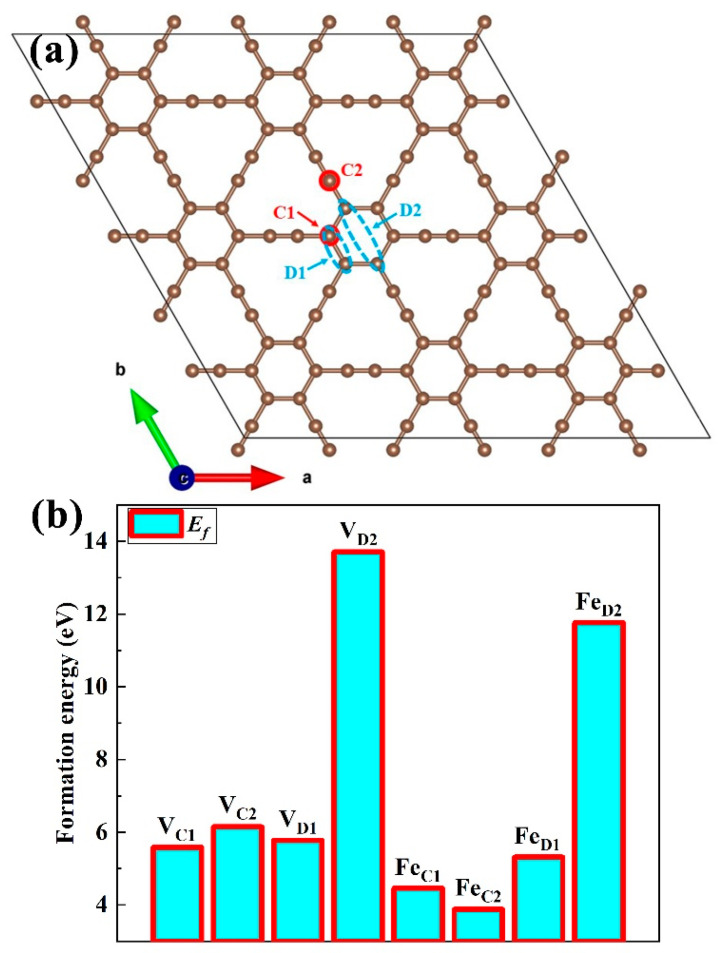 Figure 1
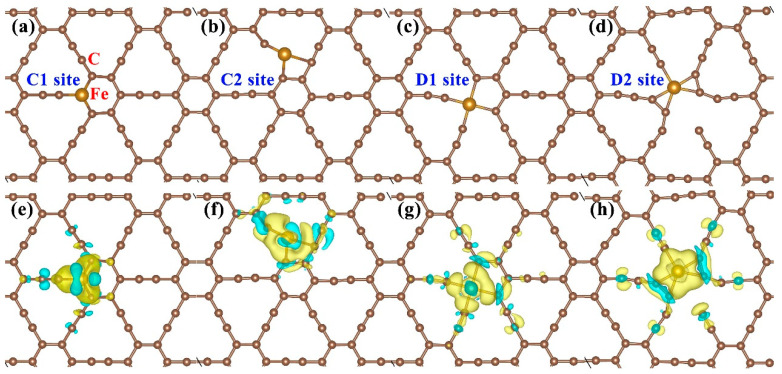 Figure 2
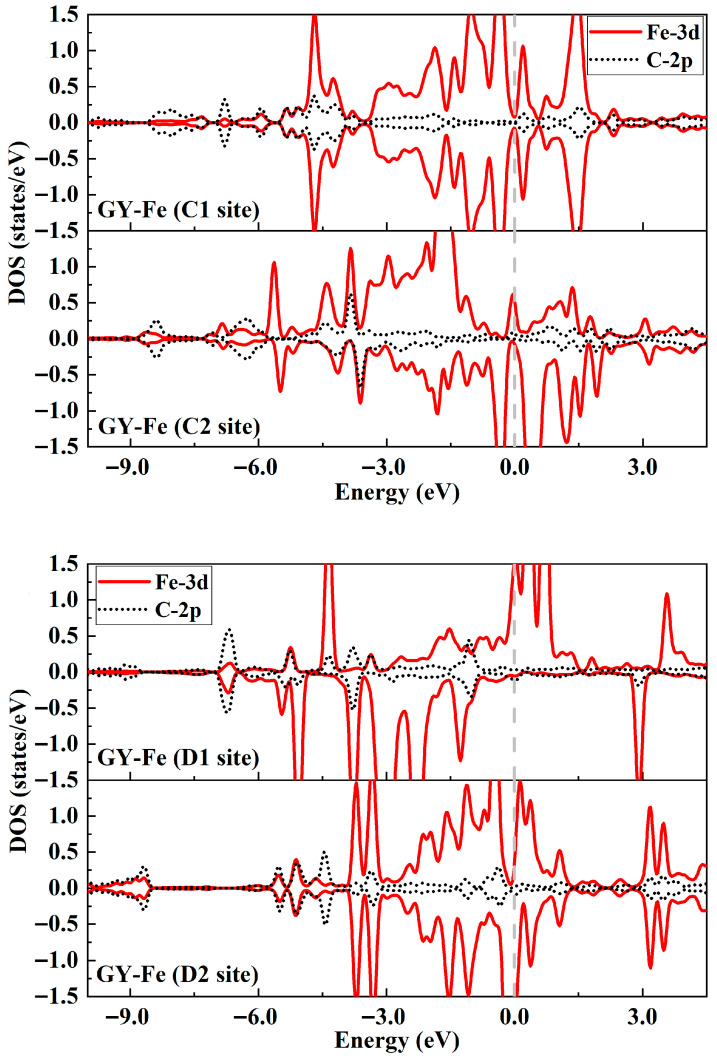 Figure 3
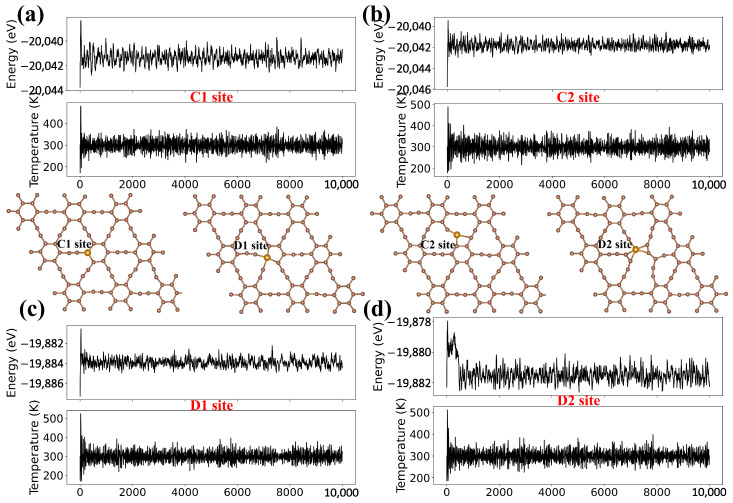 Figure 4
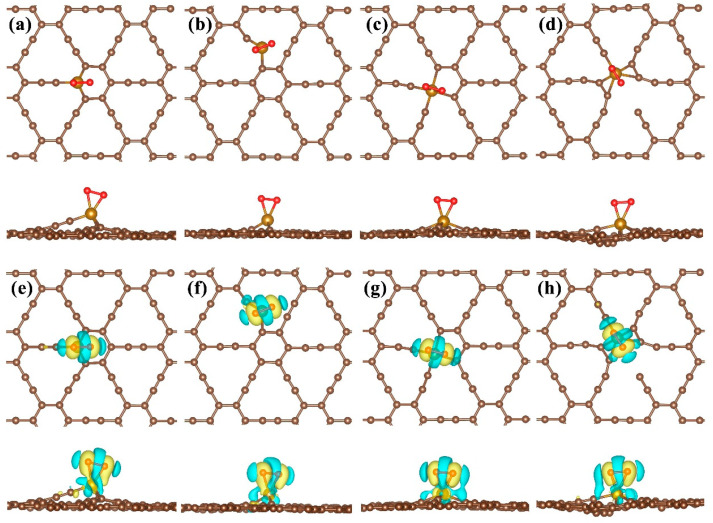 Figure 5
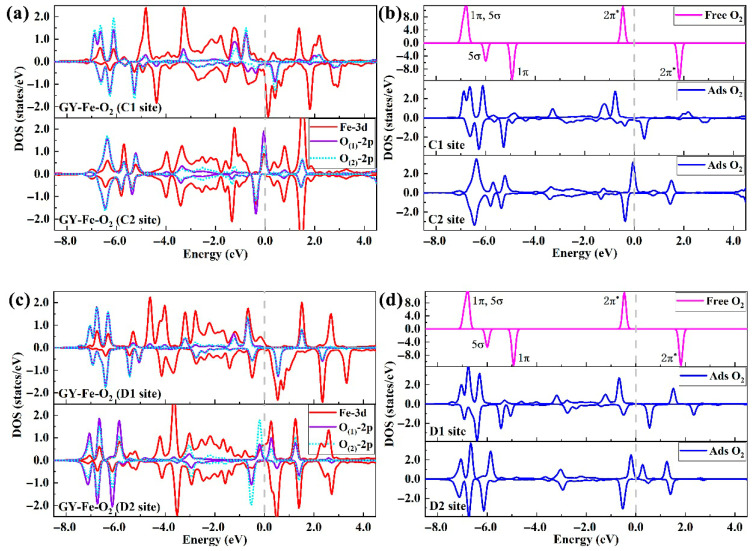 Figure 6
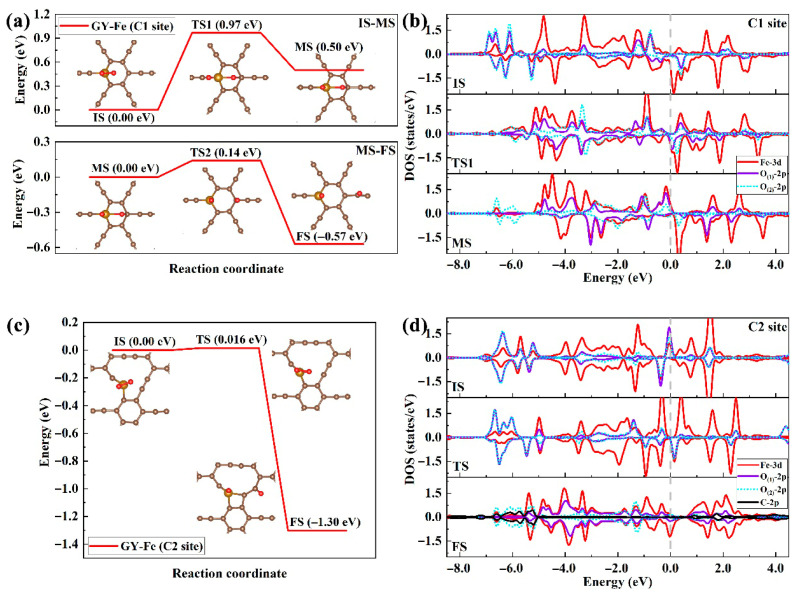 Figure 7
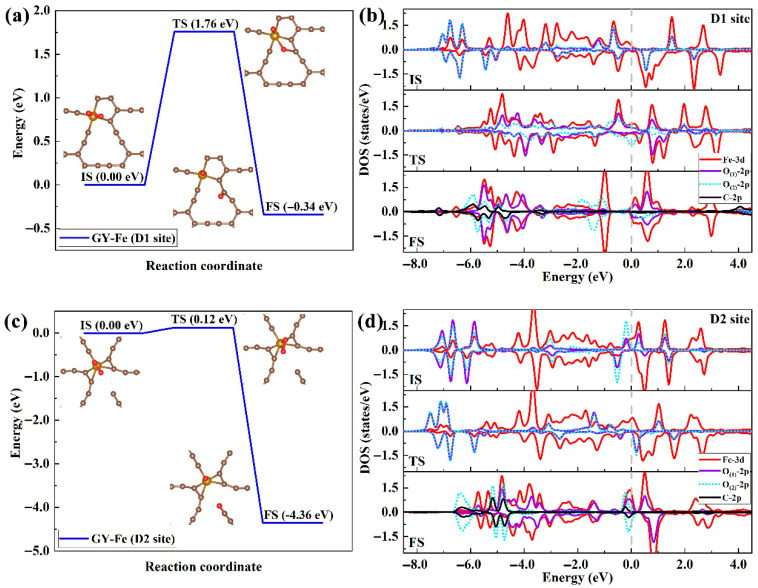 Figure 8
Peer Reviews
No public reviews on file for this paper yet. If you reviewed it on a platform where reviews are public (OpenReview, ICLR, NeurIPS, ICML), you can paste yours below so the community can read it here.
Videos
No videos yet. Explain this paper in a talk, walkthrough, or lecture? Add one.
Taxonomy
TopicsElectrocatalysts for Energy Conversion · Catalytic Processes in Materials Science · Graphene research and applications