Artificial Intelligence and Colposcopy: Detection and Classification of Vulvar HPV-Related Low-Grade and High-Grade Squamous Intraepithelial Lesions
Miguel Mascarenhas, Vanitha Sivalingam, Inês Castro, Katie Jones, Miguel Martins, Inês Alencoão, Maria João Carinhas, Joana Mota, Pedro Cardoso, Francisco Mendes, Maria João Almeida, Bruno Mendes, João Ferreira, Guilherme Macedo, Teresa Mascarenhas, Ahsan Javed

TL;DR
This paper introduces the first AI model to detect and classify HPV-related vulvar lesions using vulvoscopy images, achieving high accuracy.
Contribution
The study presents the first convolutional neural network for automated detection and classification of vulvar HSIL and LSIL.
Findings
The CNN model achieved 99.7% recall and 99.1% precision in lesion detection and classification.
The model was trained and validated using 9857 annotated vulvoscopy frames from 28 cases.
This AI tool could improve diagnostic accuracy and reduce invasive procedures in vulvar lesion diagnosis.
Abstract
Background/Objectives: Accurate identification of vulvar high-grade squamous intraepithelial lesions (HSIL) is essential for preventing progression to invasive squamous cell carcinoma. This study addresses the gap in artificial intelligence (AI) applications for vulvar lesion diagnosis by developing and validating the first convolutional neural network (CNN) model to automatically detect and classify HPV-related vulvar lesions—specifically HSIL and low-grade squamous intraepithelial lesions (LSIL)—based on vulvoscopy images. Methods: This bicentric study included data from 28 vulvoscopies, comprising a total of 9857 annotated frames, categorized using histopathological reports (HSIL or LSIL). The dataset was divided into training, validation, and testing sets for development and assessment of a YOLOv11-based object detection model. Results: The CNN demonstrated a recall (sensitivity) of…
Genes, proteins, chemicals, diseases, species, mutations and cell lines named across the full text — each resolved to its canonical identifier and authoritative record.
Click any figure to enlarge with its caption.
 Figure 1
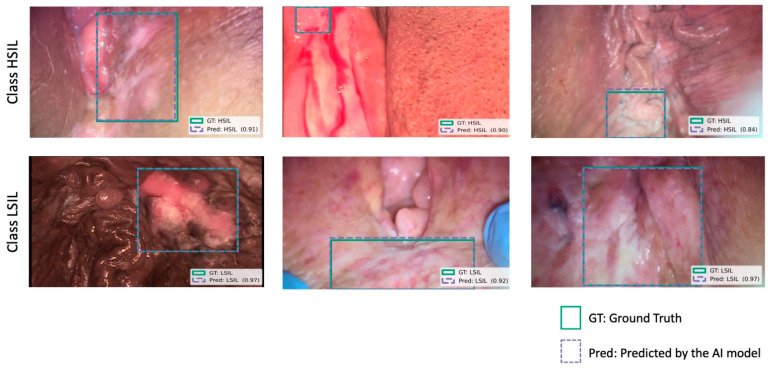 Figure 2
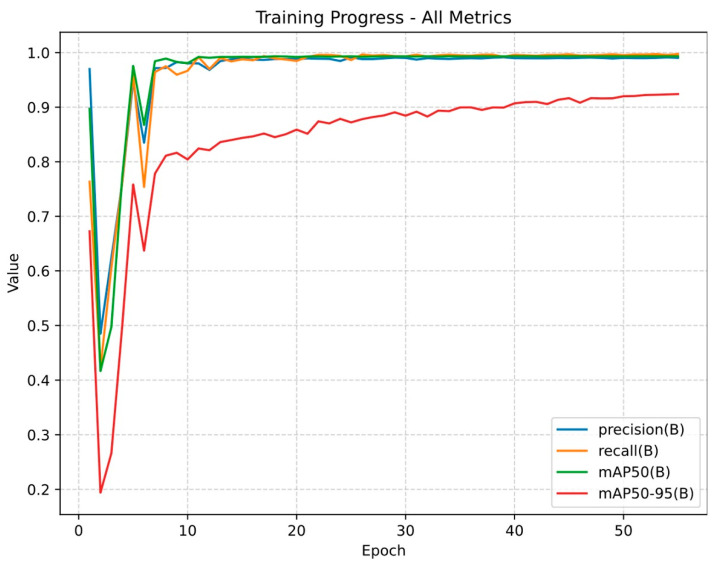 Figure 3
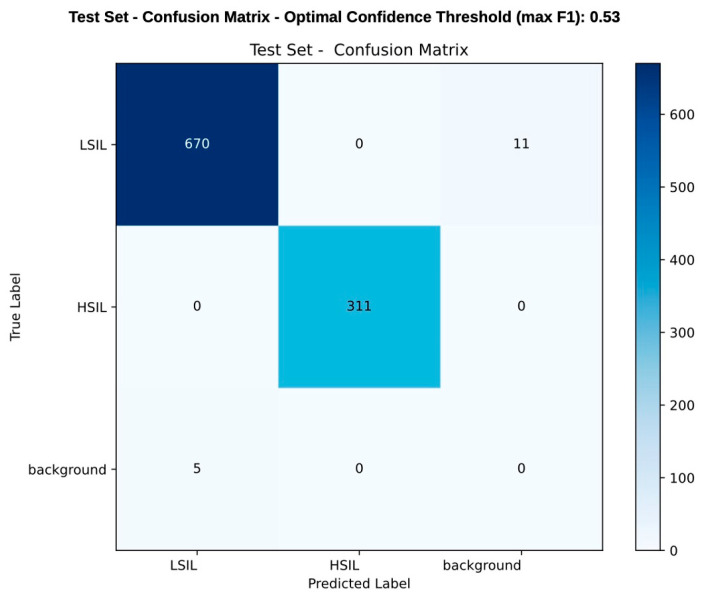 Figure 4
Peer Reviews
No public reviews on file for this paper yet. If you reviewed it on a platform where reviews are public (OpenReview, ICLR, NeurIPS, ICML), you can paste yours below so the community can read it here.
Videos
No videos yet. Explain this paper in a talk, walkthrough, or lecture? Add one.
Taxonomy
TopicsCervical Cancer and HPV Research · AI in cancer detection · Genital Health and Disease