Range-Aware Two-Stage Modeling for Feed Ratio Optimization in Fluoroelastomers: Mechanistic Pathways from NMR Structural Features to Macroscopic Properties
Yaxian Liu, Yadong Wu, Zhoujun Lin, Lijuan Peng, Hongwei Fu

TL;DR
This paper introduces a new method for optimizing fluoroelastomer feed ratios by linking NMR structural features to material properties, improving prediction accuracy and reducing errors.
Contribution
The RATS method introduces a two-stage modeling approach that enables mechanistic pathway analysis for feed ratio optimization in fluoroelastomers.
Findings
RATS achieved an average R2 of 0.90 across four property predictions, outperforming direct modeling.
The method identified 72 systematic transmission pathways, including the promoting effect of PMVE-series structures and the inhibitory effect of VDF monomers.
RATS reduces prediction error by 28% and provides a data-guided alternative to empirical trial-and-error methods.
Abstract
This study developed the RATS (Range-Aware Two-Stage) modeling approach to establish mechanistic foundations for feed ratio optimization in fluoroelastomers. Using 19F NMR spectroscopic analysis, the approach decomposes complex composition–property relationships into sequential processes: monomer feed ratios to NMR-derived structural features, and structural features to properties, enabling mechanistic pathway analysis through quantifiable structural intermediates. Using 52 industrial datasets, RATS achieved an average R2 of 0.90 across four property predictions, representing a 0.14 improvement over direct modeling and a 28% reduction in prediction error. The approach identified 72 systematic transmission pathways, including promoting effects of PMVE-series structures (+0.220 influence strength) and inhibitory effects of VDF monomers (−0.219 influence strength), through quantified model…
Genes, proteins, chemicals, diseases, species, mutations and cell lines named across the full text — each resolved to its canonical identifier and authoritative record.
Click any figure to enlarge with its caption.
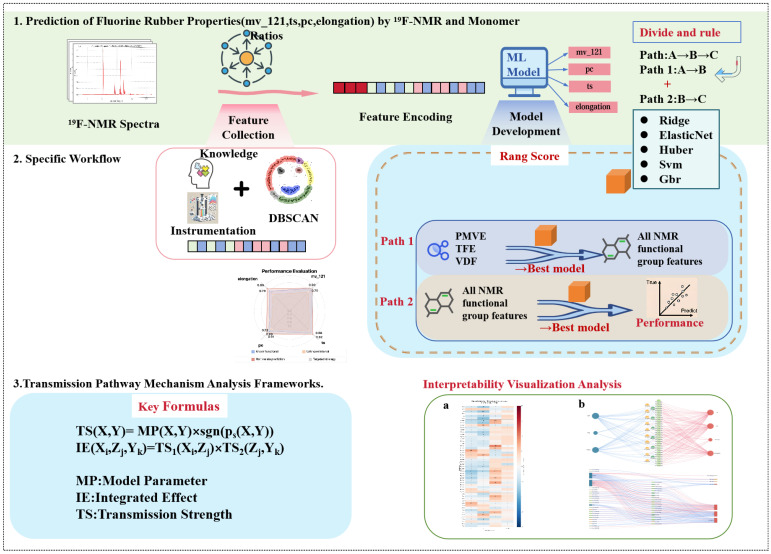 Figure 1
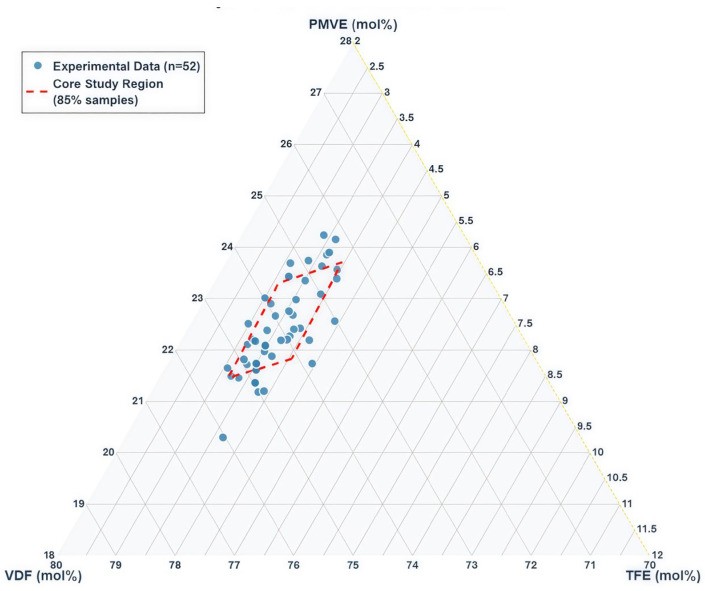 Figure 2
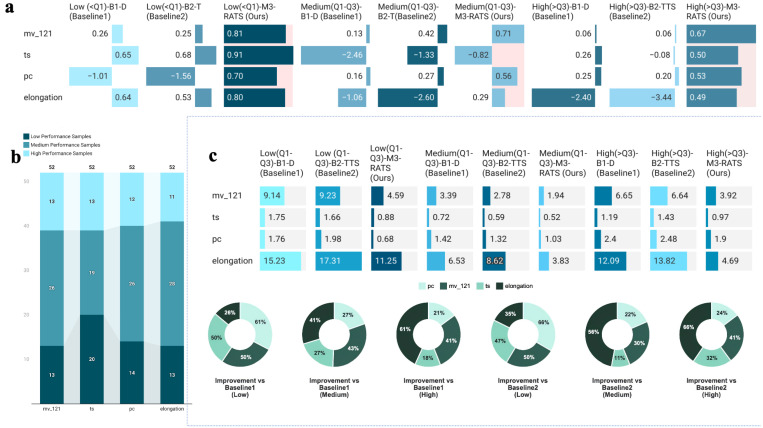 Figure 3
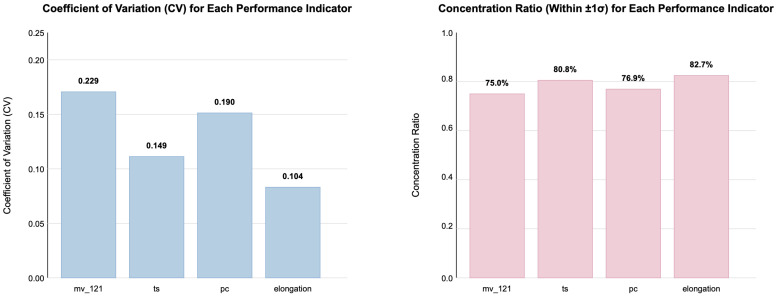 Figure 4
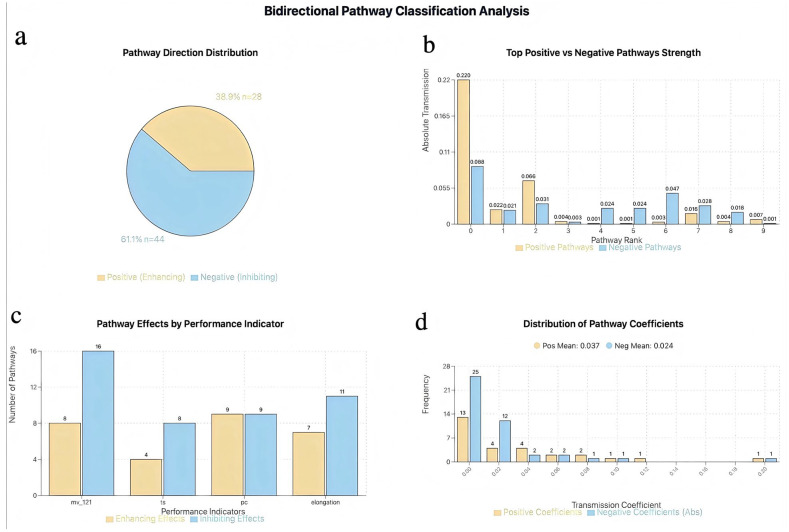 Figure 5
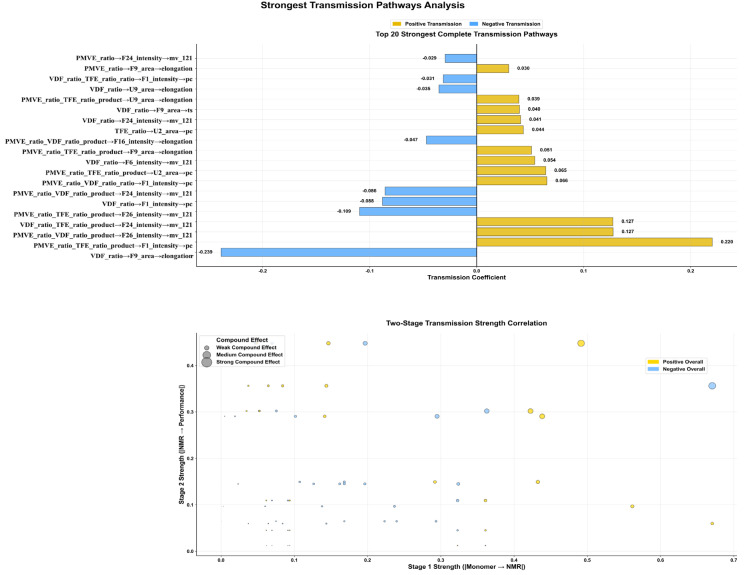 Figure 6
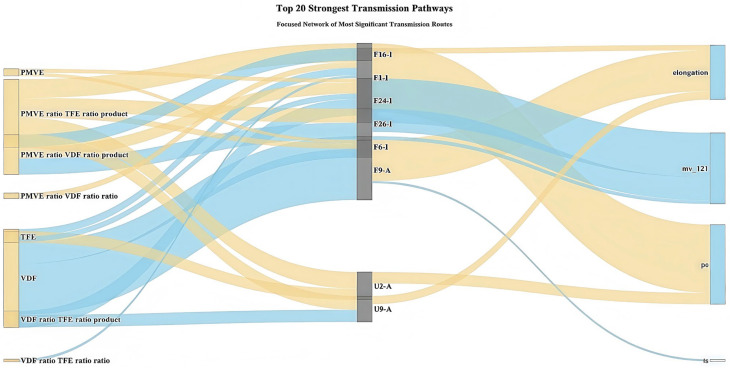 Figure 7
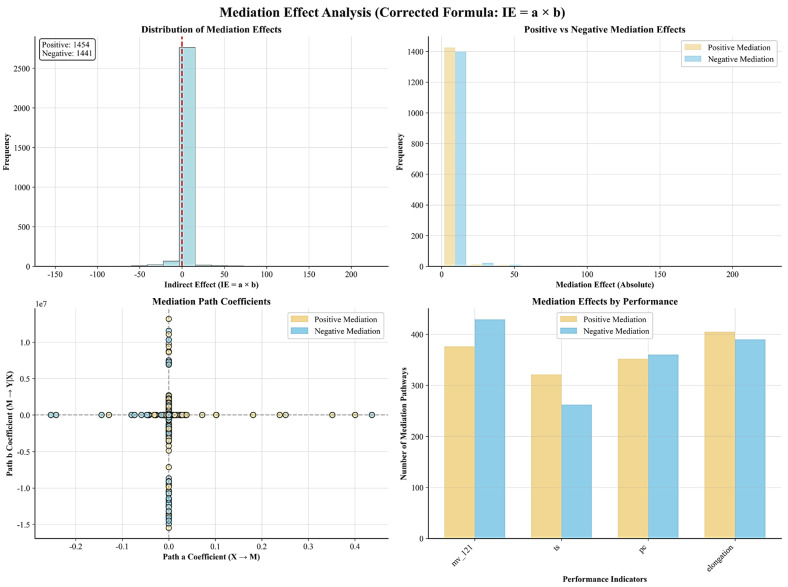 Figure 8
Peer Reviews
No public reviews on file for this paper yet. If you reviewed it on a platform where reviews are public (OpenReview, ICLR, NeurIPS, ICML), you can paste yours below so the community can read it here.
Videos
No videos yet. Explain this paper in a talk, walkthrough, or lecture? Add one.
Taxonomy
TopicsAdvanced Polymer Synthesis and Characterization · Synthetic Organic Chemistry Methods · Machine Learning in Materials Science