Investigation of Photorecoordination Kinetics for Complexes of Bis(aza-18-crown-6)-Containing Dienones with Alkali and Alkaline-Earth Metal Cations via Time-Resolved Absorption Spectroscopy: Structure vs. Properties
Oleg A. Alatortsev, Valeriy V. Volchkov, Mikhail N. Khimich, Ivan D. Sorokin, Mikhail Ya. Melnikov, Fedor E. Gostev, Ivan V. Shelaev, Victor A. Nadtochenko, Marina V. Fomina, Sergey P. Gromov

TL;DR
This study explores how metal cations in a specific dye complex rearrange after light exposure, linking structural features to reaction speeds.
Contribution
The paper introduces a new understanding of photorecoordination kinetics in crown ether-based dye-metal complexes.
Findings
Photorecoordination occurs via an axial-to-equatorial conformational change within hundreds of femtoseconds.
Photorecoordination times correlate with the stability constants of the complexes.
An energy barrier exists in the conformational process, as shown by calculated profiles.
Abstract
The analysis of time-resolved S1–Sn absorption spectra in the 0–500 ps range, together with quantum-chemical calculations, uncovered a photorecoordination reaction for the following complexes of CD6 (a bis(aza-18-crown-6)-containing dienone (ketocyanine dye) with a central cyclohexanone fragment): CD6·(Mn+)2 (M = Ba2+, Sr2+, Ca2+, K+). This process takes place over hundreds of fs and involves an “axial-to-equatorial” conformational change, with the solvation shell undergoing rearrangement as well. The characteristic photorecoordination times were found to correlate with the stability constants of the complexes. The lifetimes for the fluorescent states of CD6 and its complexes, namely CD6·(Mn+)2 (M = Ba2+, Sr2+, Ca2+, K+), are different; ergo, there is no photoejection of crowned cations into the solution. The calculated conformational profiles in the ground and excited states indicate…
Genes, proteins, chemicals, diseases, species, mutations and cell lines named across the full text — each resolved to its canonical identifier and authoritative record.
Click any figure to enlarge with its caption.
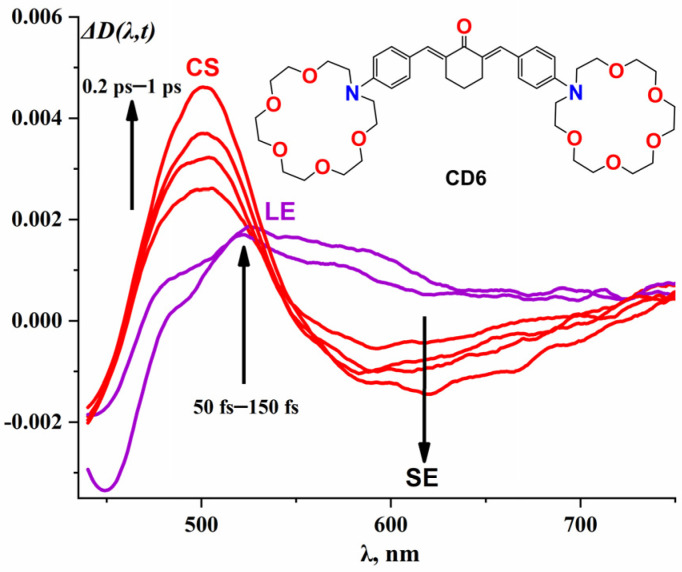 Figure 1
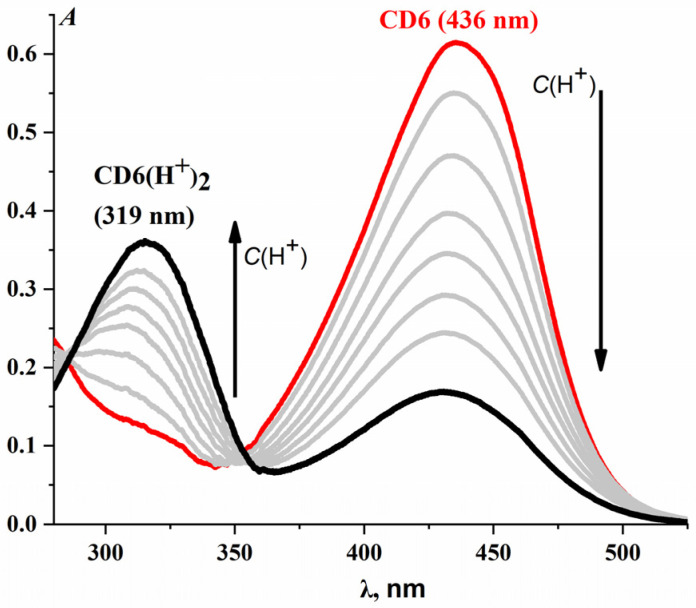 Figure 2
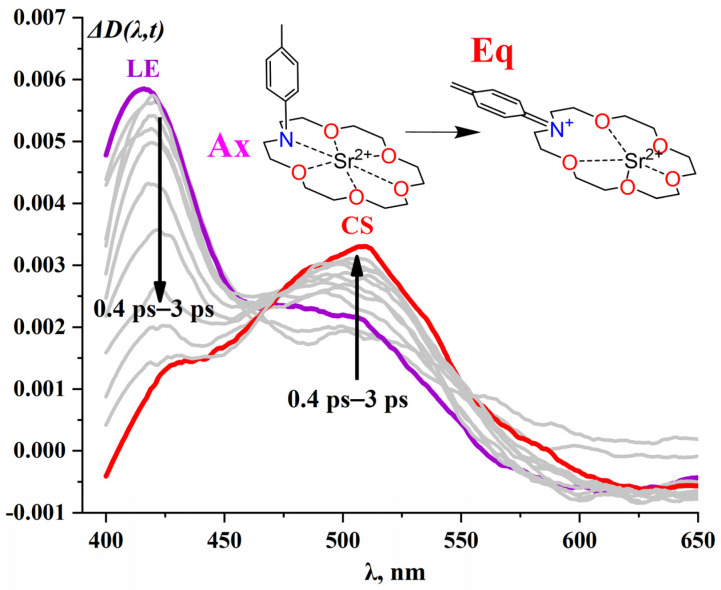 Figure 3
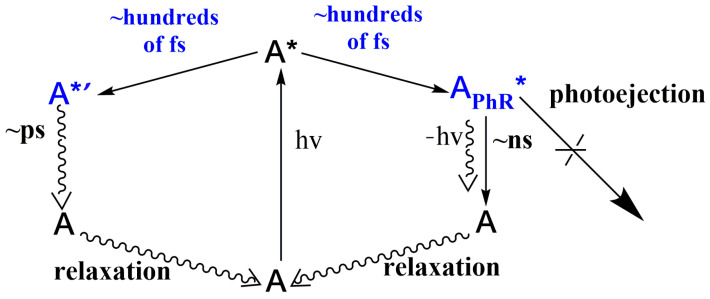 Figure 4
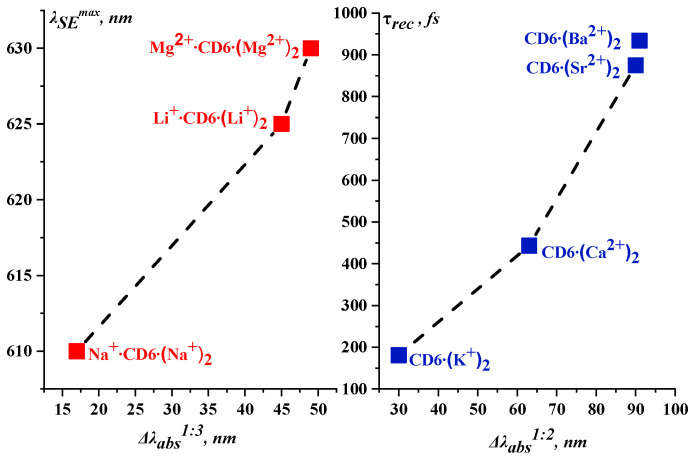 Figure 5
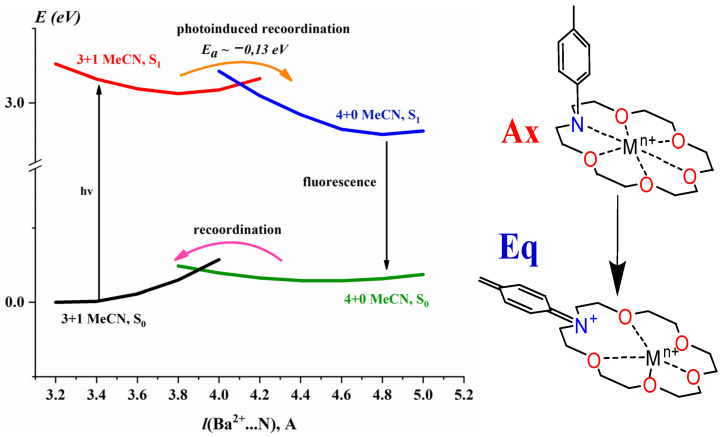 Figure 6
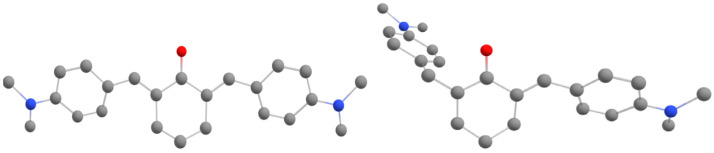 Figure 7
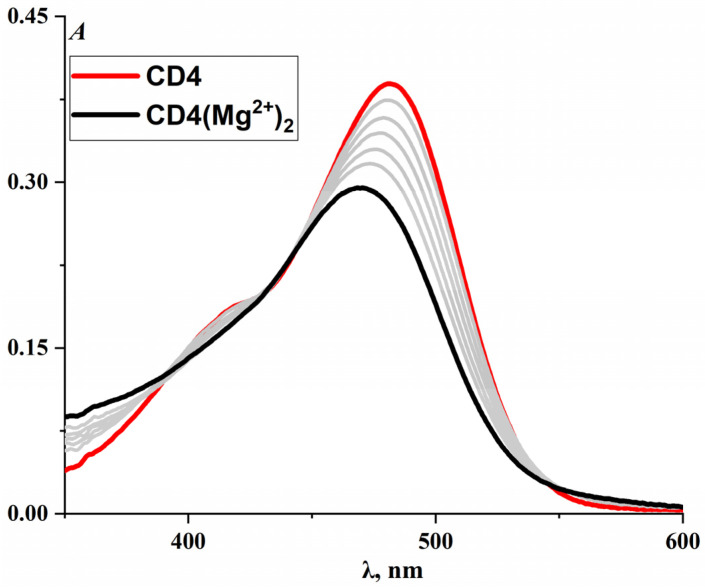 Figure 8
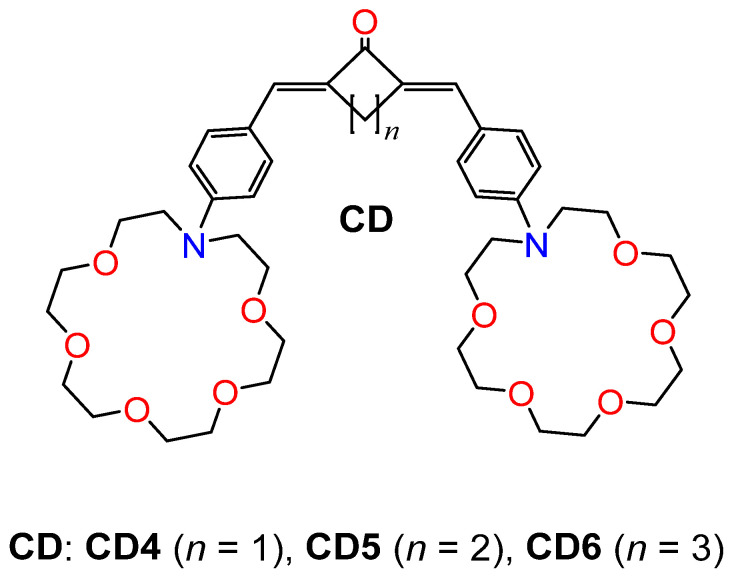 Figure 9
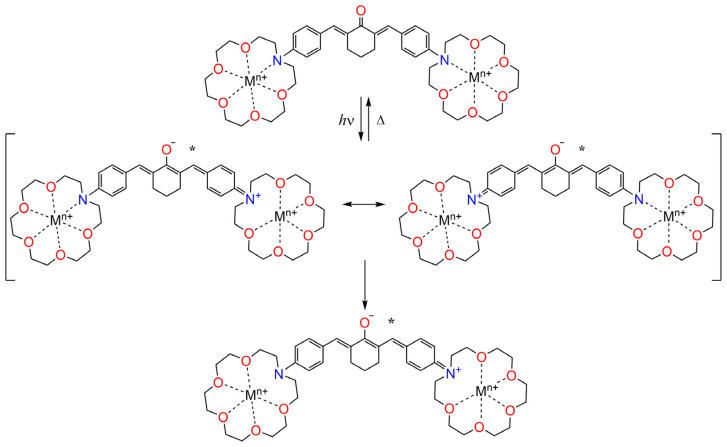 Figure 10
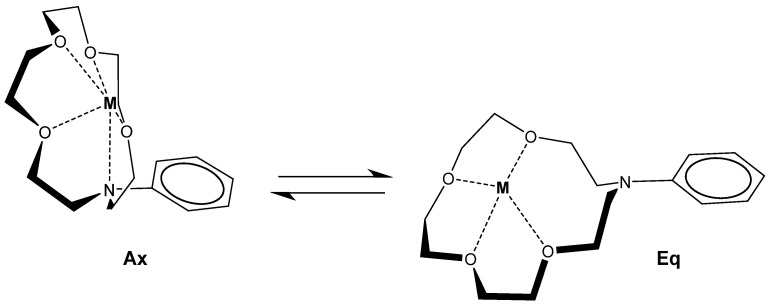 Figure 11
Peer Reviews
No public reviews on file for this paper yet. If you reviewed it on a platform where reviews are public (OpenReview, ICLR, NeurIPS, ICML), you can paste yours below so the community can read it here.
Videos
No videos yet. Explain this paper in a talk, walkthrough, or lecture? Add one.
Taxonomy
TopicsPorphyrin and Phthalocyanine Chemistry · Photochromic and Fluorescence Chemistry · Photochemistry and Electron Transfer Studies