Development of a Validated High-Performance Thin-Layer Chromatography (HPTLC) Analysis Protocol for Salivary Caffeine Used as a Probe Drug
K. M. Yasif Kayes Sikdar, Ahmed Shalan, Vincent Castejon, Carly Chambers, Samara Renae Coverley, Okhee Yoo, Md Khairul Islam, Tomislav Sostaric, Lee Yong Lim, Philip Burcham, Cornelia Locher

TL;DR
A new HPTLC method was developed to measure caffeine in saliva, which can help study how people metabolize certain drugs.
Contribution
A validated HPTLC method for salivary caffeine quantification was developed, supporting CYP1A2 phenotyping studies.
Findings
The HPTLC method has detection and quantification limits of 2.42 and 7.34 ng/band.
Salivary caffeine peaks around 1 hour after ingestion and decreases gradually.
The method uses a 1:1 methanol dilution for saliva processing.
Abstract
CYP1A2 activity plays a critical role in the metabolism of drugs such as caffeine, clozapine, propranolol, and warfarin. In pharmacogenomic studies, caffeine is a probe drug of choice for CYP1A2 phenotyping. Due to the non-invasive nature of sampling, saliva is an alternative biofluid to plasma for monitoring caffeine levels. This study reports on a validated HPTLC method for quantifying salivary caffeine levels, which can support future studies on CYP1A2 phenotyping employing caffeine as a probe drug. The HPTLC method, using silica gel 60 F254 plates and acetone/toluene/chloroform (4:3:3, v/v/v) as the mobile phase, has detection and quantification limits of 2.42 and 7.34 ng/band, respectively. An optimised saliva processing protocol using a 1:1 dilution with methanol was also established. Five saliva sample sets collected 0–4 h after ingestion of 100 mg caffeine were analysed using…
Genes, proteins, chemicals, diseases, species, mutations and cell lines named across the full text — each resolved to its canonical identifier and authoritative record.
Click any figure to enlarge with its caption.
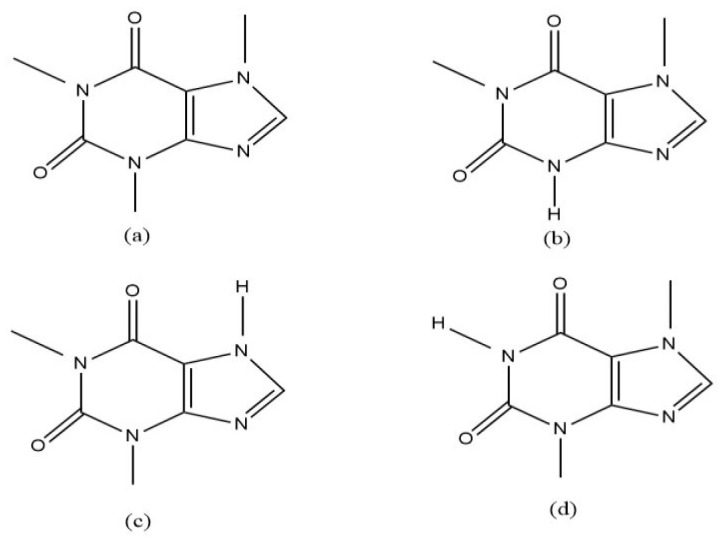 Figure 1
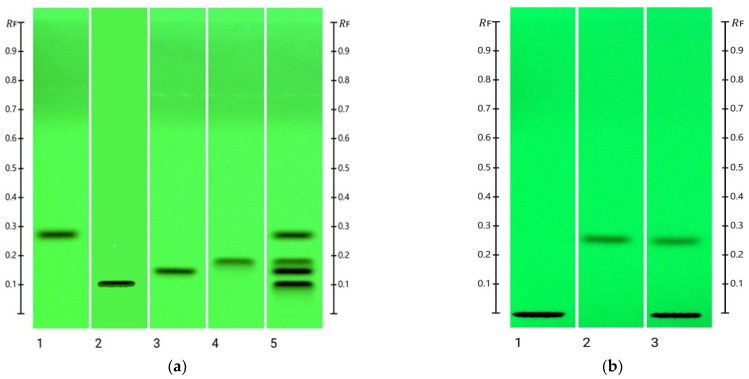 Figure 2
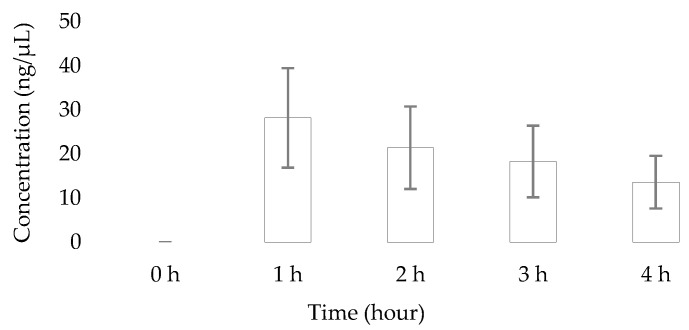 Figure 3
Peer Reviews
No public reviews on file for this paper yet. If you reviewed it on a platform where reviews are public (OpenReview, ICLR, NeurIPS, ICML), you can paste yours below so the community can read it here.
Videos
No videos yet. Explain this paper in a talk, walkthrough, or lecture? Add one.
Taxonomy
TopicsSalivary Gland Disorders and Functions · Pharmacogenetics and Drug Metabolism · Analytical Chemistry and Chromatography