Using Structural Equation Models to Interpret Genome-Wide Association Studies for Morphological and Productive Traits in Soybean [Glycine max (L.) Merr.]
Matheus Massariol Suela, Camila Ferreira Azevedo, Ana Carolina Campana Nascimento, Gota Morota, Felipe Lopes da Silva, Gaspar Malone, Nizio Fernando Giasson, Moysés Nascimento

TL;DR
This study uses structural equation models to uncover complex trait relationships in soybean, improving understanding for breeding programs.
Contribution
The paper introduces SEM-GWAS to decompose SNP effects into direct and indirect components, revealing novel trait relationships in soybean.
Findings
Negative interrelationships were found between number of grains and hundred-grain weight.
Positive relationships were identified between number of pods and number of grains, and between hundred-grain weight and pod thickness.
46 candidate genes were identified, with some jointly controlling multiple traits.
Abstract
Understanding trait relationships is fundamental in soybean breeding because the goal is to maximize simultaneous gains. Standard multi-trait genome-wide association studies (MT-GWAS) identify variants linked to multiple traits but fail to capture phenotypic structures or interrelations. Structural Equation Models (SEM) account for covariances and recursion, enabling the decomposition of single nucleotide polymorphism (SNP) effects into direct or indirect components and identifying pleiotropic regions. We applied SEM to analyze morphology (pod thickness, PT) and yield traits (number of pods, NP; number of grains, NG; hundred-grain weight, HGW). The dataset comprised 96 soybean individuals genotyped with 4070 SNP markers. The phenotypic network was constructed using the hill-climbing algorithm, a class of score-based methods commonly applied to learn the structure of Bayesian networks,…
Genes, proteins, chemicals, diseases, species, mutations and cell lines named across the full text — each resolved to its canonical identifier and authoritative record.
Click any figure to enlarge with its caption.
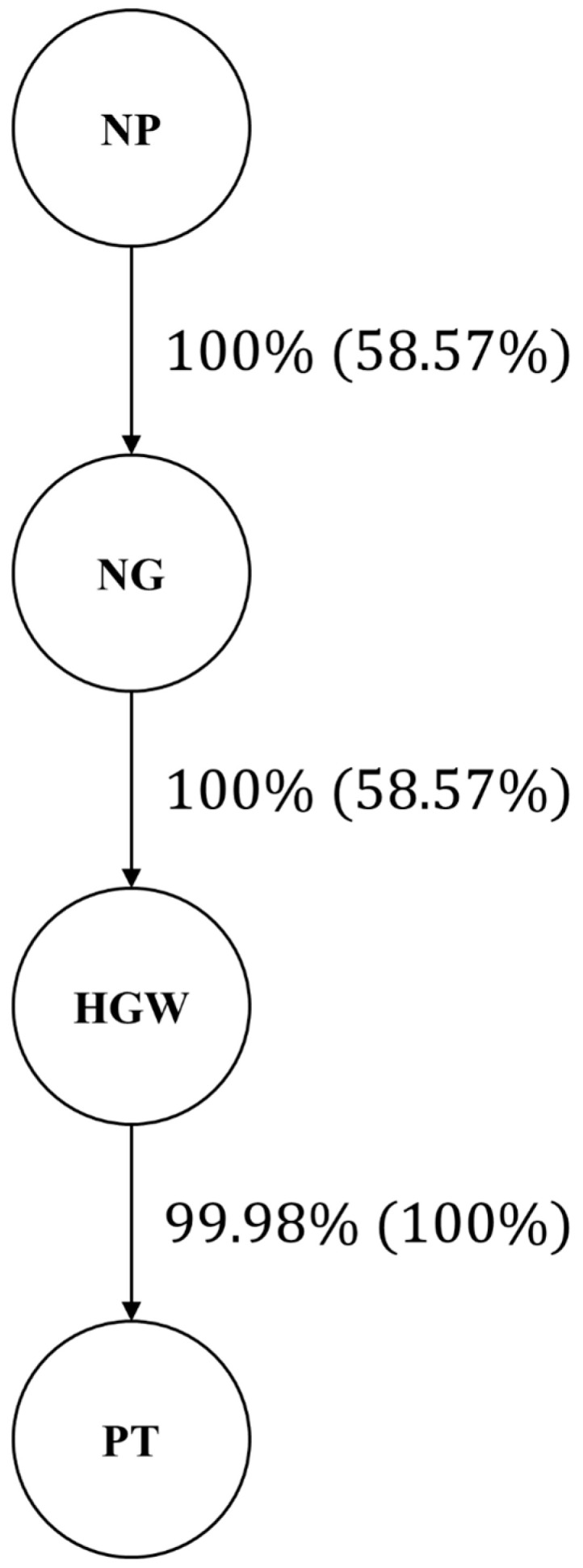 Figure 1
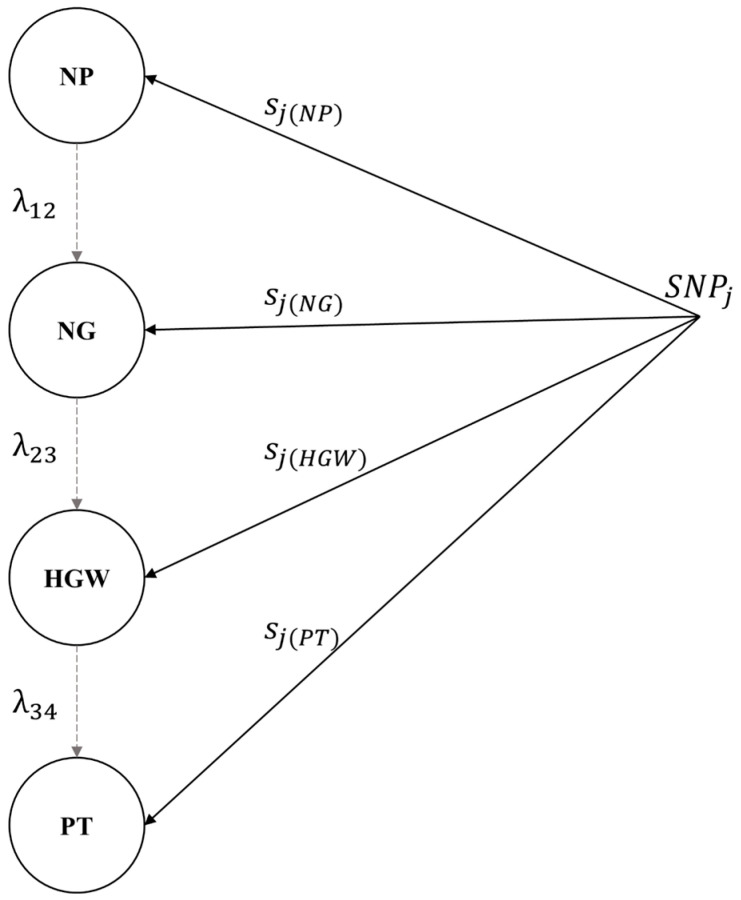 Figure 2
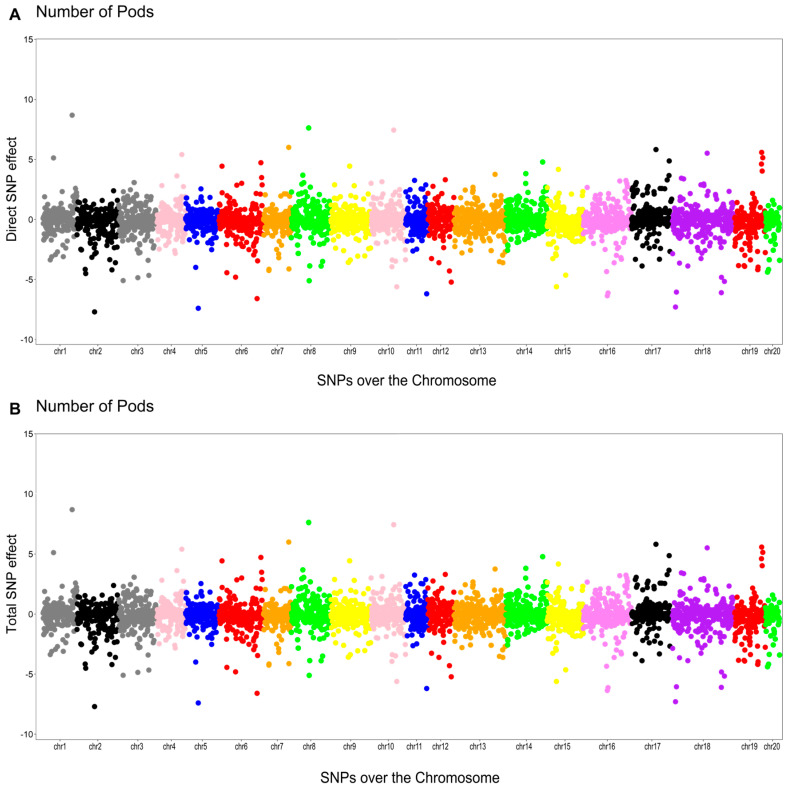 Figure 3
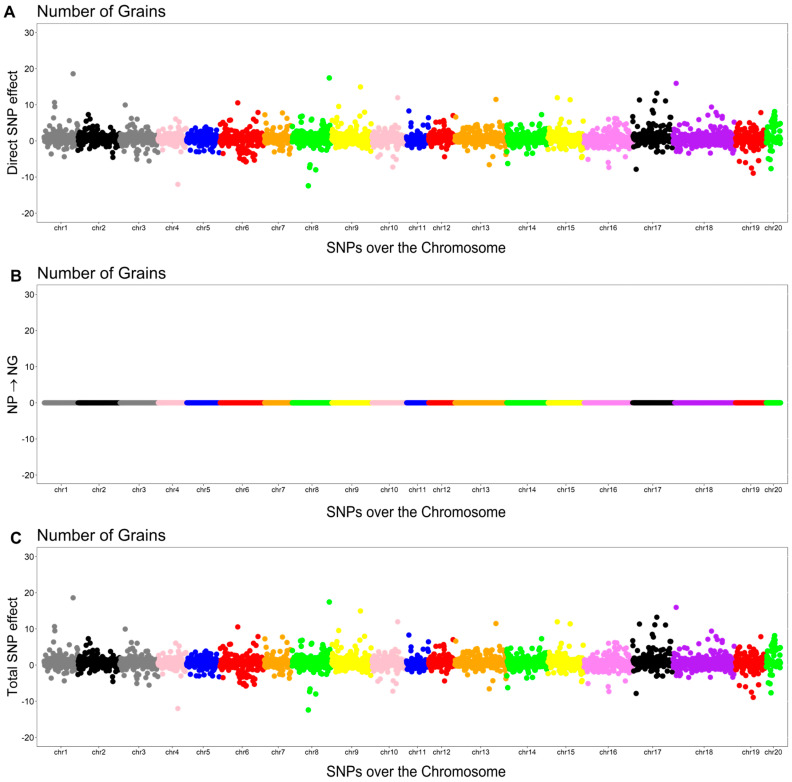 Figure 4
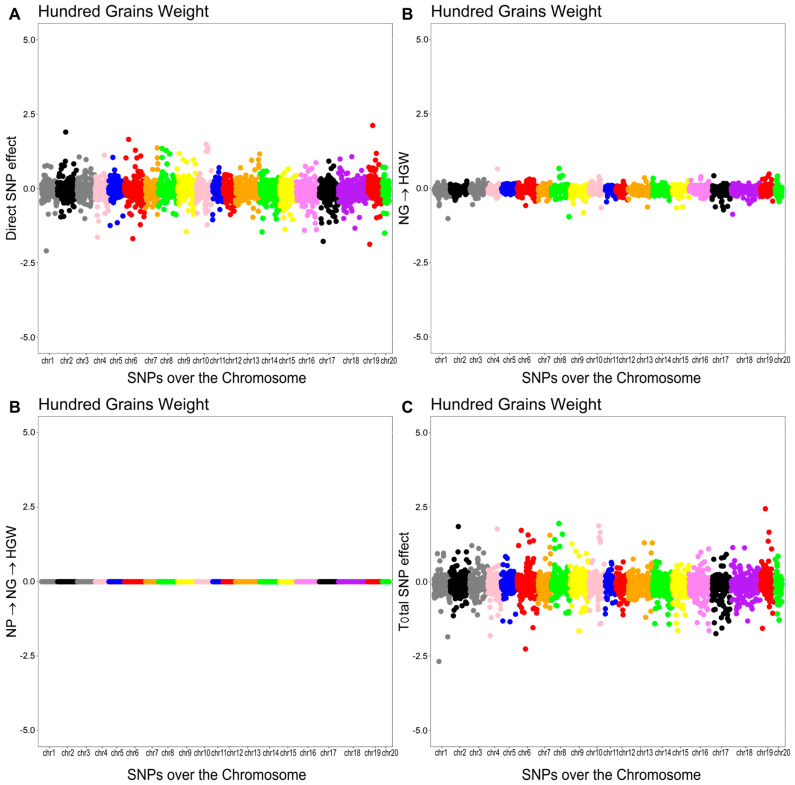 Figure 5
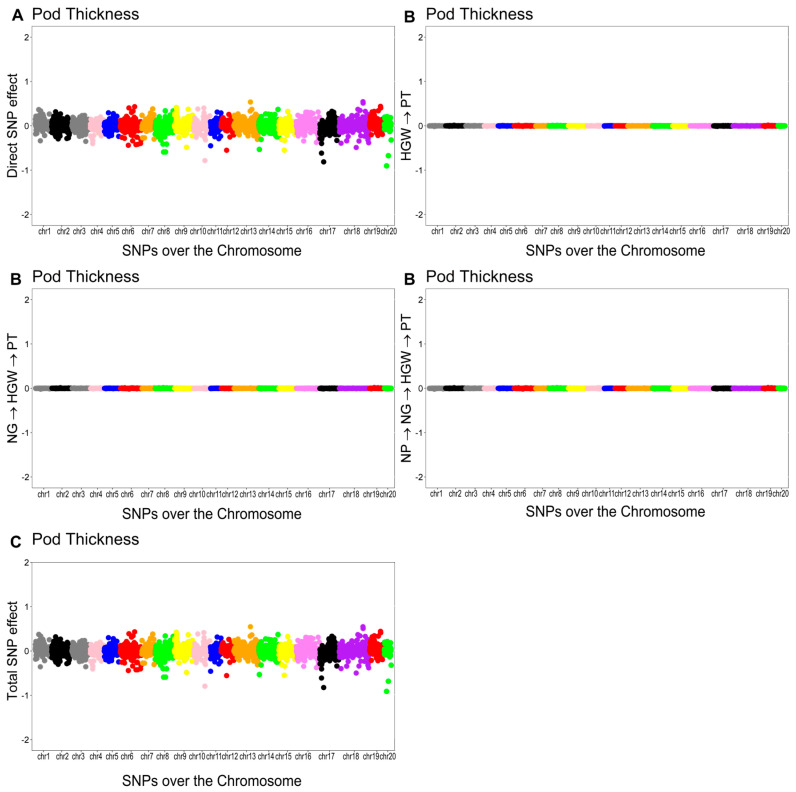 Figure 6
Peer Reviews
No public reviews on file for this paper yet. If you reviewed it on a platform where reviews are public (OpenReview, ICLR, NeurIPS, ICML), you can paste yours below so the community can read it here.
Videos
No videos yet. Explain this paper in a talk, walkthrough, or lecture? Add one.
Taxonomy
TopicsSoybean genetics and cultivation · Genetics and Plant Breeding · Legume Nitrogen Fixing Symbiosis