Solvent-Responsive Luminescence of an 8-Hydroxyquinoline-Modified 1H-Imidazo[4,5-f][1,10]phenanthroline Ligand and Its Cu(I) Complexes: Excited-State Mechanisms and Structural Effects
Zhenqin Zhao, Siyuan Liu, Shu Cui, Yichi Zhang, Ziqi Jiang, Xiuling Li

TL;DR
This paper explores how different solvents affect the light emission of copper complexes, revealing how their structures influence luminescence behavior for sensor applications.
Contribution
The study reveals solvent-dependent excited-state mechanisms in Cu(I) complexes modified with an 8-hydroxyquinoline ligand.
Findings
Free ipqH2 shows dual emission via ESPT and tautomerization in alcohol/DMSO mixtures.
Cu(I) complexes exhibit red-shifted emission in water-rich DMSO due to (IL + ML)CT states.
Flexible diphosphine ligands enhance DMF sensitivity, while rigid ligands show weaker solvent responses.
Abstract
Understanding how solvents influence the luminescence behavior of Cu(I) complexes is crucial for designing advanced optical sensors. This study reports the synthesis, structures and photophysical investigation of an 8-hydroxyquinoline-functionalized 1H-imidazo[4,5-f][1,10]phenanthroline ligand, ipqH2, and its four Cu(I) complexes with diphosphine co-ligands. Photoluminescence studies demonstrated distinct solvent-dependent excited-state mechanisms. In DMSO/alcohol mixtures, free ipqH2 exhibited excited-state proton transfer (ESPT) and enol-keto tautomerization, producing dual emission at about 447 and 560 nm, while the complexes resisted ESPT due to hydrogen bond blocking by PF6− anions and Cu(I) coordination. In DMSO/H2O, aggregation-caused quenching (ACQ) and high-energy O–H vibrational quenching dominated, but complexes 1 and 2 showed a significant red-shifted emission (569–574 nm)…
Genes, proteins, chemicals, diseases, species, mutations and cell lines named across the full text — each resolved to its canonical identifier and authoritative record.
Click any figure to enlarge with its caption.
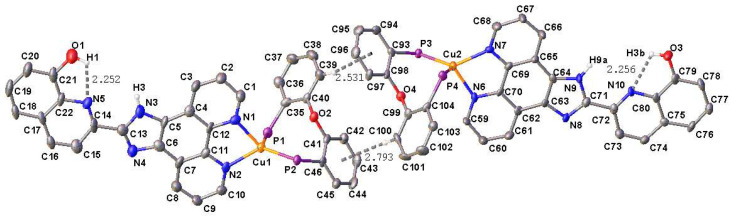 Figure 1
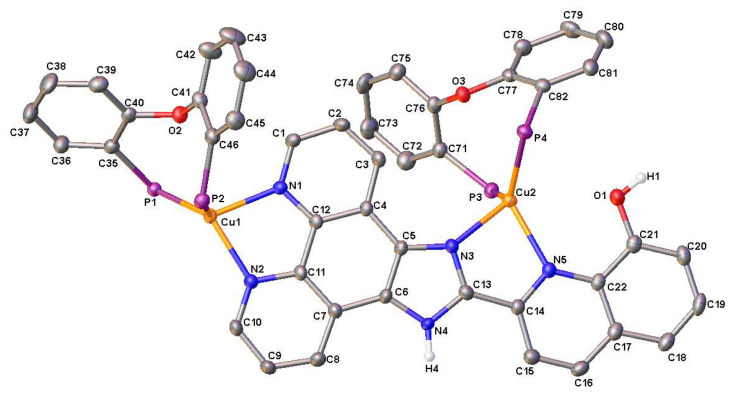 Figure 2
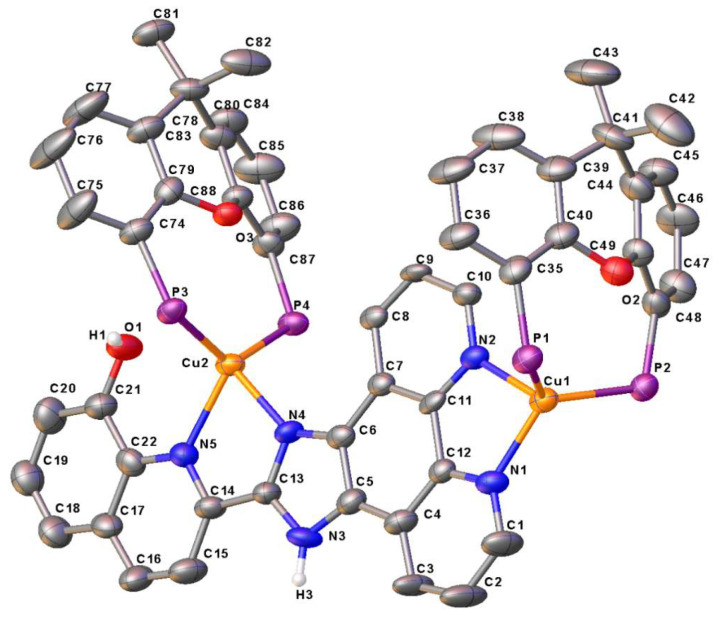 Figure 3
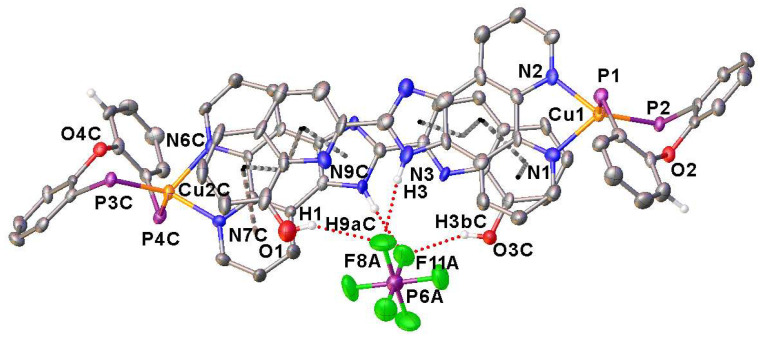 Figure 4
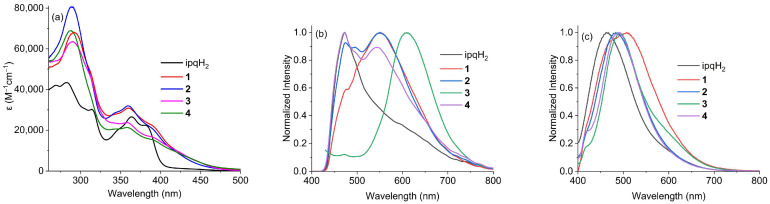 Figure 5
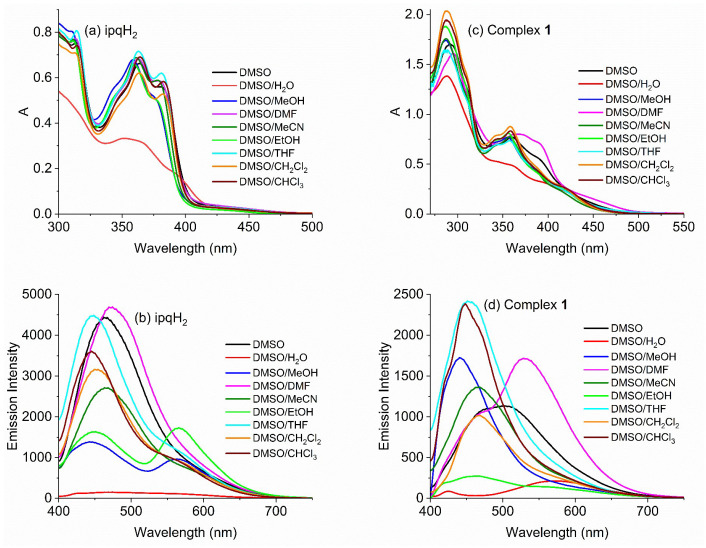 Figure 6
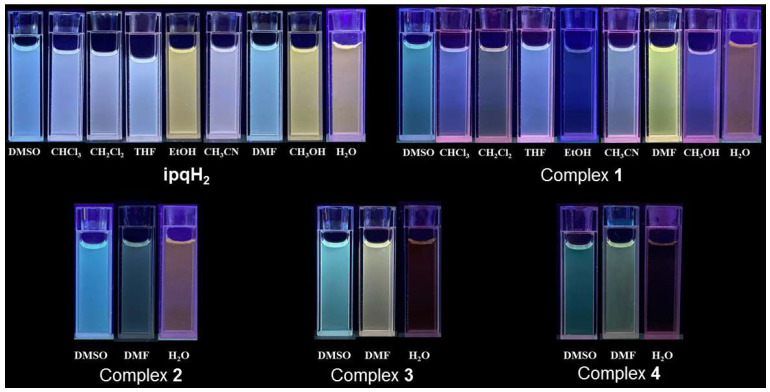 Figure 7
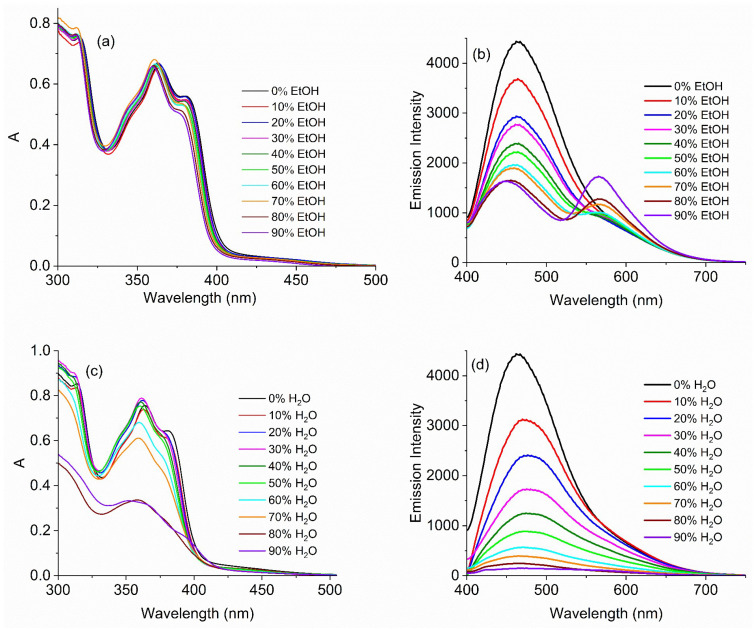 Figure 8
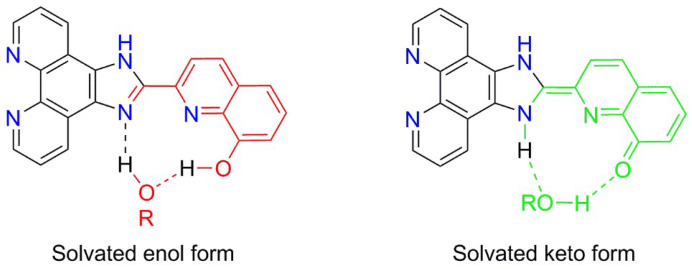 Figure 9
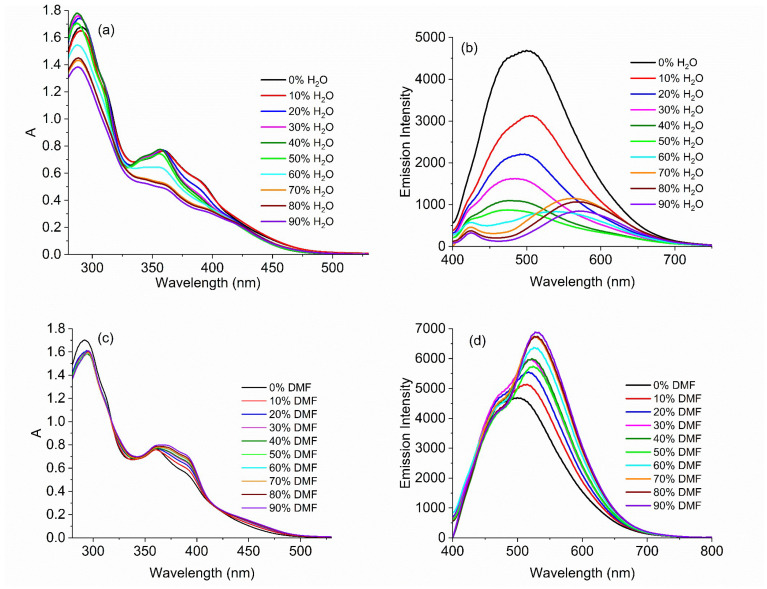 Figure 10
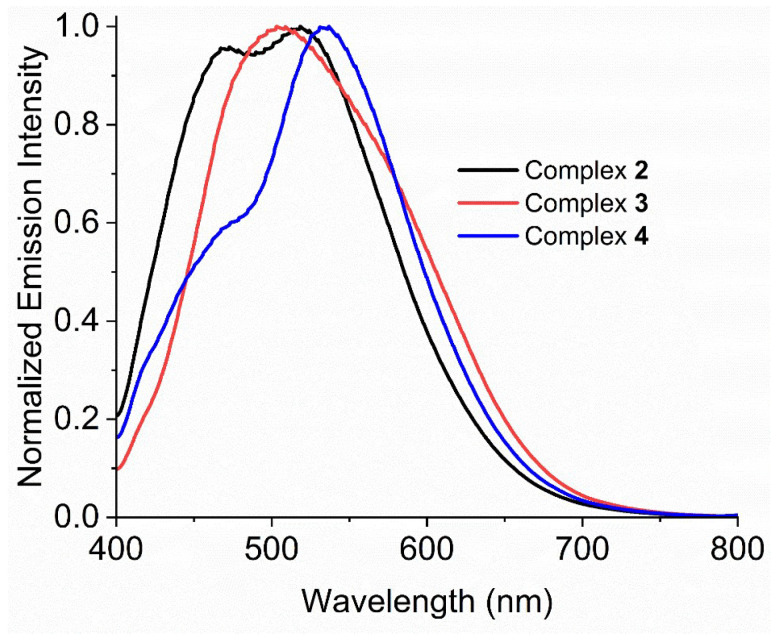 Figure 11
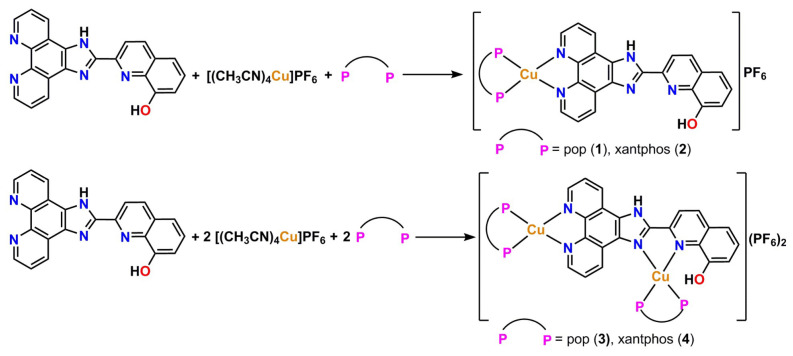 Figure 12
Peer Reviews
No public reviews on file for this paper yet. If you reviewed it on a platform where reviews are public (OpenReview, ICLR, NeurIPS, ICML), you can paste yours below so the community can read it here.
Videos
No videos yet. Explain this paper in a talk, walkthrough, or lecture? Add one.
Taxonomy
TopicsOrganic Light-Emitting Diodes Research · Radical Photochemical Reactions · Metal complexes synthesis and properties