Scion–Rootstock Interactions Enhance Freezing Stress Resilience in Citrus reticulata Through Integrated Antioxidant Defense and Carbon–Nitrogen Metabolic Adjustments
Alaiha Asif, Shahid Iqbal, Carlos Eduardo Aucique-Perez, KeAndre Leaks, Rashad Mukhtar Balal, Matthew Mattia, John M. Chater, Muhammad Adnan Shahid

TL;DR
Grafting citrus scions onto specific rootstocks improves their ability to withstand freezing temperatures by boosting antioxidant defenses and metabolic adjustments.
Contribution
The study identifies UFR5 as a rootstock that significantly enhances freezing tolerance in citrus through genotype-dependent physiological and metabolic mechanisms.
Findings
UF-950 grafted onto UFR5 showed the highest freezing tolerance with reduced oxidative damage and sustained metabolic fluxes.
Antioxidant enzyme activity and osmolyte accumulation varied significantly among rootstocks, influencing scion resilience.
Rootstock genotype strongly modulates scion physiology under freezing stress, highlighting the importance of genotype selection.
Abstract
Frequent and increasingly severe freezing events threaten citrus production in northern Florida, underscoring the need for strategies that enhance freezing resilience in citrus cultivars. Grafting scions onto tolerant rootstocks provides a physiologically integrative approach to improve stress tolerance. This study aims to elucidate how these interactions modulate physiological and metabolic responses under freezing stress, thereby identifying mechanisms that contribute to enhanced freeze resilience in citrus. Here, we grafted Citrus reticulata (cv. UF-950) onto eight rootstocks (Bitters, Blue-1, C-146, Sour Orange, UFR07TC, UFR09TC, UFR5, and US942) to evaluate scion–rootstock interactions under normal (20 °C) and freezing (−6 °C) conditions. Freezing stress caused a sharp increase in oxidative stress markers, lipid peroxidation, and membrane damage while reducing photosynthetic…
Genes, proteins, chemicals, diseases, species, mutations and cell lines named across the full text — each resolved to its canonical identifier and authoritative record.
Click any figure to enlarge with its caption.
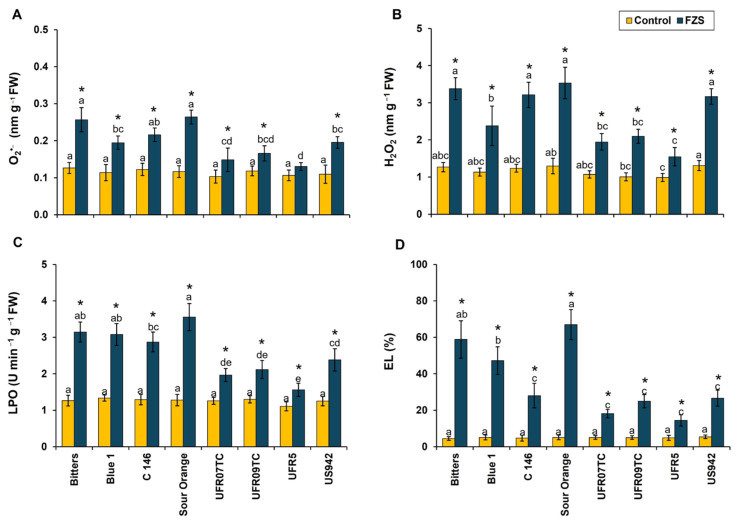 Figure 1
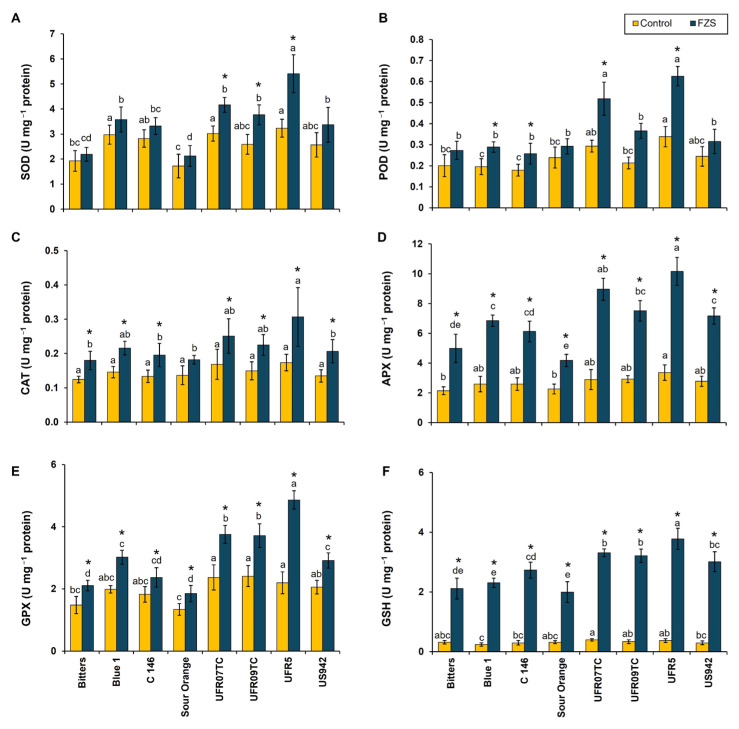 Figure 2
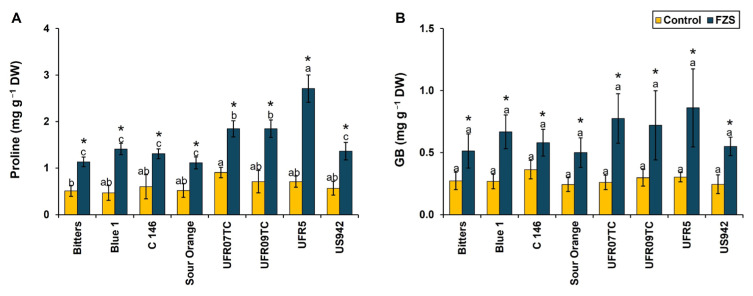 Figure 3
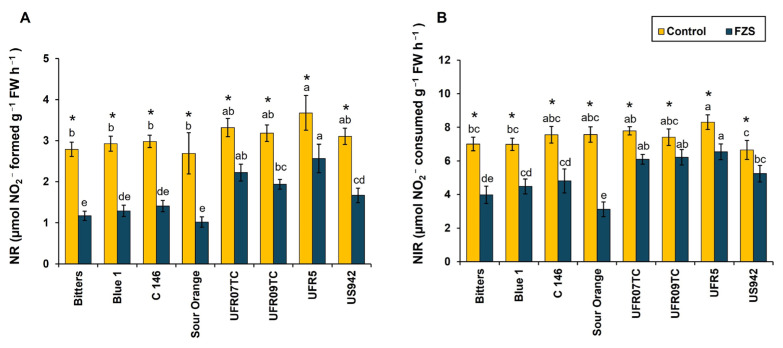 Figure 4
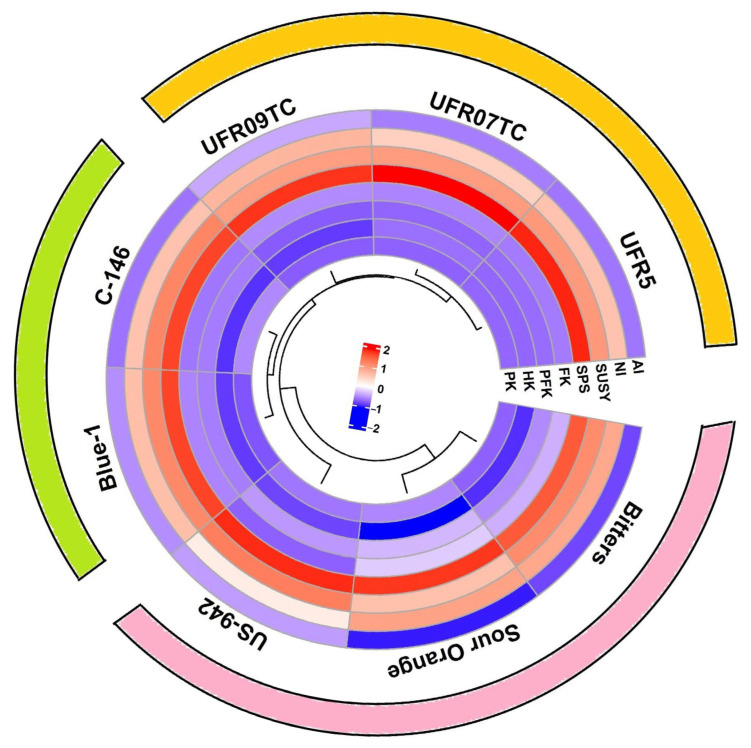 Figure 5
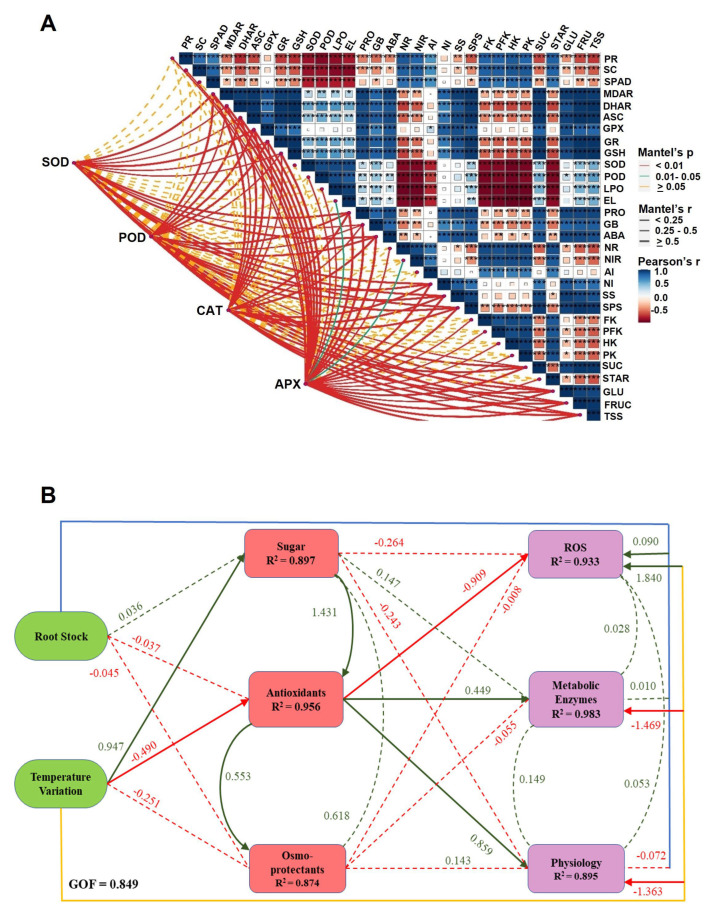 Figure 6
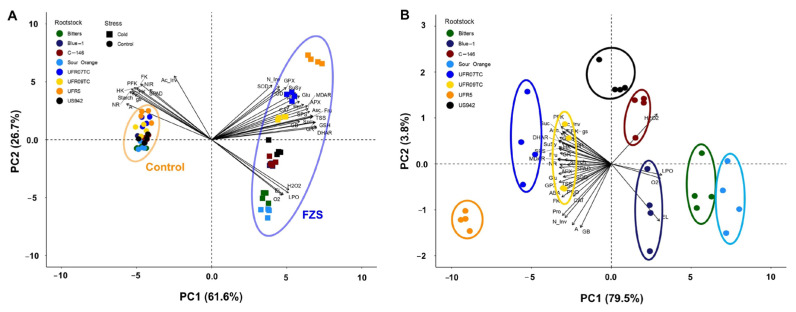 Figure 7
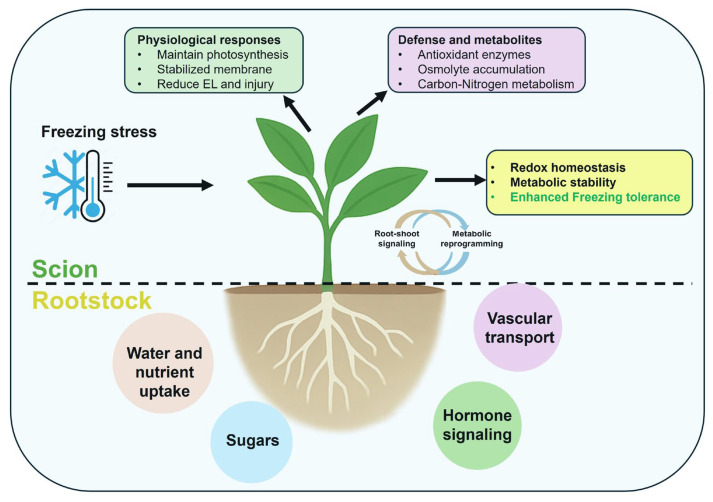 Figure 8
Peer Reviews
No public reviews on file for this paper yet. If you reviewed it on a platform where reviews are public (OpenReview, ICLR, NeurIPS, ICML), you can paste yours below so the community can read it here.
Videos
No videos yet. Explain this paper in a talk, walkthrough, or lecture? Add one.
Taxonomy
TopicsPlant Physiology and Cultivation Studies · Plant Disease Management Techniques · Postharvest Quality and Shelf Life Management