Non-Targeted Metabolomics and Network Pharmacology Reveal Bioactive Metabolites and the Medicinal Potential of Three Ornamental Camellia Flowers
Yali Zhang, Jianhua Zhang, Yani Wu, Yin Wu, Wenjiao Guo, Chunshan You

TL;DR
This study explores the medicinal potential of three ornamental Camellia flowers by identifying bioactive metabolites and their therapeutic effects.
Contribution
The study combines non-targeted metabolomics and network pharmacology to identify key bioactive metabolites in Camellia flowers.
Findings
385 significantly different metabolites were identified, with organic acids, lipids, and phenylpropanoids being the top classes.
Network pharmacology identified 78 potential molecular targets related to anti-inflammatory, antioxidant, antibacterial, and antiviral effects.
Seven flavonoid glycosides and other compounds were highlighted as key active metabolites with therapeutic potential.
Abstract
The genus Camellia offers valuable resources for tea production, oil extraction, and ornamental purposes, and its applications are expanding beyond traditional regions due to increasing human demands and advancements in research. To explore new therapeutic resources and identify key active metabolites, we conducted a non-targeted metabolomics analysis on three camellias. We also utilized network pharmacology to identify the potential targets of key metabolites involved in anti-inflammatory, antioxidant, antibacterial, and antiviral effects. A total of 385 significantly different metabolites were identified, with organic acids and derivatives, lipids and lipid-like molecules, and phenylpropanoids and polyketides being the top three metabolite classes. Of the 71 different phenylpropanoids and polyketides identified, 54 were common across all three cultivars, while 17 were unique. Network…
Genes, proteins, chemicals, diseases, species, mutations and cell lines named across the full text — each resolved to its canonical identifier and authoritative record.
Click any figure to enlarge with its caption.
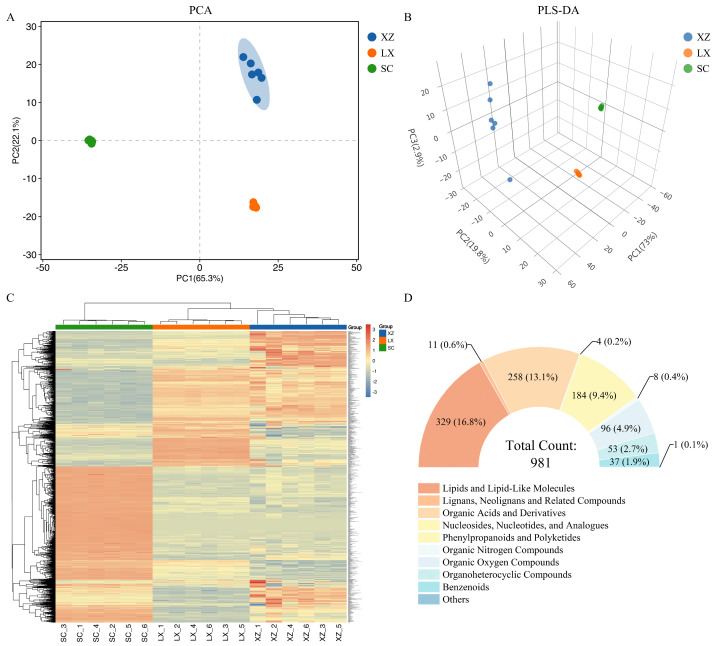 Figure 1
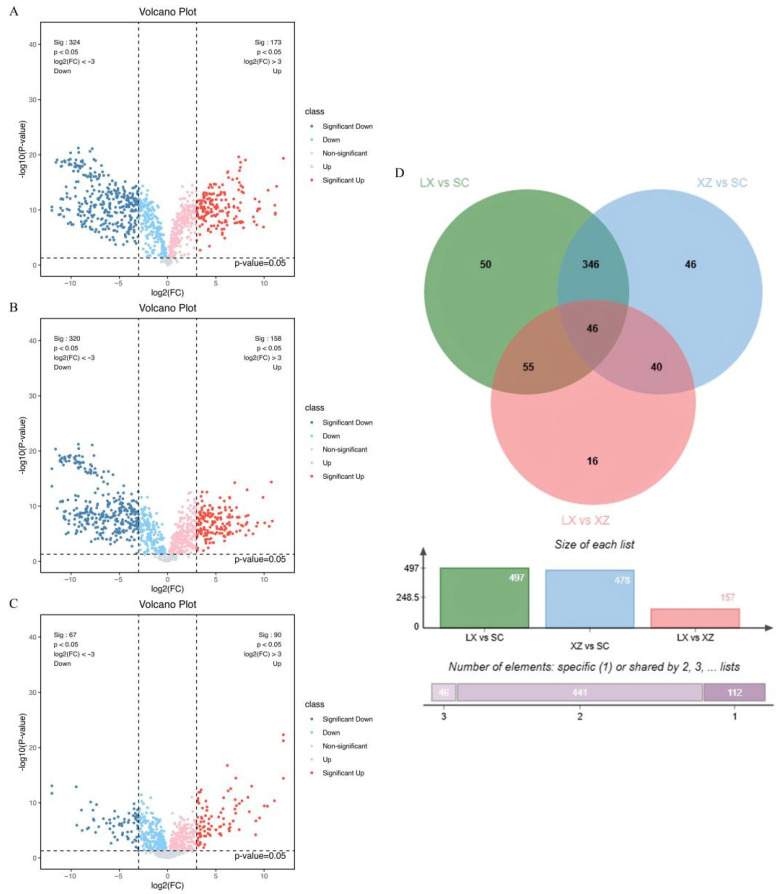 Figure 2
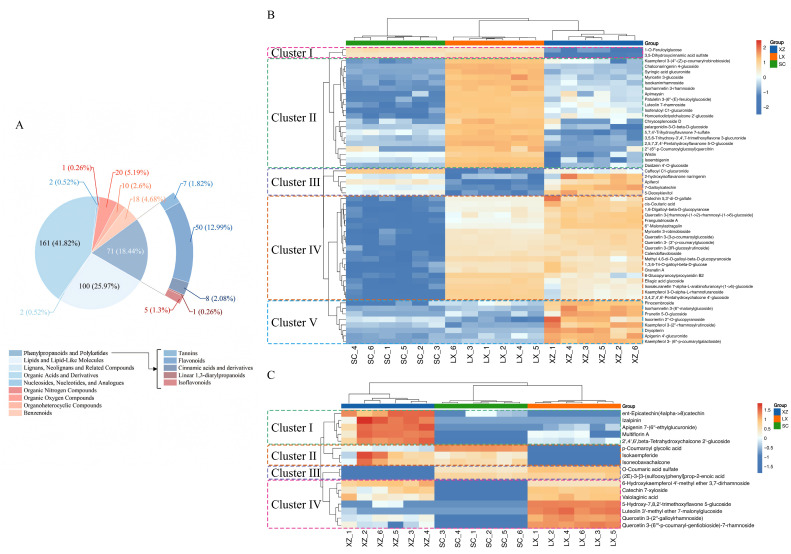 Figure 3
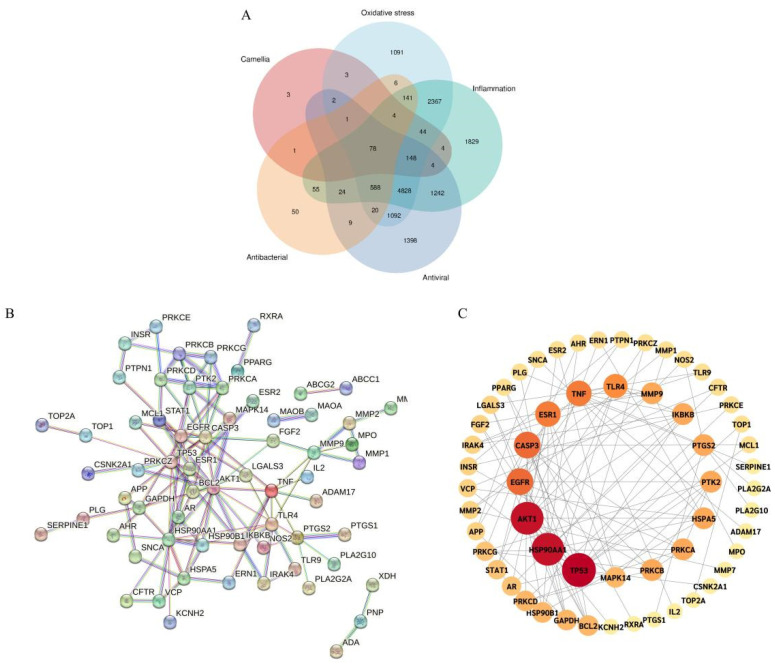 Figure 4
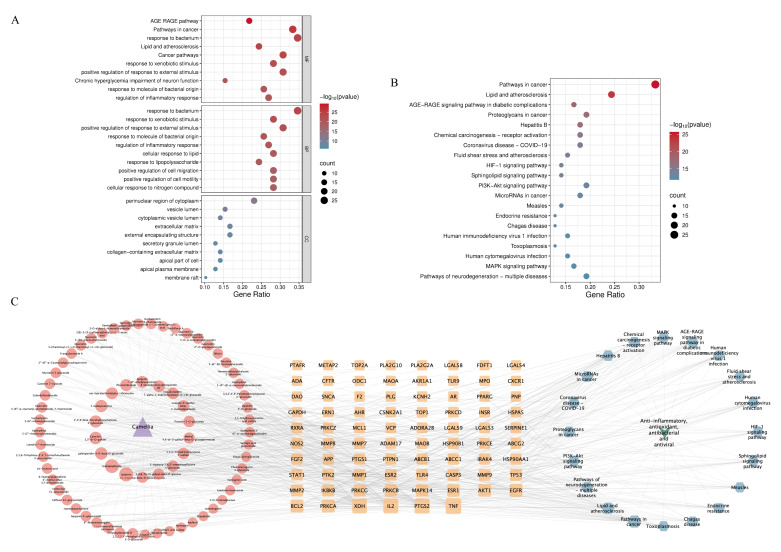 Figure 5
Peer Reviews
No public reviews on file for this paper yet. If you reviewed it on a platform where reviews are public (OpenReview, ICLR, NeurIPS, ICML), you can paste yours below so the community can read it here.
Videos
No videos yet. Explain this paper in a talk, walkthrough, or lecture? Add one.
Taxonomy
TopicsPhytochemicals and Antioxidant Activities · Tea Polyphenols and Effects · Phytochemistry and Biological Activities