Ultrasound-Assisted Pressurized Fluid Extraction of Antioxidant and Anticancer Molecules from a Mangaba, Cambuí and Red Propolis Blend
Diego S. de Oliveira, Marília R. Oliveira, Glenda A. da Silva, Cristiane B. Corrêa, Ana Veruska C. da Silva, Jhonattas de C. Carregosa, Alberto Wisniewski, Maria Beatriz P. P. Oliveira, Claudio Dariva, Klebson S. Santos

TL;DR
This study shows that a blend of mangaba, cambuí, and red propolis can be extracted to yield antioxidant and anticancer compounds using ultrasound-assisted methods.
Contribution
The study introduces an optimized ultrasound-assisted pressurized fluid extraction method for obtaining bioactive compounds from a plant and propolis blend.
Findings
Sequential extraction with ethanol/water yielded high phenolic content and moderate antioxidant activity.
The extract showed 82.3% cytotoxic inhibition against lung carcinoma cells at 100 μg/mL.
Mass spectrometry identified antiproliferative phenolics in the extract.
Abstract
This study explored the antioxidant and anticancer potential of extracts obtained from the mangaba, cambuí, and red propolis blend. The extracts were obtained using ultrasound-assisted pressurized fluid extraction (UAPFE) at 50 bar, 60 °C, and a flow rate of 2 mL/min. Both sequential extraction with solvents of increasing polarity (propane followed by ethanol/water) and one-step extraction were employed for 30 min. Extracts were characterized by ultra-high-resolution mass spectrometry, total phenolic content, antioxidant activity (via DPPH and FRAP assays), and cytotoxicity using the sulforhodamine B colorimetric method. Among the tested conditions, the sequential extraction with ethanol/water (UAPFE-SE) yielded 16.2 ± 3.0% (overall extraction yield), with high phenolic content (24.1 ± 0.4 µg/mg). Mass spectrometry revealed the presence of antiproliferative phenolics. The UAPFE-SE…
Genes, proteins, chemicals, diseases, species, mutations and cell lines named across the full text — each resolved to its canonical identifier and authoritative record.
Click any figure to enlarge with its caption.
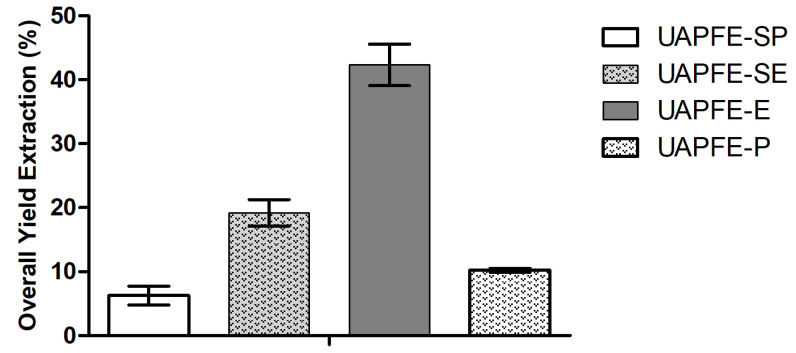 Figure 1
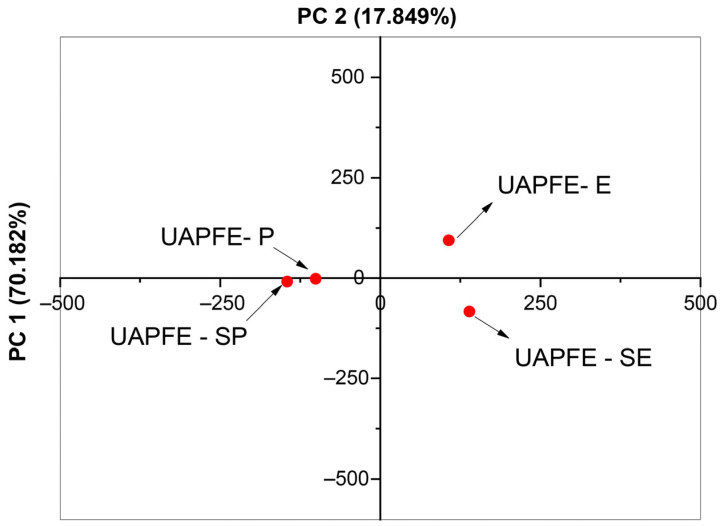 Figure 2
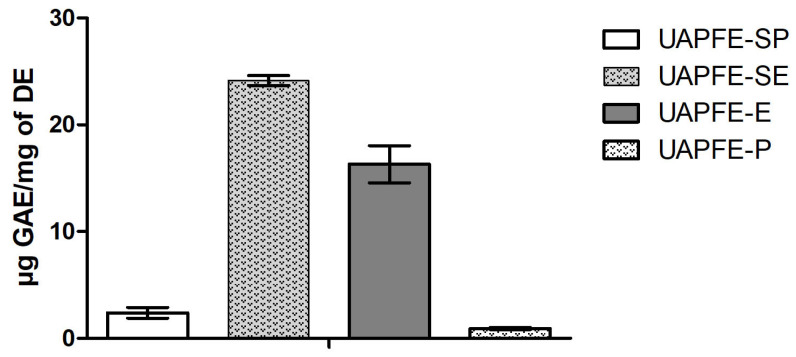 Figure 3
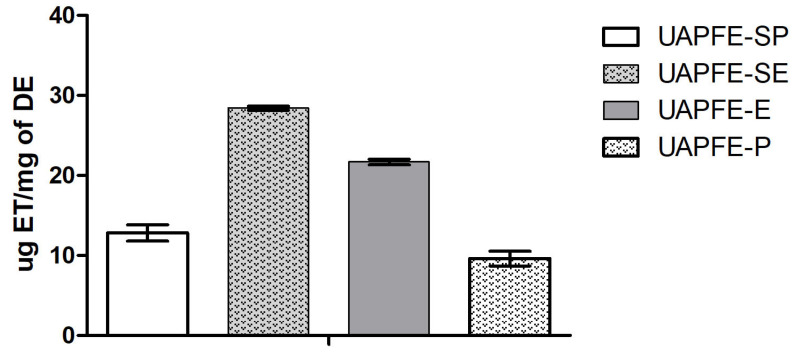 Figure 4
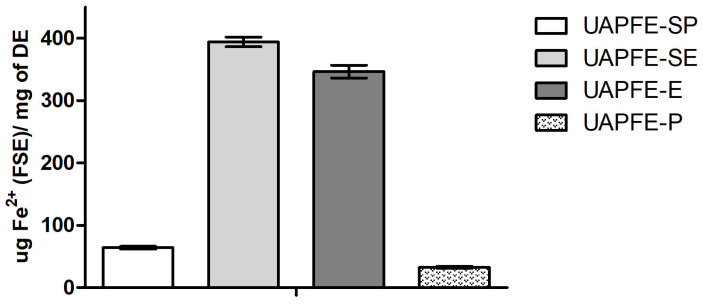 Figure 5
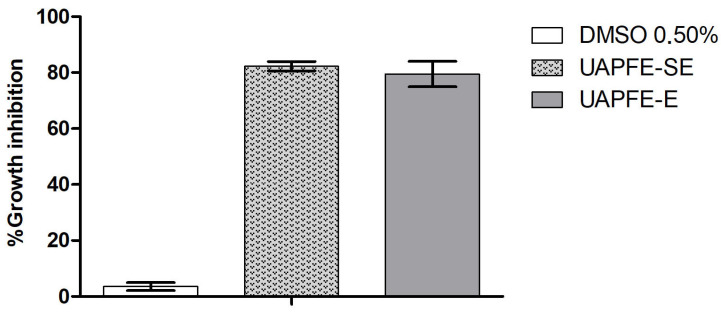 Figure 6
Peer Reviews
No public reviews on file for this paper yet. If you reviewed it on a platform where reviews are public (OpenReview, ICLR, NeurIPS, ICML), you can paste yours below so the community can read it here.
Videos
No videos yet. Explain this paper in a talk, walkthrough, or lecture? Add one.
Taxonomy
TopicsBee Products Chemical Analysis · Phytochemicals and Antioxidant Activities · Phytochemistry Medicinal Plant Applications