Floral Characteristics and Reproductive Biology in Brazilian Melon Accessions: Insights from Commercial and Exotic Varieties
Nadia Carolina Sanabria-Verón, Cláusio Antônio Ferreira de Melo, Glauber Henrique de Sousa Nunes, Delmira Da Costa Silva, Margarete Magalhães de Souza, Ronan Xavier Corrêa

TL;DR
This study examines flower development and reproduction in Brazilian and exotic melon varieties to understand their agricultural potential.
Contribution
The study provides new insights into reproductive traits and variability in Brazilian melon accessions using pollen viability and stigma receptivity analyses.
Findings
Cucumis melo germplasm showed 81% andromonoecious and 19% trimonoecious plants.
Pollen viability exceeded 95%, and pollen germination increased by 12.5% between 1 and 3 hours after pollination.
Hybrids had lower in vivo pollen germination compared to commercial varieties.
Abstract
Melon has great economic importance in Brazil, and flower development is the basis for fruit and seed production. The objective of this study was to elucidate the variability of flowering characteristics and to compare qualitative and quantitative reproductive variations in relation to pollen viability and stigmatic receptivity in 21 genotypes, which includes 15 Brazilian accessions. In addition, we evaluated the influence of time on the growth of the pollen tube and its arrival at the ovule in vivo at different intervals (1 h, 2 h, 3 h) after hand pollination in three commercial varieties, one exotic accession, and two intervarietal hybrids, by epifluorescence technique. Three groups were distributed by the clustering method of Scott–Knott at 5% probability; group III included only commercial varieties for the flower width descriptor. C. melo germplasm presented 81% andromonoecious…
Genes, proteins, chemicals, diseases, species, mutations and cell lines named across the full text — each resolved to its canonical identifier and authoritative record.
Click any figure to enlarge with its caption.
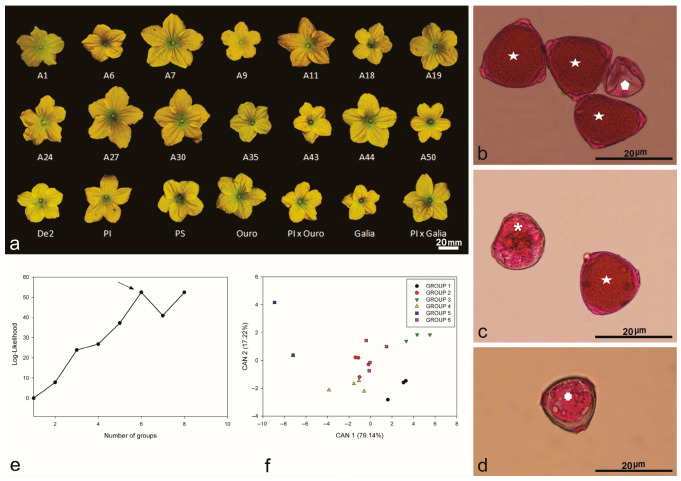 Figure 1
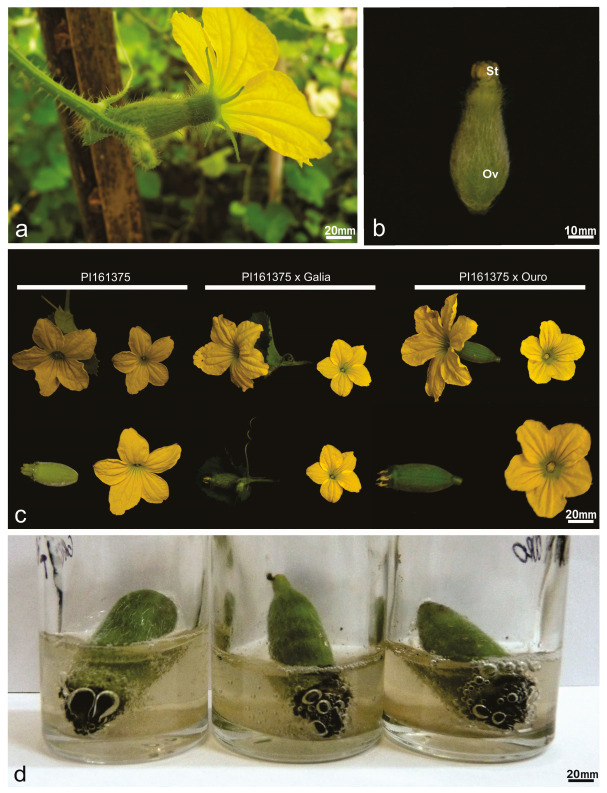 Figure 2
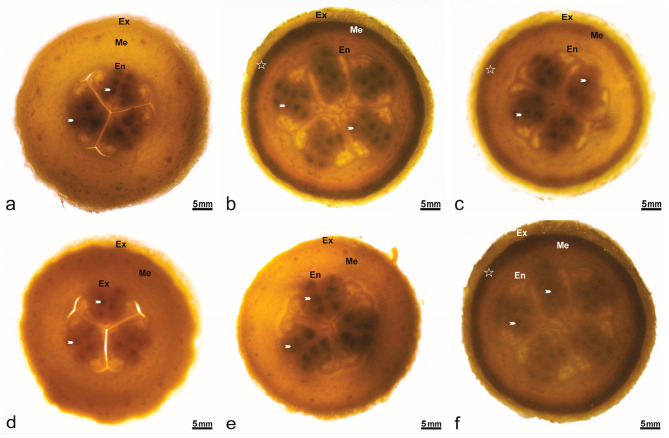 Figure 3
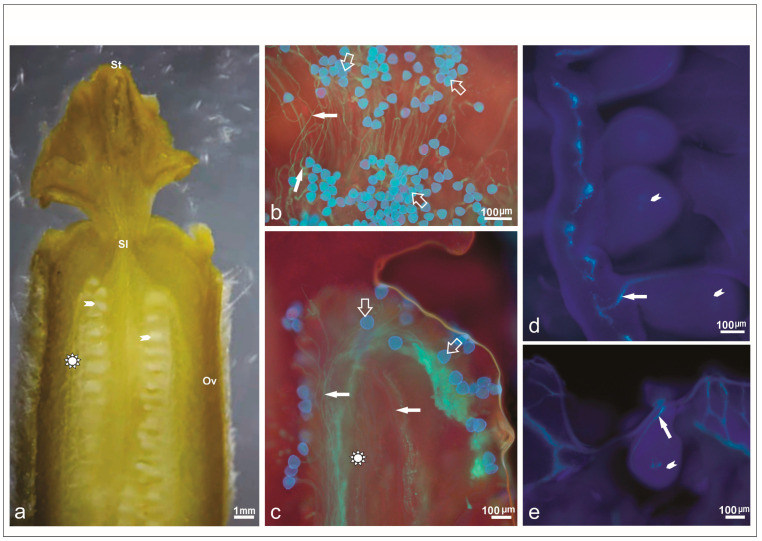 Figure 4
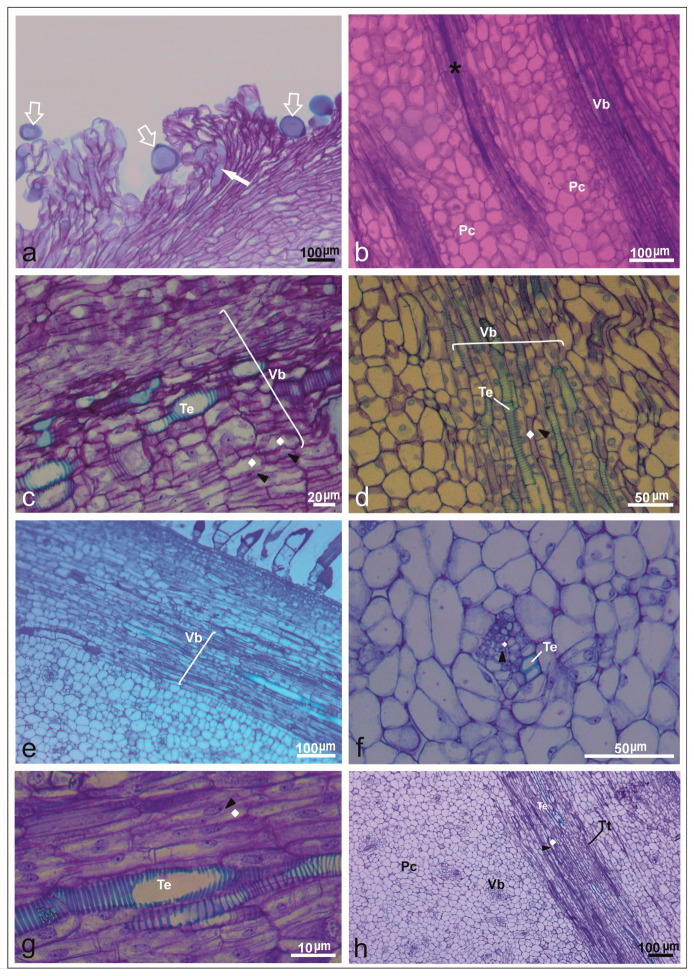 Figure 5
Peer Reviews
No public reviews on file for this paper yet. If you reviewed it on a platform where reviews are public (OpenReview, ICLR, NeurIPS, ICML), you can paste yours below so the community can read it here.
Videos
No videos yet. Explain this paper in a talk, walkthrough, or lecture? Add one.
Taxonomy
TopicsPlant Reproductive Biology · Plant Physiology and Cultivation Studies · Plant and animal studies