In Silico and RP HPLC Studies of Biologically Active 1,3,4-Thiadiazol-2-yl)-benzene-1,3-diols
Marek Studziński, Katarzyna Barańska, Beata Paw, Bogusław Senczyna, Tadeusz Paszko, Joanna Matysiak

TL;DR
This paper studies the lipophilicity and drug-like properties of a group of biologically active compounds using both computational and experimental methods.
Contribution
The study provides new insights into the lipophilicity and ionization behavior of 1,3,4-thiadiazol-2-yl)-benzene-1,3-diols using in silico and HPLC methods.
Findings
A weak correlation was found between experimentally determined log kw and in silico log P descriptors.
Most compounds have lipophilic character suitable for potential drugs based on log D7.4 values.
The compounds partially exist in an ionized anionic form at physiological pH.
Abstract
Biologically active compounds from the 1,3,4-thiadiazol-2-yl)-benzene-1,3-diols group described earlier have been studied. Various approaches were used to determine their lipophilicity and predict pharmacokinetic properties. The lipophilicity parameters log kw were determined using isocratic column chromatography and various stationary phases. Based on the standard curve and retention measurements by using an octadecyl column, the log D7.4 distribution coefficient was determined. A weak correlation was found between the experimentally determined log kw parameters and the in silico calculated log P descriptors. It was shown that the compounds partially exist in an ionized anionic form at physiological pH. The determined log D7.4 parameter indicates that most of them have lipophilic character at the level recommended for potential drugs.
Genes, proteins, chemicals, diseases, species, mutations and cell lines named across the full text — each resolved to its canonical identifier and authoritative record.
Click any figure to enlarge with its caption.
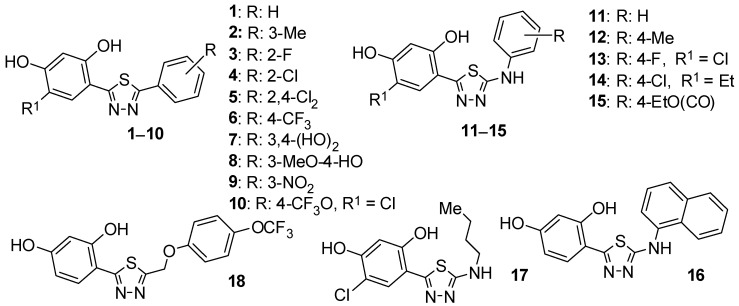 Figure 1
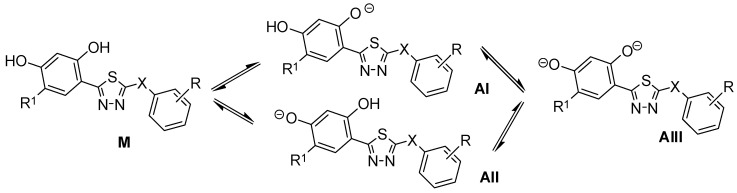 Figure 2
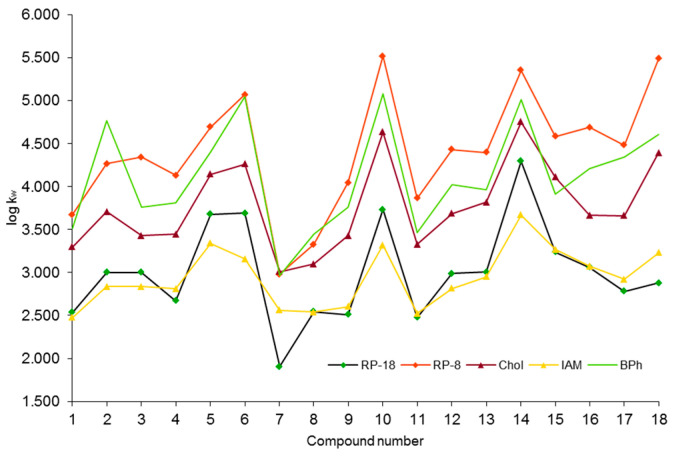 Figure 3
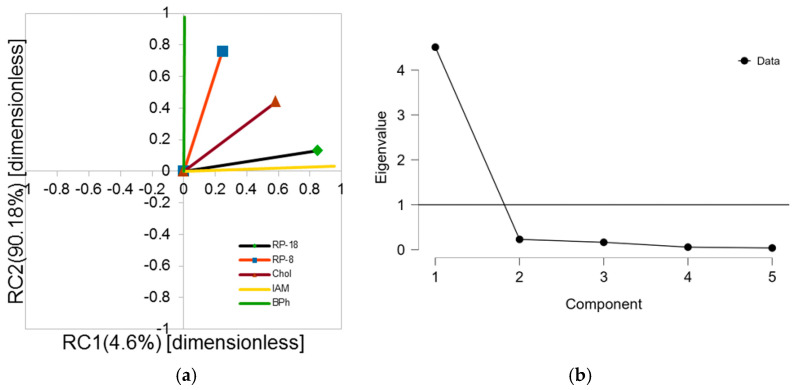 Figure 4
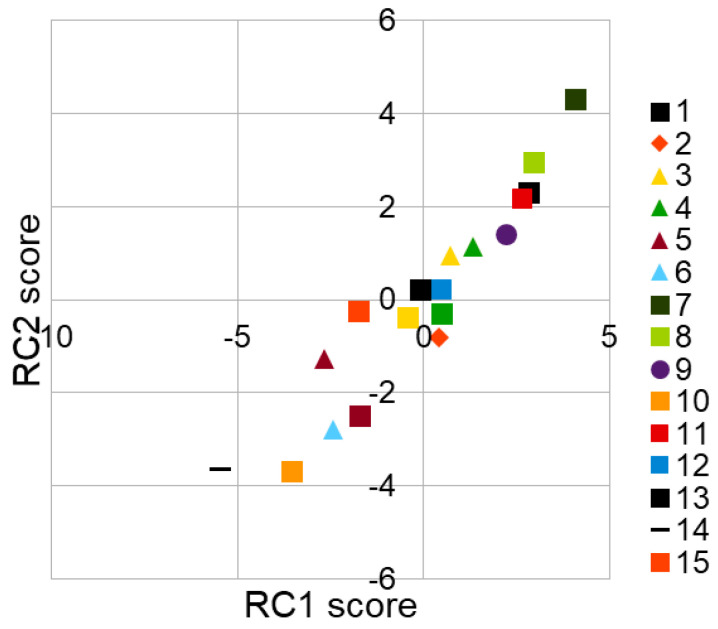 Figure 5
Peer Reviews
No public reviews on file for this paper yet. If you reviewed it on a platform where reviews are public (OpenReview, ICLR, NeurIPS, ICML), you can paste yours below so the community can read it here.
Videos
No videos yet. Explain this paper in a talk, walkthrough, or lecture? Add one.
Taxonomy
TopicsSynthesis and biological activity · Computational Drug Discovery Methods · Analytical Chemistry and Chromatography