Highly Stable Supramolecular Donor–Acceptor Complexes Involving (Z)-, (E)-di(3-pyridyl)ethylene Derivatives as Weak Acceptors: Structure—Property Relationships
Artem I. Vedernikov, Valeriy V. Volchkov, Mikhail N. Khimich, Mikhail Y. Mel’nikov, Fedor E. Gostev, Ivan V. Shelaev, Victor A. Nadtochenko, Lyudmila G. Kuz’mina, Judith A. K. Howard, Asya A. Efremova, Mikhail V. Rusalov, Sergey P. Gromov

TL;DR
Researchers synthesized a new compound and studied its complex with another molecule, finding stable structures and fast electron transfer processes.
Contribution
The study reveals structure-property relationships in supramolecular complexes involving di(3-pyridyl)ethylene derivatives and identifies fast back electron transfer in specific isomeric complexes.
Findings
A highly stable pseudocyclic complex forms between (Z)-2 and (E)-1 with logKD·A = 8.48.
Back electron transfer is approximately two times faster in (E)-1·(Z)-2 compared to (E)-1·(E)-2.
Quantum chemical calculations suggest the photorelaxation pathway for the complexes.
Abstract
The Z-isomer of N,N’-diammoniopropyl derivative of di(3-pyridyl)ethylene was synthesized. The structure and stability of complexes between this non-planar weak acceptor (A, (Z)-2) and a planar strong donor, the E-isomer of bis(18-crown-6)stilbene (D, (E)-1), were studied using X-ray diffraction, 1H NMR spectroscopy, and optical spectroscopy, including 1H NMR and spectrofluorimetric titrations. In MeCN, the components form a very stable pseudocyclic bimolecular complex (logKD·A = 8.48) due to homoditopic coordination of the ammonium groups of the acceptor to the crown moieties of the donor through numerous hydrogen bonds. Intrasupramolecular photo-driven electron transfer (ET) in the isomeric complexes of (E)-1 with (E)- and (Z)-2 was studied using steady-state absorption and fluorescence spectroscopy with time-resolved pulse absorption spectroscopy. It was found that back ET is…
Genes, proteins, chemicals, diseases, species, mutations and cell lines named across the full text — each resolved to its canonical identifier and authoritative record.
Click any figure to enlarge with its caption.
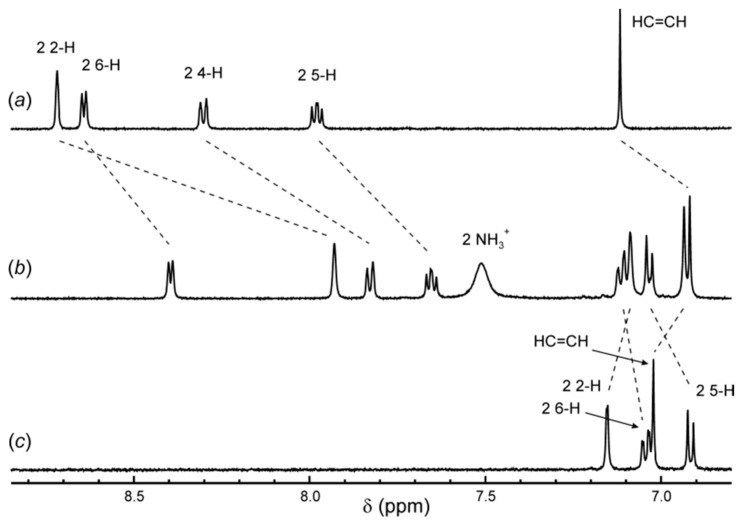 Figure 1
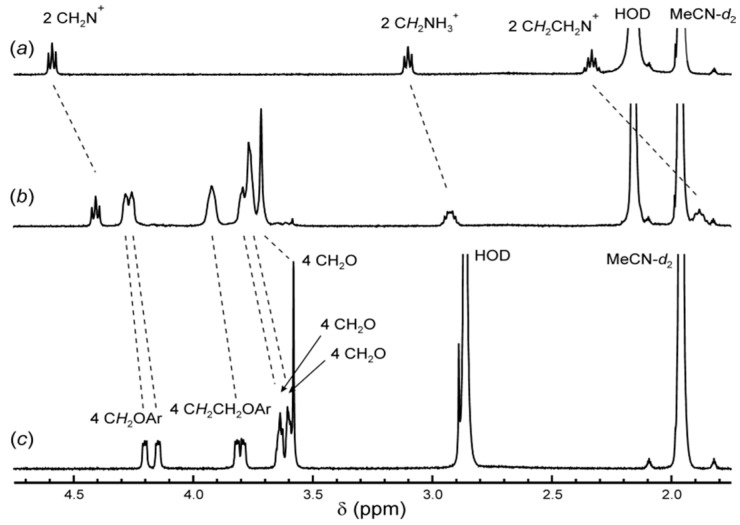 Figure 2
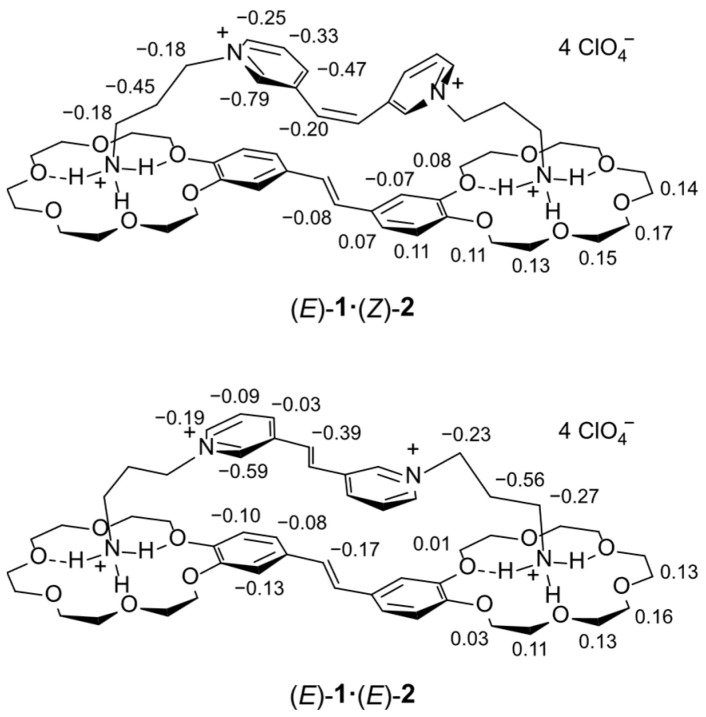 Figure 3
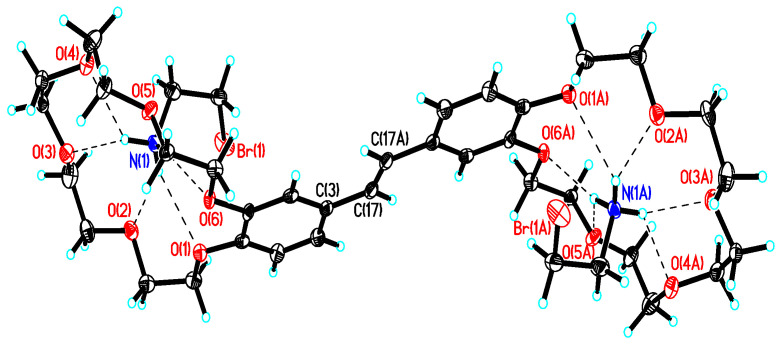 Figure 4
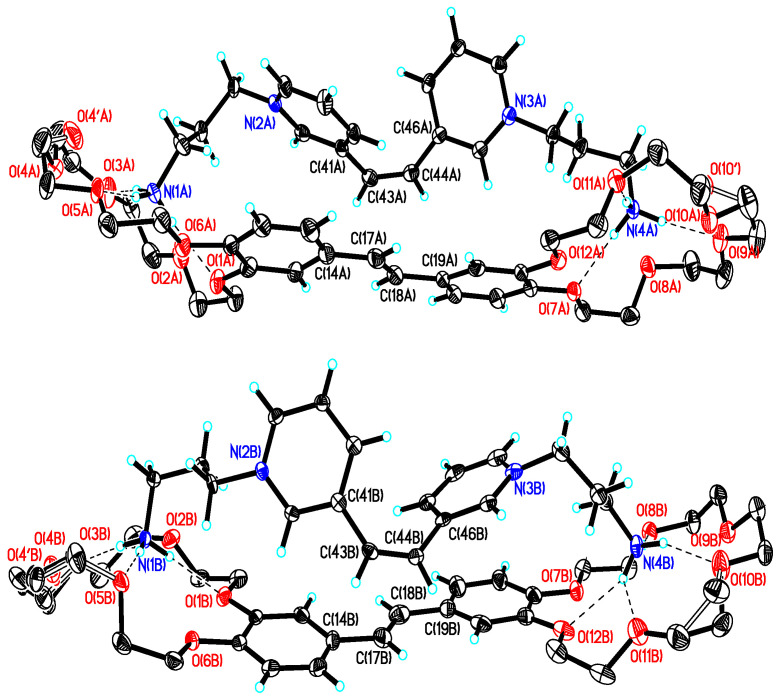 Figure 5
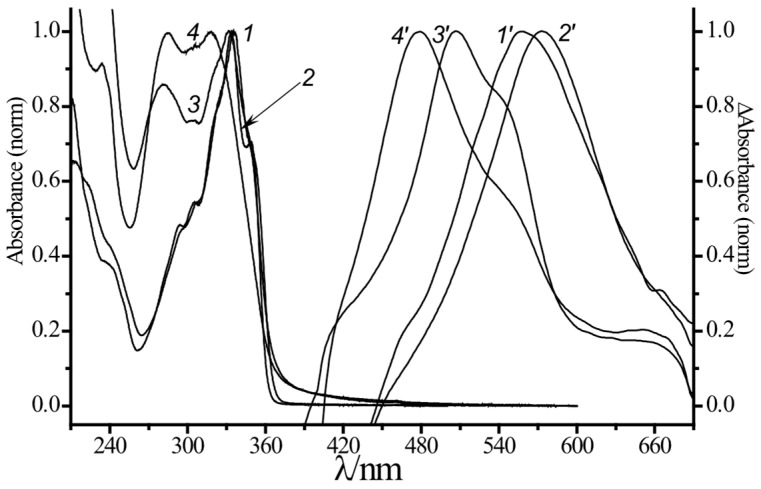 Figure 6
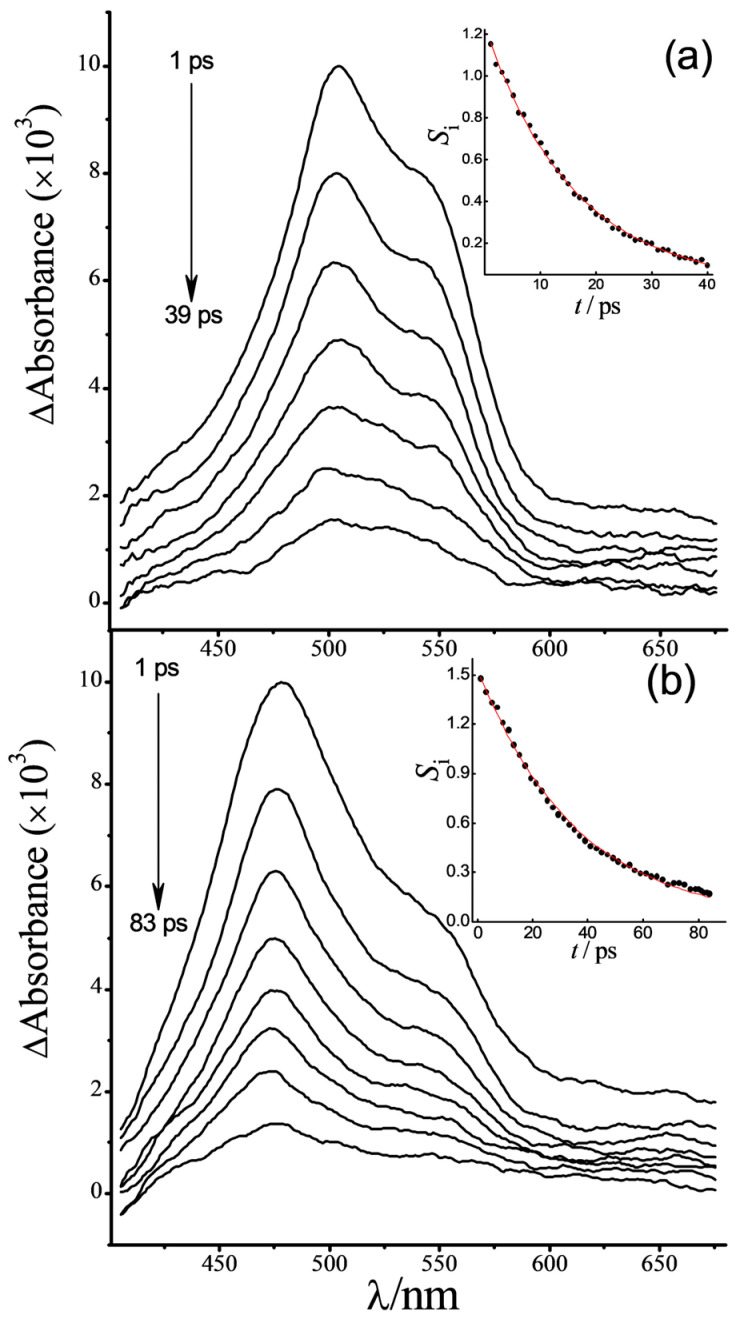 Figure 7
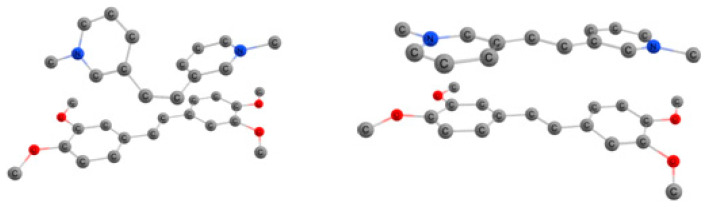 Figure 8
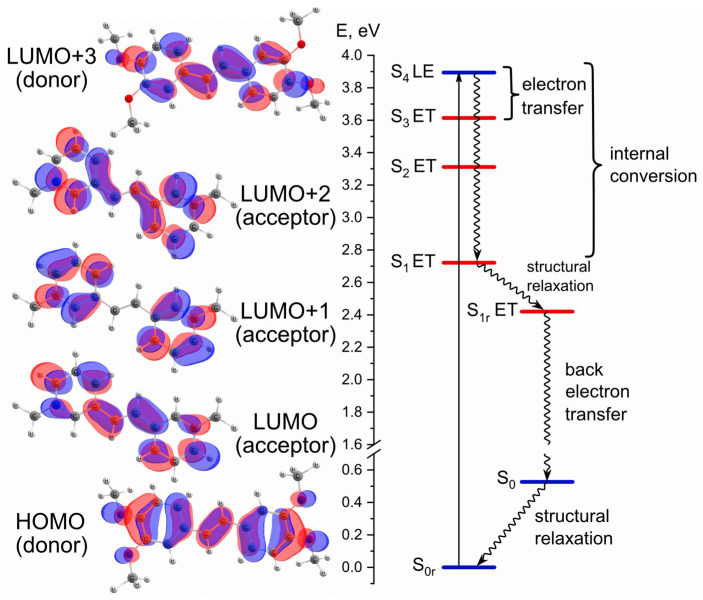 Figure 9
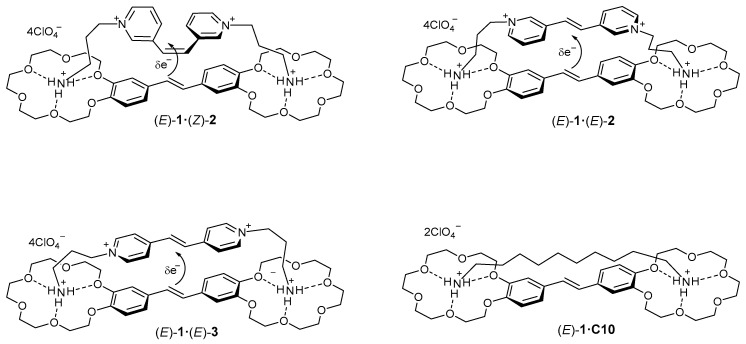 Figure 10
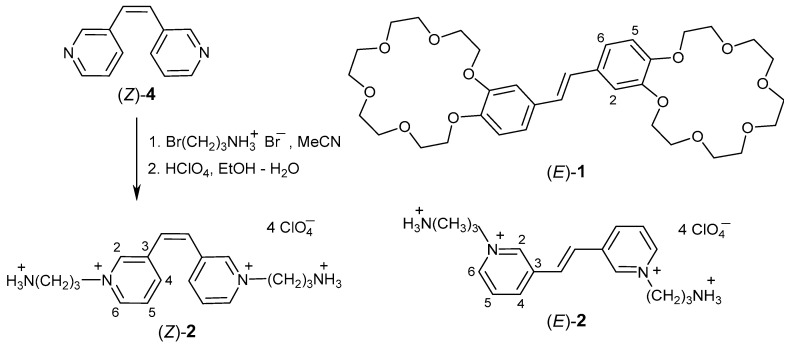 Figure 11
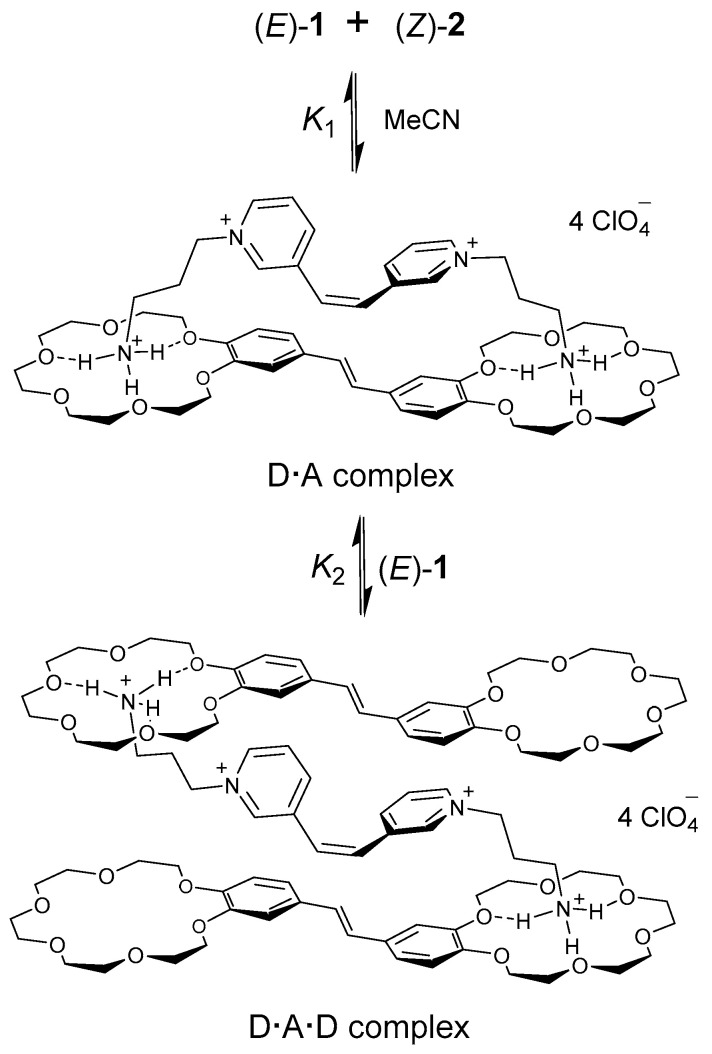 Figure 12
Peer Reviews
No public reviews on file for this paper yet. If you reviewed it on a platform where reviews are public (OpenReview, ICLR, NeurIPS, ICML), you can paste yours below so the community can read it here.
Videos
No videos yet. Explain this paper in a talk, walkthrough, or lecture? Add one.
Taxonomy
TopicsPorphyrin and Phthalocyanine Chemistry · Luminescence and Fluorescent Materials · Photochemistry and Electron Transfer Studies