Diastereoselective Reformatsky Reaction Mediated by Dichlorocyclopentadienyltitanium(III)
Josefa L. López-Martínez, Irene Torres-García, Manuel Muñoz-Dorado, Miriam Álvarez-Corral, Ignacio Rodríguez-García

TL;DR
A new titanium-based catalyst improves the selectivity of a classic chemical reaction for building carbon-carbon bonds.
Contribution
A diastereoselective Reformatsky reaction using CpTiCl2 is introduced, achieving high syn-isomer selectivity.
Findings
CpTiCl2 promotes β-hydroxy ester formation with up to 100:0 syn:anti diastereoselectivity.
The catalyst works under mild conditions and tolerates diverse substrates like aldehydes and α-iodonitriles.
The mechanism involves a Zimmerman–Traxler transition state favoring syn stereocontrol.
Abstract
The Reformatsky reaction, first reported in 1887, has long been recognized as a fundamental method for carbon–carbon bond construction due to its mild conditions and functional group tolerance. Over the past few decades, this transformation has undergone a notable revival, with modern catalytic variants addressing limitations of stoichiometric protocols and expanding its role in complex molecule synthesis. Yet, despite its versatility, achieving stereoselective control remains a longstanding challenge. Herein we report the use of dichlorocyclopentadienyltitanium(III) (CpTiCl2), generated in situ from CpTiCl3 and manganese, as an efficient catalyst for Reformatsky-type couplings of aldehydes with α-haloesters and α-iodonitriles. Under mild conditions, CpTiCl2 promotes the formation of β-hydroxy esters in high yields and with significant diastereoselective preference for the syn isomer…
Genes, proteins, chemicals, diseases, species, mutations and cell lines named across the full text — each resolved to its canonical identifier and authoritative record.
Click any figure to enlarge with its caption.
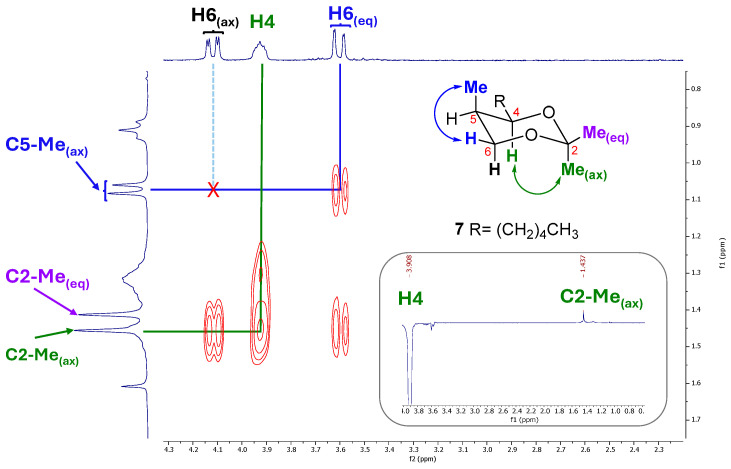 Figure 1
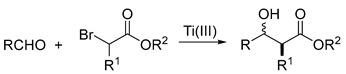 Figure 2
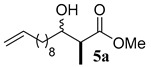 Figure 3
 Figure 4
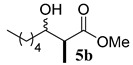 Figure 5
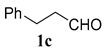 Figure 6
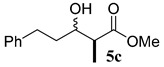 Figure 7
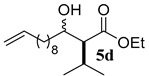 Figure 8
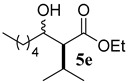 Figure 9
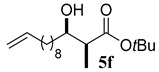 Figure 10
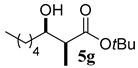 Figure 11
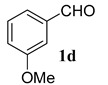 Figure 12
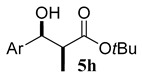 Figure 13
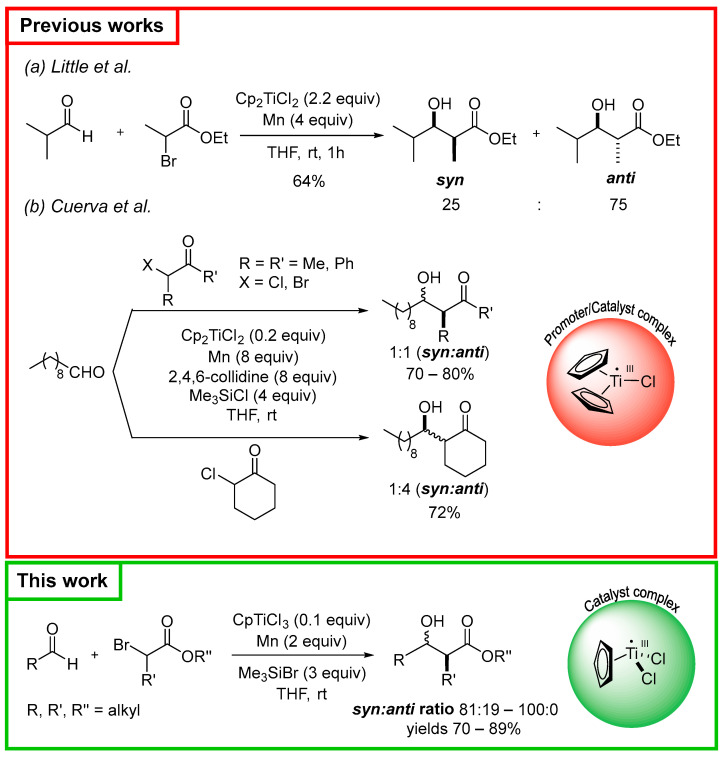 Figure 14
 Figure 15
 Figure 16
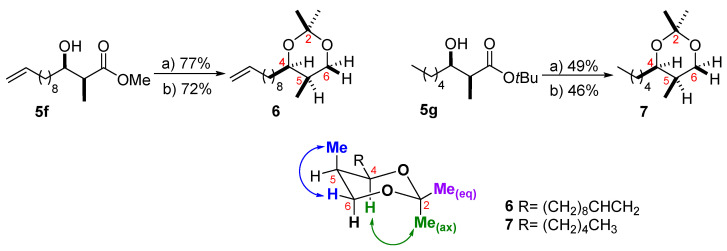 Figure 17
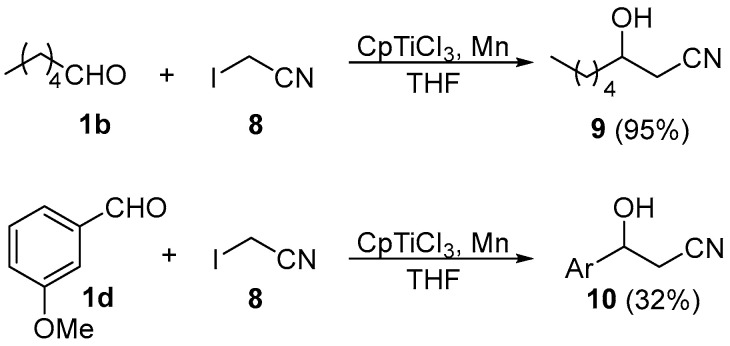 Figure 18
Peer Reviews
No public reviews on file for this paper yet. If you reviewed it on a platform where reviews are public (OpenReview, ICLR, NeurIPS, ICML), you can paste yours below so the community can read it here.
Videos
No videos yet. Explain this paper in a talk, walkthrough, or lecture? Add one.
Taxonomy
TopicsAdvanced Synthetic Organic Chemistry · Asymmetric Synthesis and Catalysis · Synthetic Organic Chemistry Methods