Evaluation of Antioxidant-Rich Mexican Oregano (Lippia graveolens) Infusion and Carvacrol: Impact on Metabolic Activity and Cytotoxicity in Breast Cancer Cell Lines
Brian Enrique Rojo-Ruvalcaba, Montserrat Maldonado-González, Gabriela María Cálix-Rodríguez, Elia Herminia Valdés-Miramontes, Juan Florencio Gómez-Leyva, Teresa Arcelia García-Cobián, Pedro Ernesto Sánchez-Hernández, Andrea Carolina Machado-Sulbaran, Rocío Ivette López-Roa

TL;DR
Mexican oregano infusion shows strong antioxidant properties and selective anticancer effects on breast cancer cells, especially aggressive types, with less toxicity to healthy cells.
Contribution
The study is the first to chemically characterize Mexican oregano infusion and compare its selective anticancer effects with carvacrol in breast cancer cell lines.
Findings
Mexican oregano infusion has strong antioxidant capacity and antiproliferative effects on breast cancer cells.
Mexican oregano infusion is less cytotoxic to non-cancerous cells compared to carvacrol.
The infusion shows potential for treating aggressive triple-negative breast cancer subtypes.
Abstract
Background/Objectives: The search for natural alternatives in breast cancer (BC) management has spurred interest in plant-derived extracts, particularly oregano variants and their bioactive compound carvacrol (Cv). However, Mexican oregano (Lippia graveolens) infusion (MoI) remains unexplored. This study aimed to chemically characterize MoI and compare its anticancer effects with Cv across BC cell lines, including aggressive triple-negative (TN) subtypes. Methods: MoI was analyzed for composition, antioxidant capacity (ABTS, DPPH, FRAP, total phenols/flavonoids), and phytochemical profile (FTIR, HPLC). Anticancer activity was assessed via MTT and LDH assays. Results: MoI exhibits strong antioxidant capacity and concentration-dependent antiproliferative effects, with IC50 values ranging from 0.08 to 0.18 mg/mL across BC lines, significantly higher (i.e., less cytotoxic) than Cv IC50 of…
Genes, proteins, chemicals, diseases, species, mutations and cell lines named across the full text — each resolved to its canonical identifier and authoritative record.
Click any figure to enlarge with its caption.
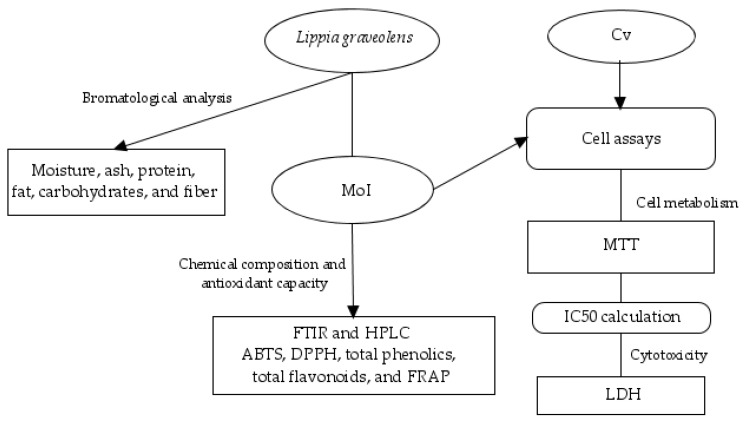 Figure 1
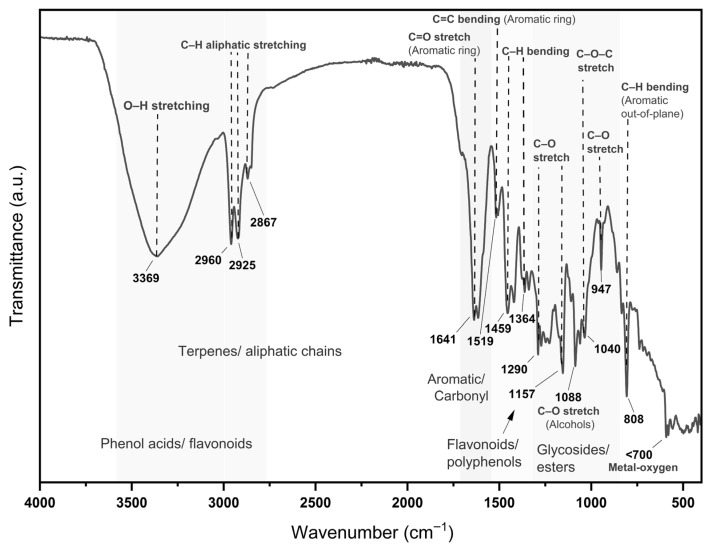 Figure 2
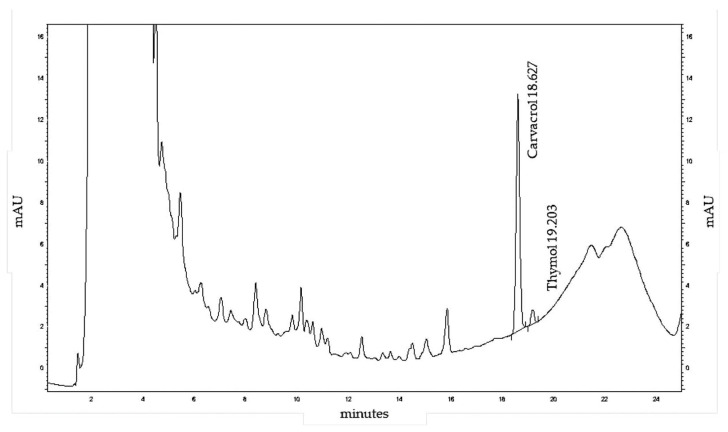 Figure 3
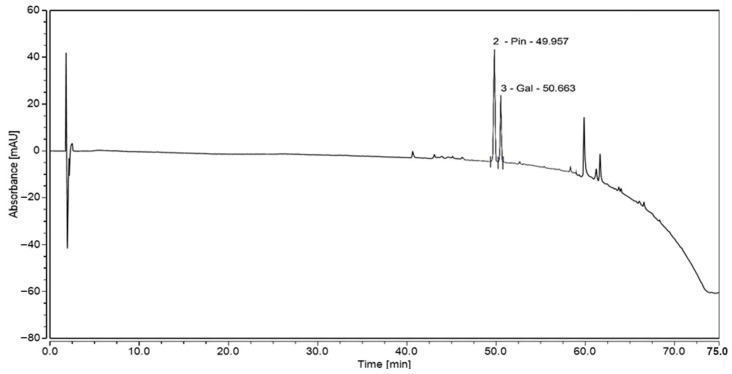 Figure 4
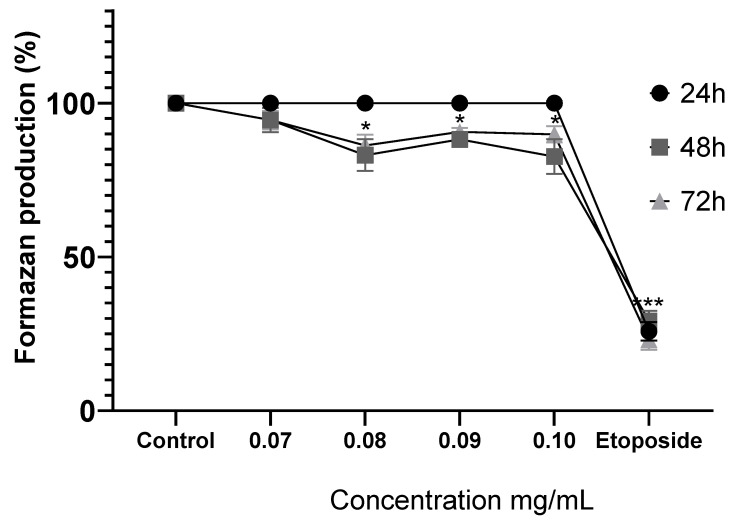 Figure 5
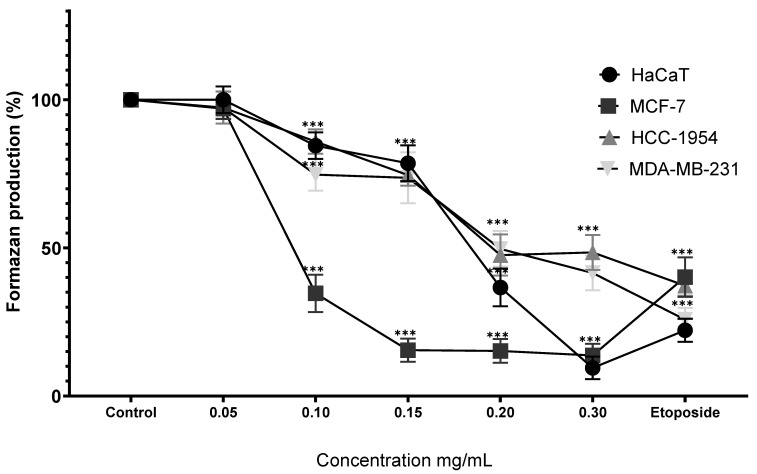 Figure 6
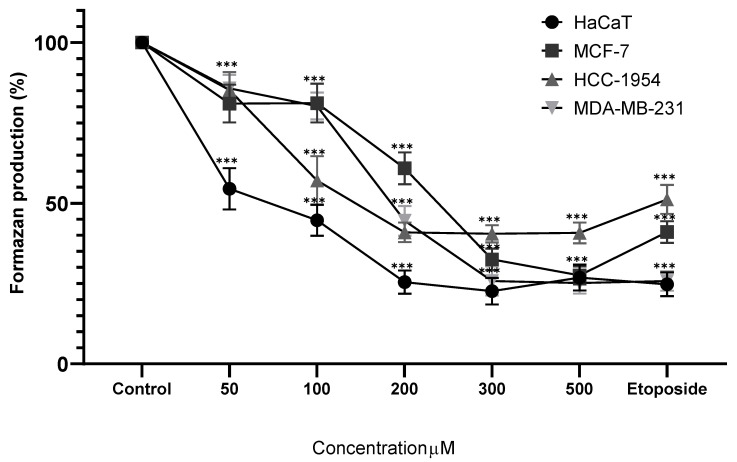 Figure 7
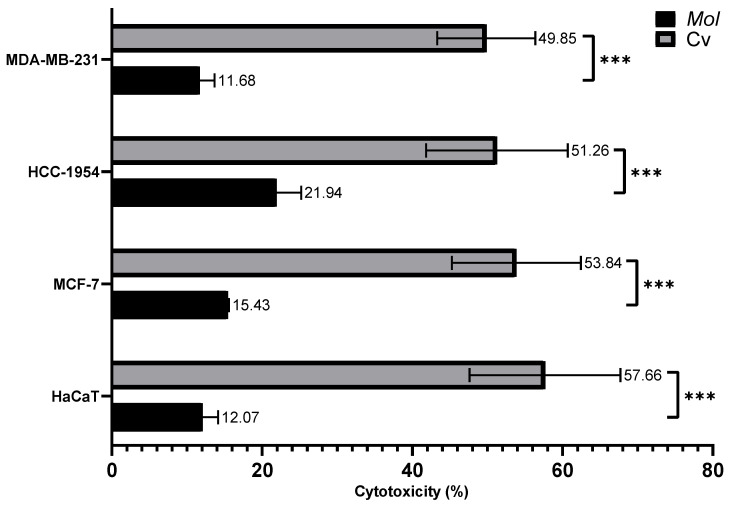 Figure 8
Peer Reviews
No public reviews on file for this paper yet. If you reviewed it on a platform where reviews are public (OpenReview, ICLR, NeurIPS, ICML), you can paste yours below so the community can read it here.
Videos
No videos yet. Explain this paper in a talk, walkthrough, or lecture? Add one.
Taxonomy
TopicsEssential Oils and Antimicrobial Activity · Phytochemicals and Antioxidant Activities · Genomics, phytochemicals, and oxidative stress