Prematurity Appears to Be the Main Factor for Transient Congenital Hypothyroidism in Greece, a Recently Iodine-Replete Country
Eftychia G. Koukkou, Panagiotis Girginoudis, Michaela Nikolaou, Anna Taliou, Alexandra Tsigri, Danae Barlampa, Marianna Panagiotidou, Ioannis Ilias, Christina Kanaka-Gantenbein, Kostas B. Markou

TL;DR
In Greece, where iodine deficiency is controlled, premature birth is the main cause of transient congenital hypothyroidism in newborns.
Contribution
This study identifies prematurity as the primary factor for transient hypothyroidism in Greece, despite iodine sufficiency.
Findings
Prematurely born children had 2.078 times higher odds of transient hypothyroidism compared to term-born children.
Other factors like maternal iodine deficiency or thyroid autoantibodies did not significantly contribute to transient hypothyroidism.
Out of 889 followed-up children, 329 were classified as having transient hypothyroidism after successful thyroxine discontinuation.
Abstract
Background/Objectives: Neonatal screening programmes for thyroid function testing, based on thyroid-stimulating hormone (TSH) assessment, detect both Permanent Congenital Hypothyroidism (PCH) and Transient Congenital Hypothyroidism (TCH). Maternal iodine-deficient dietary intake may result in compensatory neonatal TSH elevation; screening for Congenital Hypothyroidism (CH) is used as an indicator of the degree of iodine deficiency and of its control. In Greece, newborn screening for CH, using TSH measurement in dried blood spots (Guthrie card), began in 1979 through the Institute of Child Health (ICH). Although the general Greek population is considered iodine-replete, most pregnant Greek people are mildly iodine deficient according to the stricter WHO criteria. The aim of this retrospective study was to record the cases of TCH and the main causative factors over a 10-year period…
Genes, proteins, chemicals, diseases, species, mutations and cell lines named across the full text — each resolved to its canonical identifier and authoritative record.
Click any figure to enlarge with its caption.
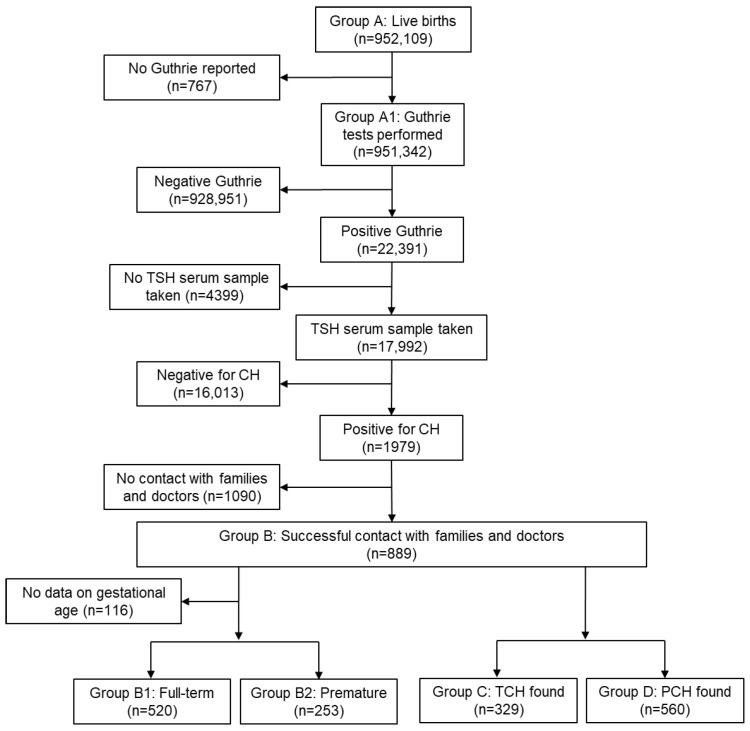 Figure 1
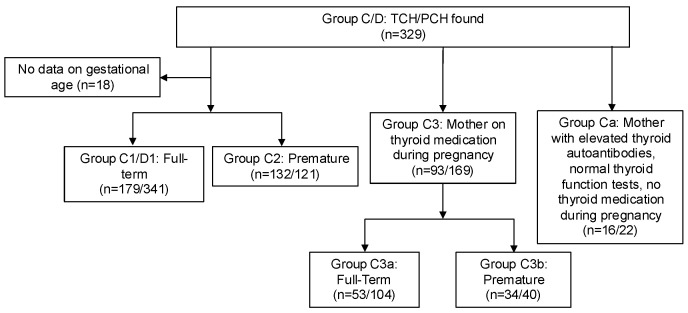 Figure 2
 Figure 3
Peer Reviews
No public reviews on file for this paper yet. If you reviewed it on a platform where reviews are public (OpenReview, ICLR, NeurIPS, ICML), you can paste yours below so the community can read it here.
Videos
No videos yet. Explain this paper in a talk, walkthrough, or lecture? Add one.
Taxonomy
TopicsThyroid Disorders and Treatments · Neonatal Health and Biochemistry · Neonatal Respiratory Health Research