Chitosan-graft-poly(N-vinylcaprolactam) Nanoparticles Containing Crotalus atrox Snake Venom: Biological and Physicochemical Characterization
Serena Sophia Rudy, Jorge Jimenez-Canale, Jose A. Sarabia-Sainz, Ana María Guzmán Partida, Alexel J. Burgara-Estrella, Erika Silva-Campa, Aracely Angulo Molina, Marcelino Montiel-Herrera, Nelly Flores-Ramírez, Paul Zavala-Rivera, Daniel Fernández-Quiroz

TL;DR
Researchers developed venom-loaded nanoparticles from snake venom and biopolymers, which show potential as a new treatment for breast cancer.
Contribution
A novel nanoparticle formulation using Crotalus atrox venom and chitosan-g-poly(N-vinylcaprolactam) for targeted cancer therapy.
Findings
Cs-Venom NPs had a hydrodynamic size of 222 nm, ζ-potential of 42.0 mV, and 88.6% encapsulation efficiency.
Cs-Venom NPs showed no hemagglutination or hemolysis, indicating low toxicity.
Cs-Venom NPs exhibited cytotoxic effects with IC50 values of 61.7 µg/mL and 59.0 µg/mL on breast cancer cell lines.
Abstract
The development of snake venom-loaded nanobiosystems based on smart biopolymers represents a promising therapeutic approach in several biomedical research fields. Specifically, the western diamondback rattlesnake (Crotalus atrox) contains various bioactive peptides and proteins with reported antitumor activity. This research aimed to establish a simplistic, facile and straightforward protocol for preparing chitosan-g-poly(N-vinylcaprolactam) nanoparticles containing C. atrox venom for potential use as a therapeutic nanocarrier against breast carcinoma cell lines. Herein, the physicochemical properties of venom-loaded nanoparticles were evaluated by FTIR, DLS, and SDS-PAGE. Also, the biological properties of both C. atrox venom and Cs-Venom NPs such as hemagglutination and hemolysis activity were evaluated in vitro. Finally, we evaluated their cytotoxic activity against two breast…
Genes, proteins, chemicals, diseases, species, mutations and cell lines named across the full text — each resolved to its canonical identifier and authoritative record.
Click any figure to enlarge with its caption.
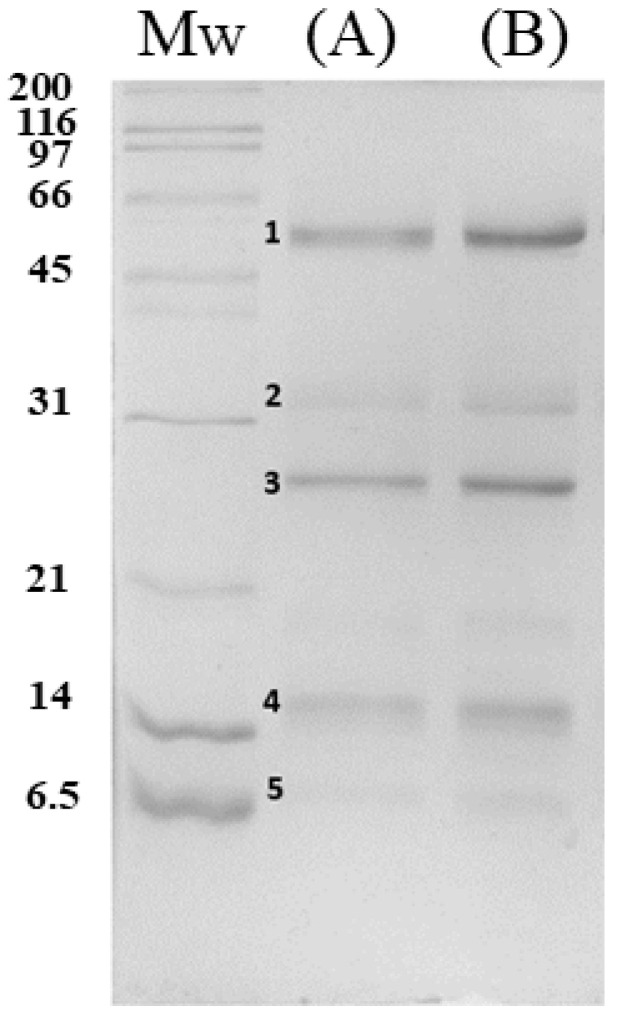 Figure 1
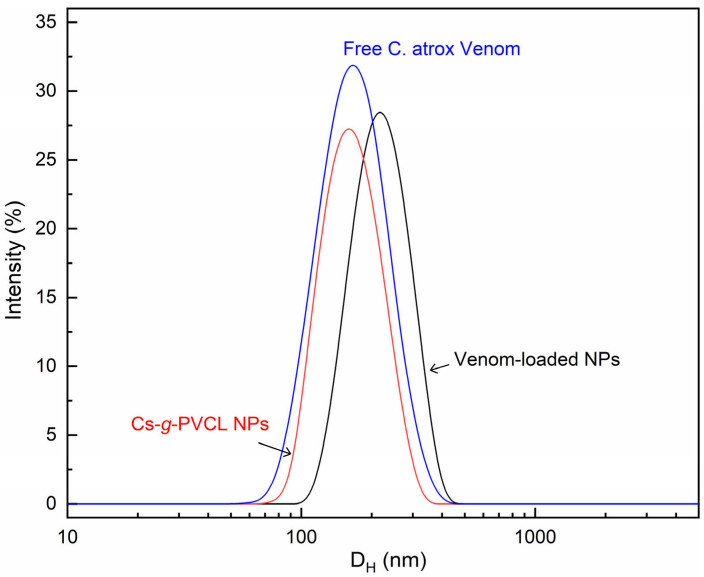 Figure 2
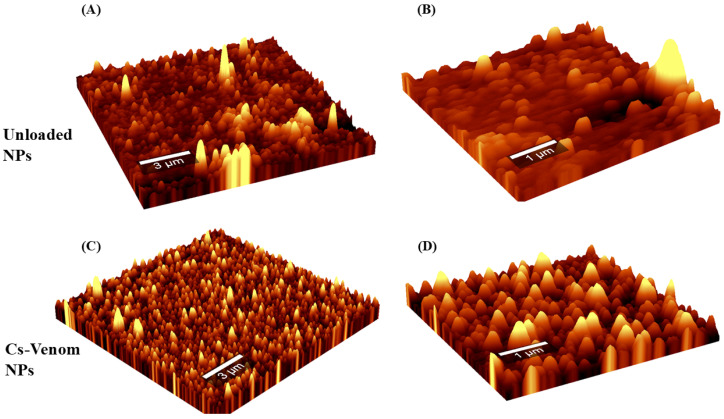 Figure 3
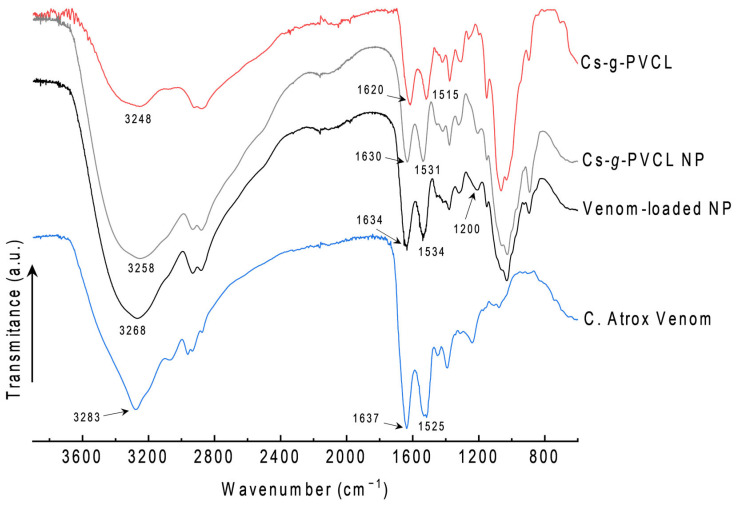 Figure 4
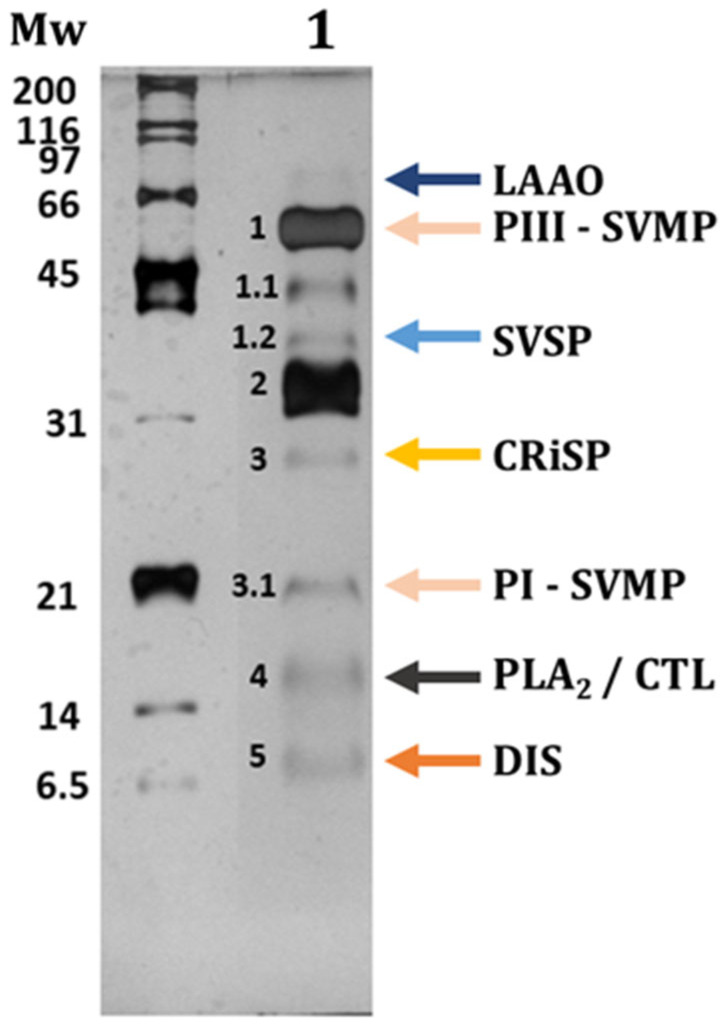 Figure 5
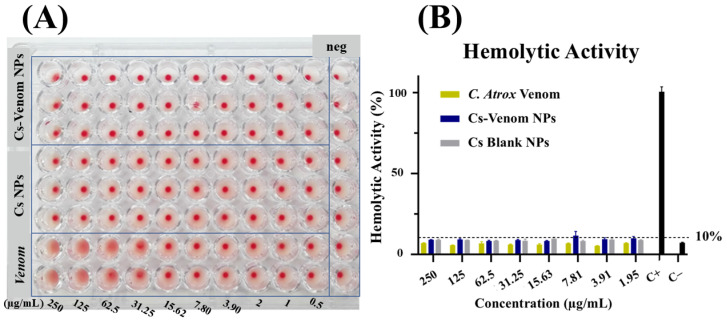 Figure 6
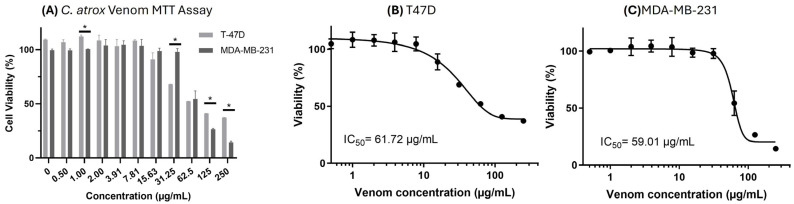 Figure 7
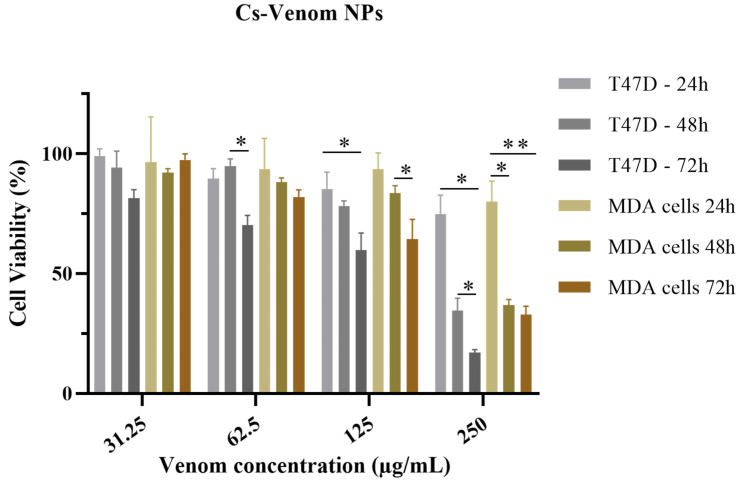 Figure 8
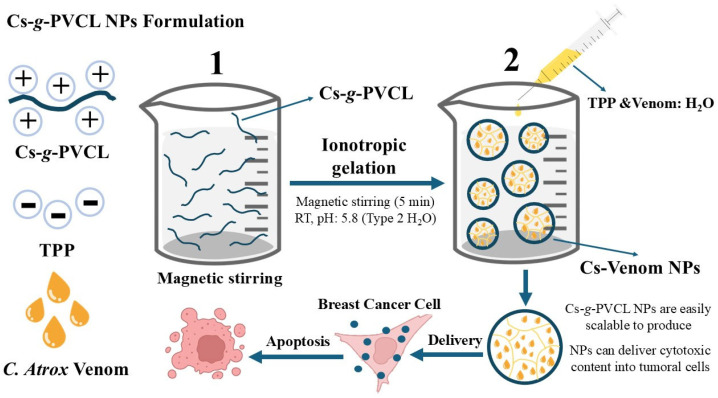 Figure 9
Peer Reviews
No public reviews on file for this paper yet. If you reviewed it on a platform where reviews are public (OpenReview, ICLR, NeurIPS, ICML), you can paste yours below so the community can read it here.
Videos
No videos yet. Explain this paper in a talk, walkthrough, or lecture? Add one.
Taxonomy
TopicsVenomous Animal Envenomation and Studies · Healthcare and Venom Research · Biochemical and Structural Characterization