Phosphorylation as a candidate regulatory mechanism for effector recruitment to tankyrase
Benjamin J. Broadway, Katie Pollock, Nora Cronin, Robert Rottapel, Frank Sicheri, Sebastian Guettler

TL;DR
This study shows that phosphorylation at a specific site in the TBM motif enhances tankyrase effector binding, offering a new regulatory mechanism for tankyrase activity.
Contribution
The study identifies phosphorylation at position eight of the TBM as a novel regulatory mechanism for tankyrase effector recruitment.
Findings
Phosphorylation of serine at position eight of the TBM increases ARC domain binding affinity by up to tenfold.
Phosphorylation at this site is enriched in proteins involved in centrosome function and localization.
TBM phosphorylation may act as a regulatory switch for tankyrase effector recruitment and retention.
Abstract
The ADP-ribosyltransferase tankyrase (with two paralogues, TNKS and TNKS2) plays pivotal roles in diverse cellular processes that encompass signal transduction, including Wnt/β-catenin, Hippo and toll-like receptor (TLR) signalling, mitotic spindle assembly, glucose homeostasis and telomere maintenance, among many other functions. Tankyrase recruits its effectors (substrates and binders) via a degenerate tankyrase-binding motif (TBM) and exerts its activities by subsequent substrate ADP-ribosylation and/or scaffolding. Variants of the TBM, found in diverse proteins, engage the ankyrin repeat cluster (ARC) domains of tankyrase. Yet, whether effector recruitment to tankyrase can be regulated has remained unknown. In this study, we propose that phosphorylation at position eight of the TBM enhances the affinity of effectors for the ARC domains of tankyrase. Using isolated TBM peptides, we…
Genes, proteins, chemicals, diseases, species, mutations and cell lines named across the full text — each resolved to its canonical identifier and authoritative record.
Click any figure to enlarge with its caption.
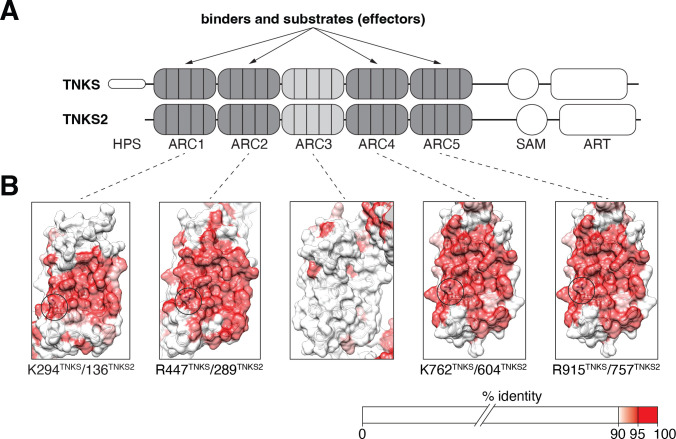 Figure 1
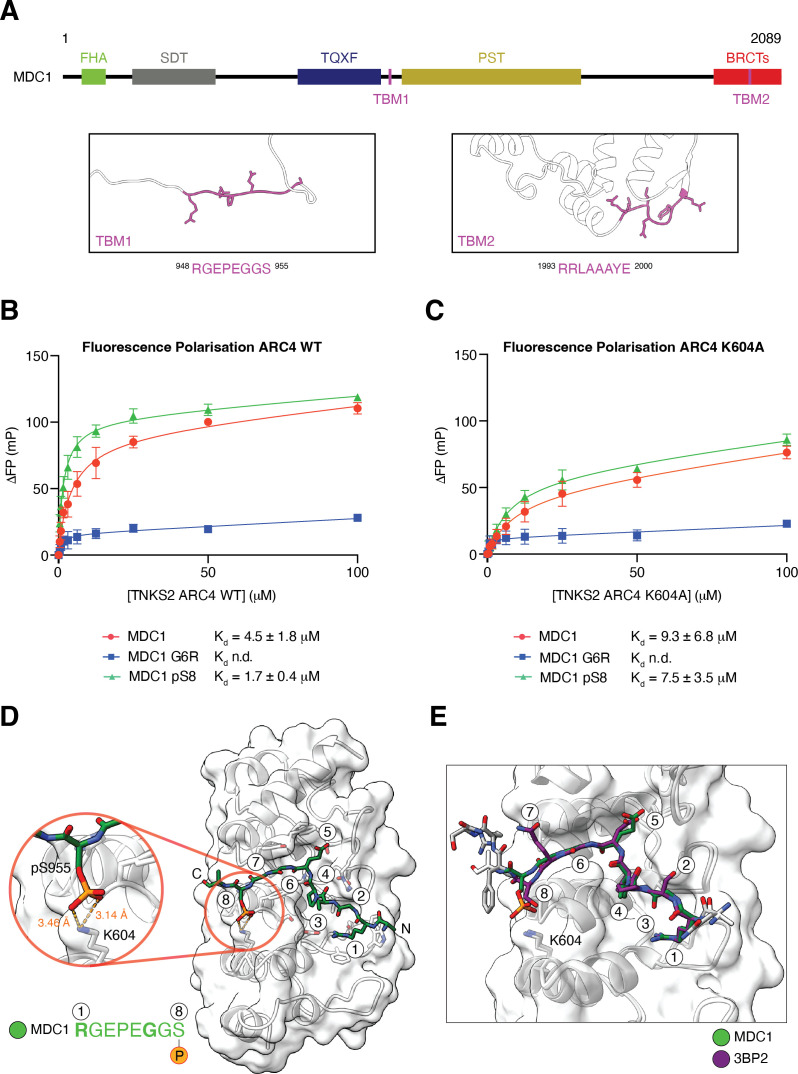 Figure 2
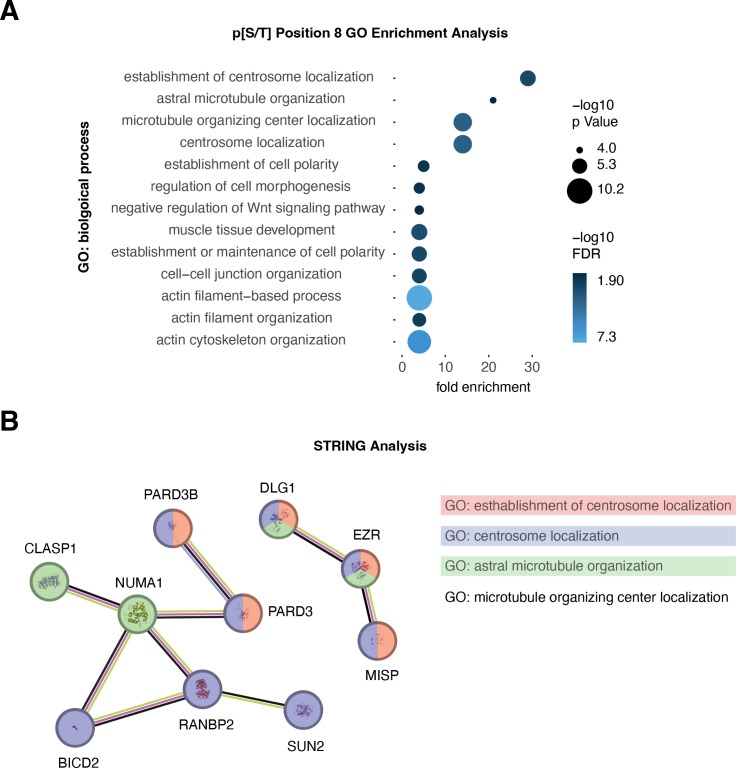 Figure 3
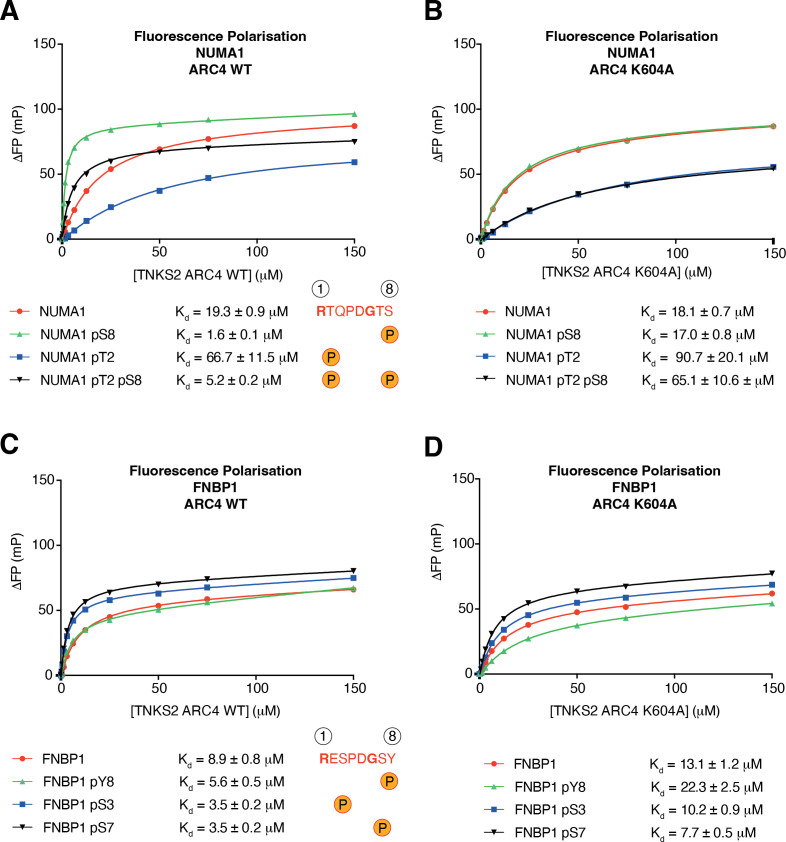 Figure 4
Peer Reviews
No public reviews on file for this paper yet. If you reviewed it on a platform where reviews are public (OpenReview, ICLR, NeurIPS, ICML), you can paste yours below so the community can read it here.
Videos
No videos yet. Explain this paper in a talk, walkthrough, or lecture? Add one.
Taxonomy
TopicsWnt/β-catenin signaling in development and cancer · Hippo pathway signaling and YAP/TAZ · Microtubule and mitosis dynamics