Nutritional Vulnerability and Functional Decline in End-Stage Heart Failure and Chronic Respiratory Disease: Utility of the CONUT Score in a Palliative Cohort
Martina Pellicé, Andrea Ladino, Karla Belén Treviño-García, Ana Suárez-Lombraña, Marta Arroyo-Huidobro, Aina Capdevila-Reniu, Bryan David Solari, Emilio Sacanella, Juan Manuel Perez-Castejon, Ferran Masanes

TL;DR
This study finds that patients with end-stage heart failure have higher malnutrition rates than those with chronic respiratory disease, and the CONUT score helps identify nutritional vulnerability in palliative care.
Contribution
The study compares malnutrition in heart failure and respiratory disease patients and evaluates the CONUT score's utility in palliative care.
Findings
CHF patients had significantly higher rates of moderate-to-severe malnutrition compared to CRD patients.
The CONUT score correlated more strongly with functional impairment than disease type alone.
Nutritional interventions in CHF patients did not improve their nutritional classification.
Abstract
Background/Objectives: Malnutrition is common among patients with advanced chronic illnesses receiving palliative care, yet comparative data between diagnostic groups are limited. This study aimed to evaluate and compare the nutritional status of patients with end-stage chronic heart failure (CHF) and chronic respiratory disease (CRD), and to assess the clinical utility of the Controlling Nutritional Status (CONUT) score in this setting. Methods: We conducted a retrospective analysis of 80 patients (41 with CHF, 39 with CRD) enrolled in a palliative care program (mean age 77.8 ± 6.8 years, 65% male). Nutritional status was assessed using BMI (Body Mass Index), CONUT score, and routine biochemical markers. Functional and clinical variables, including the Palliative Performance Scale (PPS), were also collected. Results: Moderate-to-severe malnutrition (CONUT ≥ 5) was significantly more…
Genes, proteins, chemicals, diseases, species, mutations and cell lines named across the full text — each resolved to its canonical identifier and authoritative record.
Click any figure to enlarge with its caption.
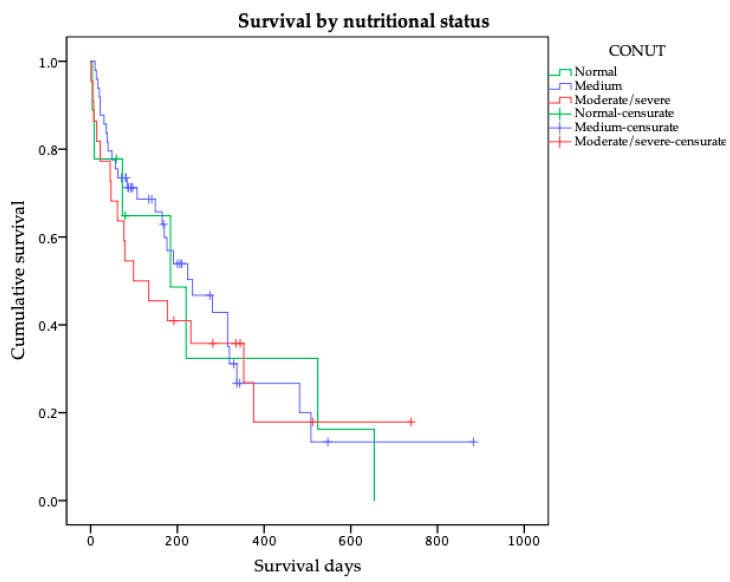 Figure 1
Peer Reviews
No public reviews on file for this paper yet. If you reviewed it on a platform where reviews are public (OpenReview, ICLR, NeurIPS, ICML), you can paste yours below so the community can read it here.
Videos
No videos yet. Explain this paper in a talk, walkthrough, or lecture? Add one.
Taxonomy
TopicsNutrition and Health in Aging · Frailty in Older Adults · Dysphagia Assessment and Management