Impacts of Tween-20, Glycerol, and Trehalose on Hyaluronidase Activity: Insights from Microscale Thermophoresis and Capillary Electrophoresis
Rouba Nasreddine, Josipa Cecić Vidoš, Alexandra Launay, Reine Nehmé

TL;DR
This study examines how common additives like Tween-20, glycerol, and trehalose affect hyaluronidase activity and enzyme behavior using advanced analytical techniques.
Contribution
The study introduces a novel labeling method for hyaluronidase compatible with MST and systematically evaluates the impact of three additives on enzyme activity.
Findings
Tween-20 had no effect on hyaluronidase activity or MST signals at concentrations between 0.005 and 0.05%.
Glycerol reduced hyaluronidase activity at concentrations above 2%.
Trehalose enhanced catalytic activity even at low concentrations and affected enzyme fluorescence.
Abstract
Additives such as surfactants (Tween-20) and cryoprotectants (glycerol and trehalose) are often used in enzymatic assays to improve the quality and long-term stabilization of proteins. However, these additives can affect the enzymatic activity and the enzyme’s affinity for active compounds, such as inhibitors, and must be considered during assay design since a slight shift in enzyme behavior may compromise the reliability of the results. In this study, the effects of Tween-20, glycerol, and trehalose on hyaluronidase (Hyal) were systematically evaluated by assessing their influence both directly—through microscale thermophoresis (MST) signals of the labeled enzyme (Hyal*)—and indirectly, by monitoring the formation of the final product of the degradation of hyaluronic acid, tetrasaccharide (Tet), using capillary electrophoresis (CE/UV). Hyal was labeled for the first time with ATTO-647…
Genes, proteins, chemicals, diseases, species, mutations and cell lines named across the full text — each resolved to its canonical identifier and authoritative record.
Click any figure to enlarge with its caption.
 Figure 1
 Figure 2
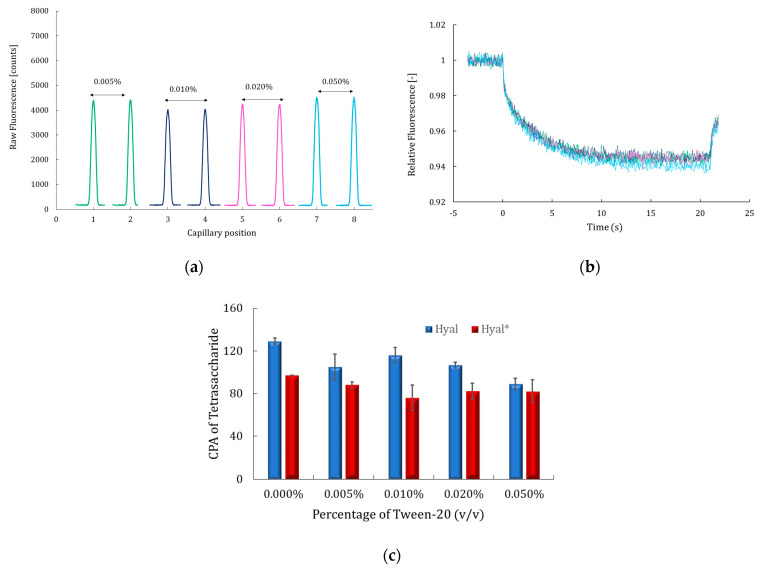 Figure 3
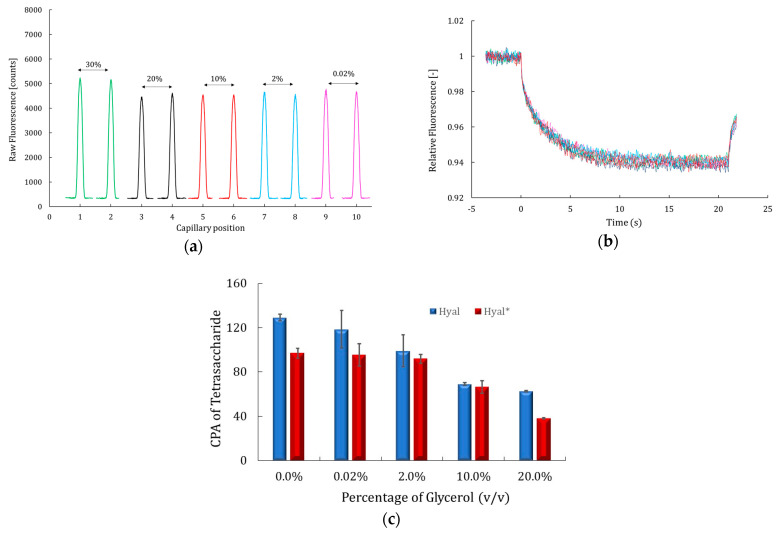 Figure 4
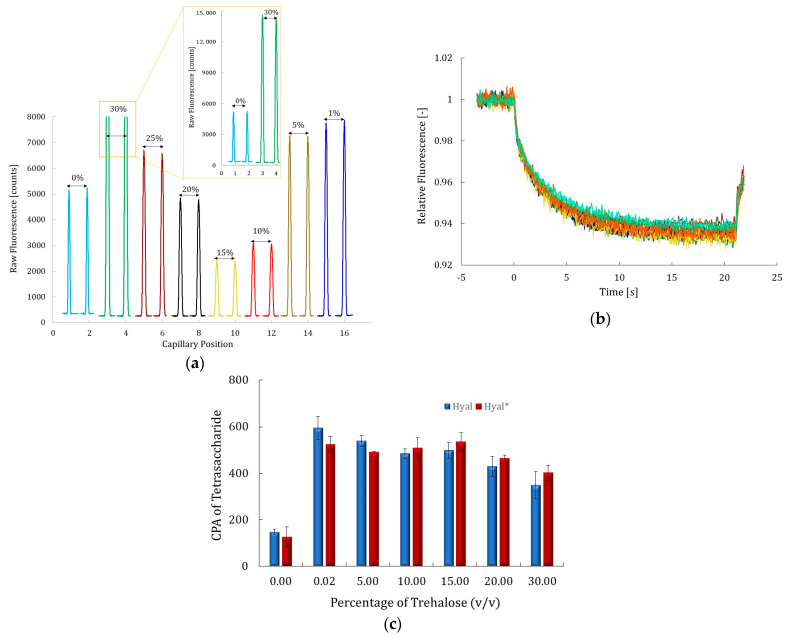 Figure 5
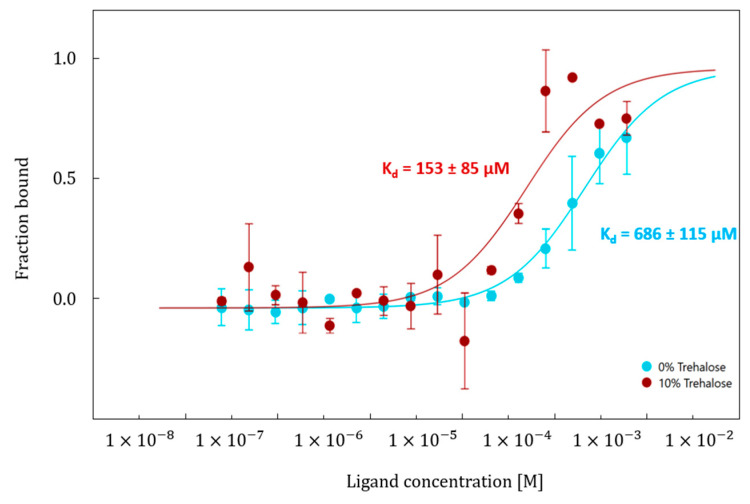 Figure 6
 Figure 7
 Figure 8
Peer Reviews
No public reviews on file for this paper yet. If you reviewed it on a platform where reviews are public (OpenReview, ICLR, NeurIPS, ICML), you can paste yours below so the community can read it here.
Videos
No videos yet. Explain this paper in a talk, walkthrough, or lecture? Add one.
Taxonomy
TopicsMicrofluidic and Bio-sensing Technologies · Microbial Inactivation Methods · Protein purification and stability