Transcriptome and Metabolome Analyses Reveal Molecular Mechanisms Regulating Growth Traits in Large Yellow Croaker (Larimichthys crocea)
Jiayi Fang, Yabing Wang, Jianguang Qin, Guangde Qiao, Qiaozhen Ke, Bingfei Li, Xiaoshan Wang, Shengyu Liu, Shiming Peng

TL;DR
This study combines transcriptome and metabolome data to uncover genes and metabolic pathways that influence growth in large yellow croaker, a key fish in Chinese aquaculture.
Contribution
The study identifies three key genes and multiple metabolic pathways involved in growth regulation in large yellow croaker.
Findings
2344 differentially expressed genes and 198 differentially expressed metabolites were identified across growth and sex groups.
Genes bpgm, mstnb, and mylpfb are crucial for growth regulation in large yellow croaker.
Several metabolic pathways, including aminoacyl-tRNA biosynthesis and inositol phosphate metabolism, are linked to growth differences.
Abstract
The large yellow croaker (Larimichthys crocea) is an economically important marine fish in China, whose growth rate in aquaculture has yet to meet the industry’s demands. Understanding the mechanism underlying inter-individual growth differences will create a favorable condition for selective breeding. In combined transcriptome and metabolome analyses, this study collected muscle tissues from four groups of croakers categorized based on sex and growth rate: fast-growing males, slow-growing males, fast-growing females, and slow-growing females. We identified 2344 differentially expressed genes (DEGs) and 198 differentially expressed metabolites (DEMs). Three genes, bpgm, mstnb, and mylpfb, played a crucial role in the growth regulation of large yellow croaker. The pathway enrichment analysis showed that “Aminoacyl-tRNA biosynthesis”, “Alanine, aspartate and glutamate metabolism”,…
Genes, proteins, chemicals, diseases, species, mutations and cell lines named across the full text — each resolved to its canonical identifier and authoritative record.
Click any figure to enlarge with its caption.
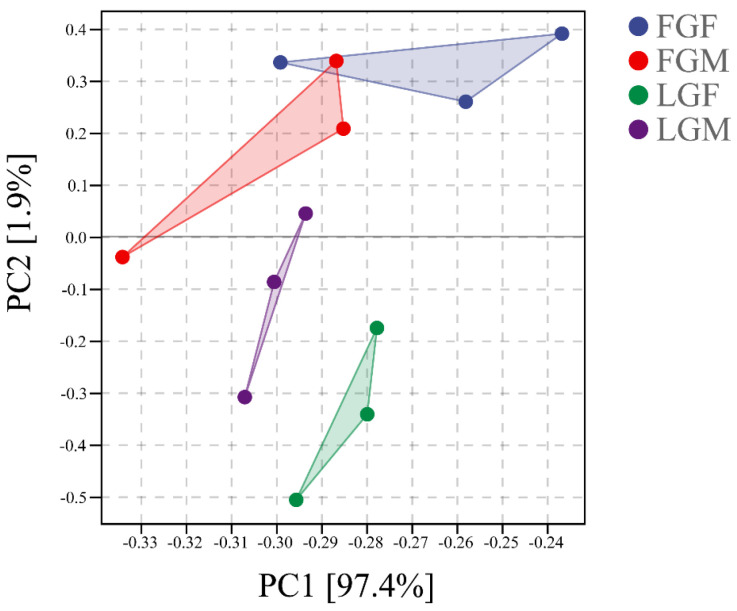 Figure 1
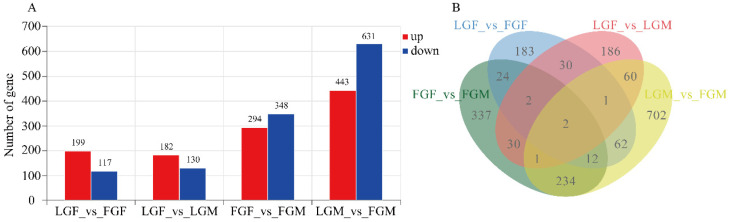 Figure 2
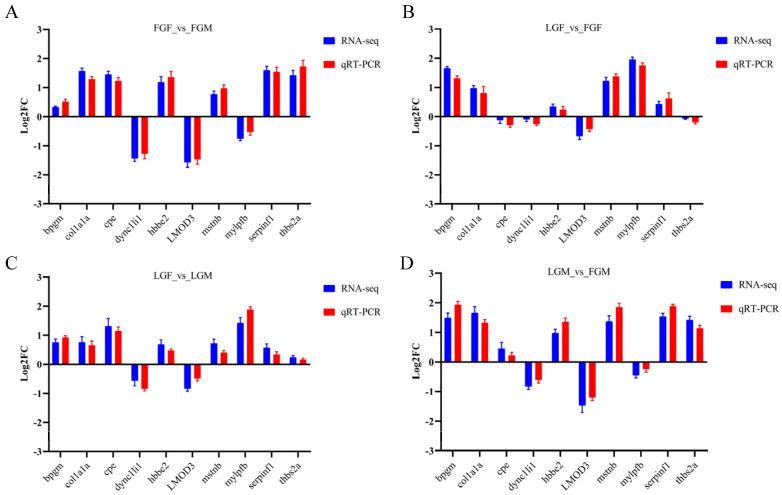 Figure 3
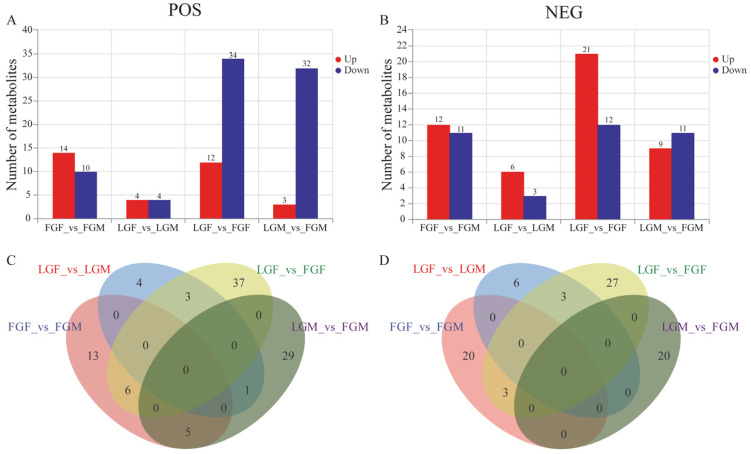 Figure 4
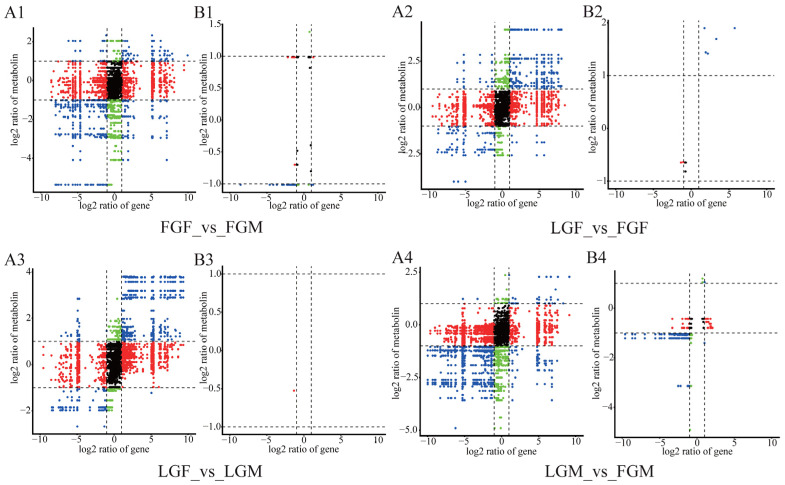 Figure 5
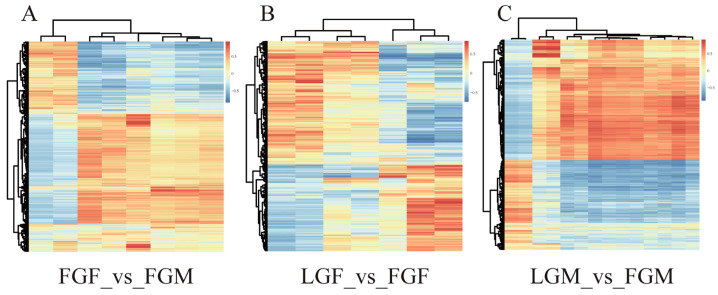 Figure 6
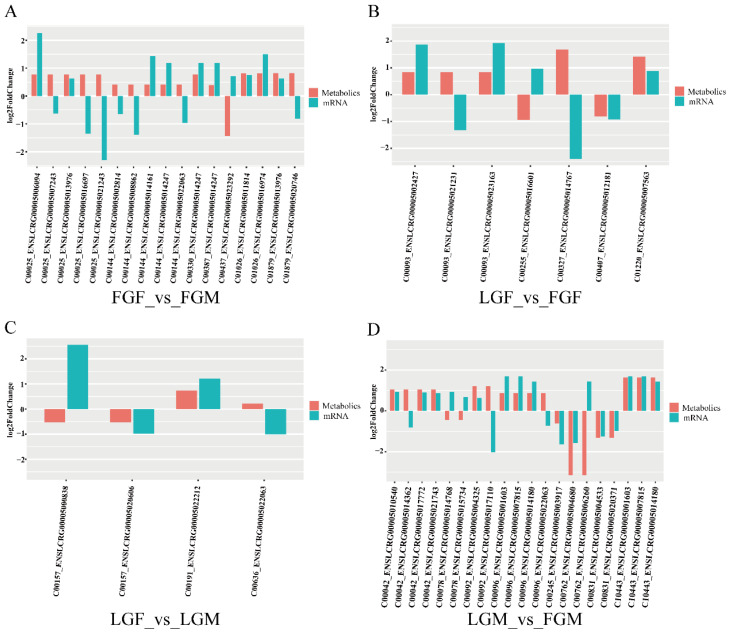 Figure 7
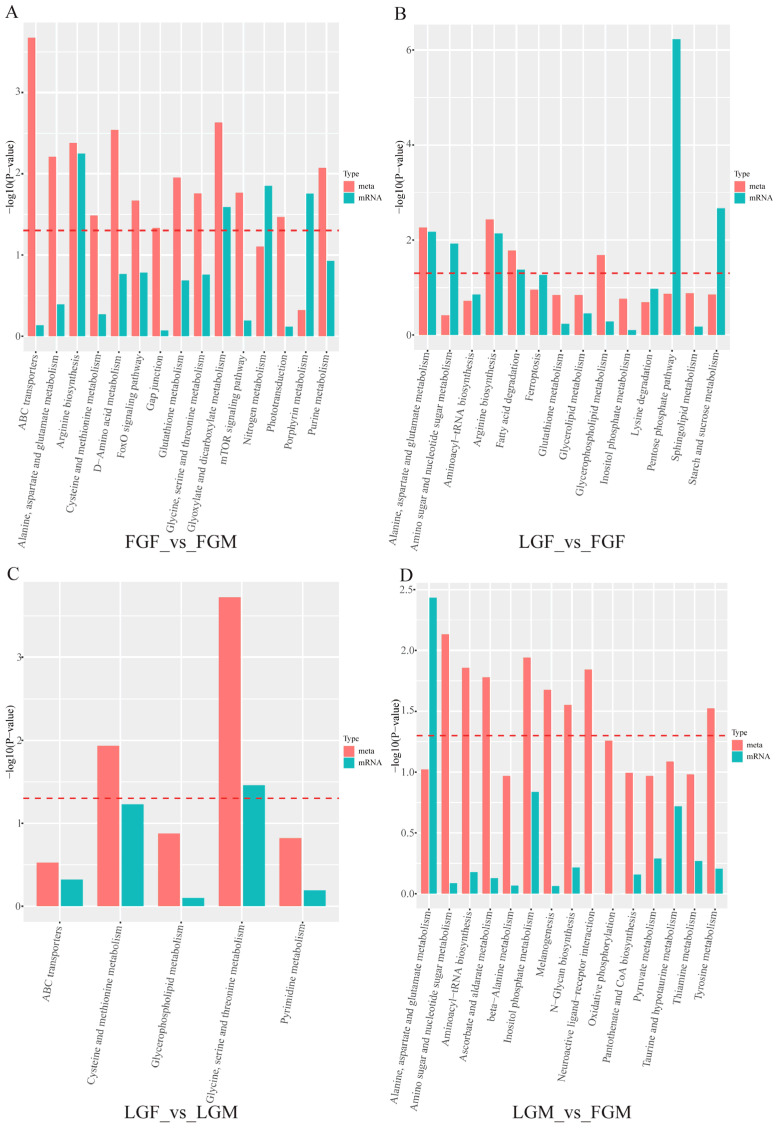 Figure 8
Peer Reviews
No public reviews on file for this paper yet. If you reviewed it on a platform where reviews are public (OpenReview, ICLR, NeurIPS, ICML), you can paste yours below so the community can read it here.
Videos
No videos yet. Explain this paper in a talk, walkthrough, or lecture? Add one.
Taxonomy
TopicsAquaculture Nutrition and Growth · Physiological and biochemical adaptations · Aquaculture disease management and microbiota