Staurosporine as an Antifungal Agent
Filipa C. Santos, Joaquim T. Marquês, Eva N. Santos, Rodrigo F. M. de Almeida

TL;DR
This paper reviews the history and potential of staurosporine as an antifungal agent, focusing on its mechanisms and applications.
Contribution
The paper provides a critical review of staurosporine's antifungal properties and mechanisms, highlighting its potential for drug development.
Findings
Staurosporine induces apoptosis in the fungus Neurospora crassa.
Staurosporine's mechanisms may include targeting membrane lipid domains and altering membrane properties.
The compound has potential as a scaffold for antifungal drug development.
Abstract
Staurosporine (STS) was discovered in 1977 by Omura and colleagues during a chemical screening for microbial alkaloids. It was the first indolocarbazole compound isolated from a soil-dwelling bacterium, Streptomyces staurosporeus. STS was also found to have antifungal activity, but its potent protein kinase (PK) inhibitory properties, perhaps the most extensively characterized biochemical feature of STS, were only revealed nearly a decade after its discovery. Thereafter, STS has been studied mainly for its anticancer potential with foreseen applications ranging from biomedical (e.g., antiparasitic) to agricultural (e.g., insecticidal). Interestingly, the recent discovery that STS induces apoptosis in the filamentous fungus Neurospora crassa renewed interest in this molecule as a scaffold for antifungal drug development. Studies in fungi and mammalian cell lines suggest that, in addition…
Genes, proteins, chemicals, diseases, species, mutations and cell lines named across the full text — each resolved to its canonical identifier and authoritative record.
Click any figure to enlarge with its caption.
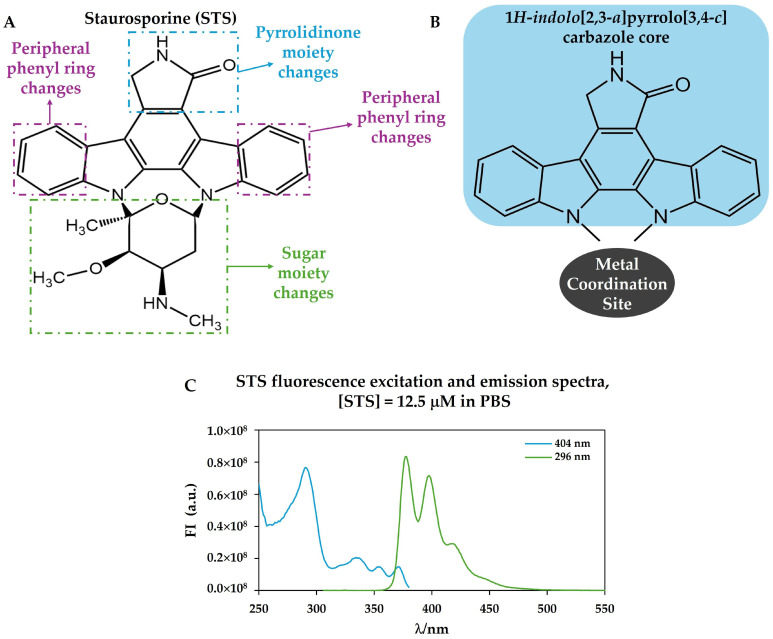 Figure 1
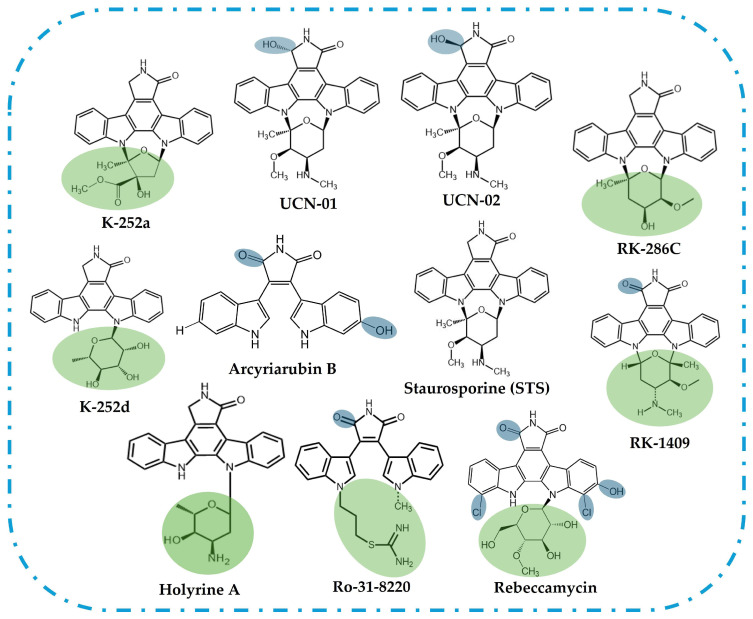 Figure 2
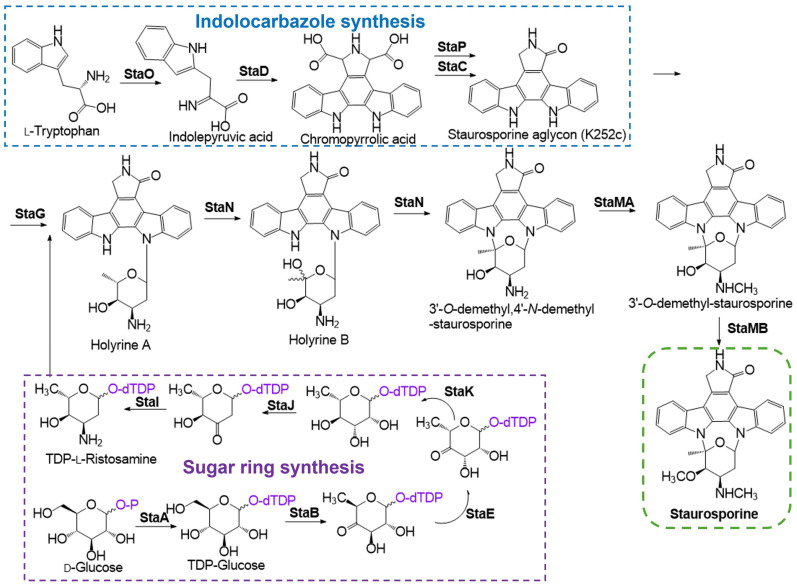 Figure 3
Peer Reviews
No public reviews on file for this paper yet. If you reviewed it on a platform where reviews are public (OpenReview, ICLR, NeurIPS, ICML), you can paste yours below so the community can read it here.
Videos
No videos yet. Explain this paper in a talk, walkthrough, or lecture? Add one.
Taxonomy
TopicsMicrobial Natural Products and Biosynthesis · Fungal Biology and Applications · Plant Pathogens and Fungal Diseases