Gene-Exercise Interactions in Amyloid Metabolism and Clearance: Implications for Alzheimer’s Disease
Maria Francesca Astorino, Giovanni Luca Cipriano, Ivan Anchesi, Maria Lui, Ivana Raffaele, Marco Calabrò, Concetta Crisafulli

TL;DR
This paper reviews how physical exercise interacts with genes to affect amyloid metabolism, offering new insights into preventing or slowing Alzheimer’s disease.
Contribution
The paper provides a novel synthesis of how aerobic exercise modulates amyloid-β metabolism and gene expression in Alzheimer’s disease.
Findings
Exercise influences amyloid-β clearance and modulates APP processing through secretases and neprilysin.
Transcriptomic data reveal gene–exercise interactions in the entorhinal cortex, an early site of amyloid deposition.
Exercise modulates pathways like mitochondrial function and neuroinflammation, potentially enhancing cognitive resilience.
Abstract
Alzheimer’s disease (AD), the most prevalent form of dementia, poses a critical global health challenge as its incidence rises with aging populations. Despite extensive research into its genetic and molecular underpinnings, effective therapeutic strategies remain limited. Growing evidence suggests that physical exercise may offer neuroprotective benefits, potentially mitigating AD progression through multifactorial mechanisms. This review synthesizes current findings on the interplay between aerobic exercise and AD pathophysiology, with a focus on amyloid-β (Aβ) metabolism, gene expression, and neuroinflammation. We explore how exercise influences Aβ clearance, modulates amyloid precursor protein (APP) processing, and impacts the activity of key enzymes such as secretases and neprilysin. Further, we highlight the gene–exercise crosstalk identified through transcriptomic data,…
Genes, proteins, chemicals, diseases, species, mutations and cell lines named across the full text — each resolved to its canonical identifier and authoritative record.
Click any figure to enlarge with its caption.
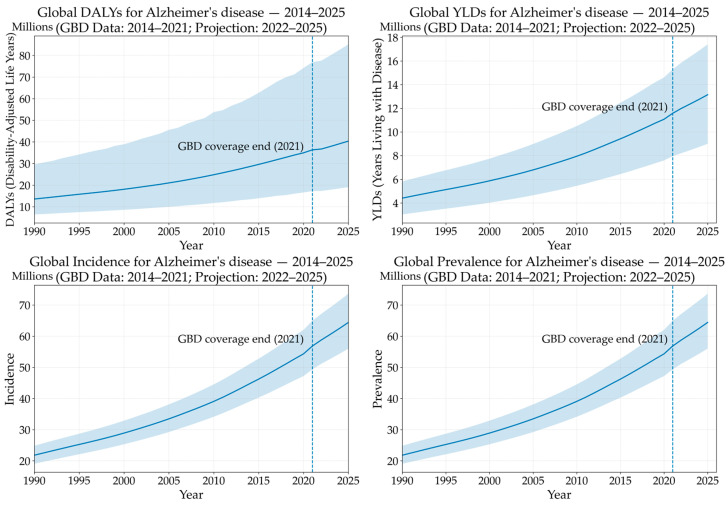 Figure 1
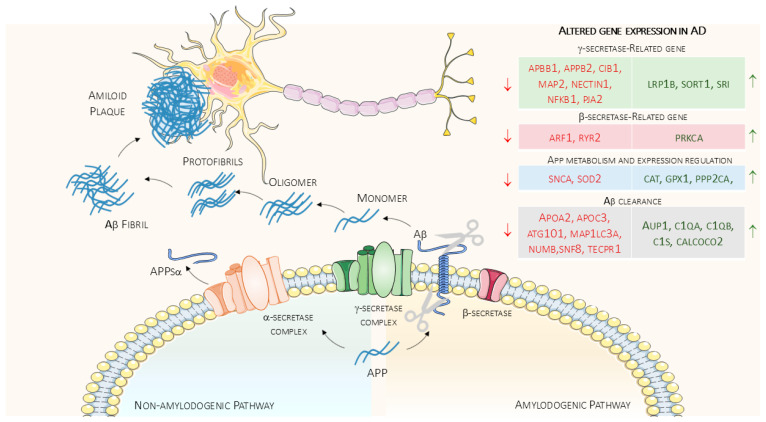 Figure 2
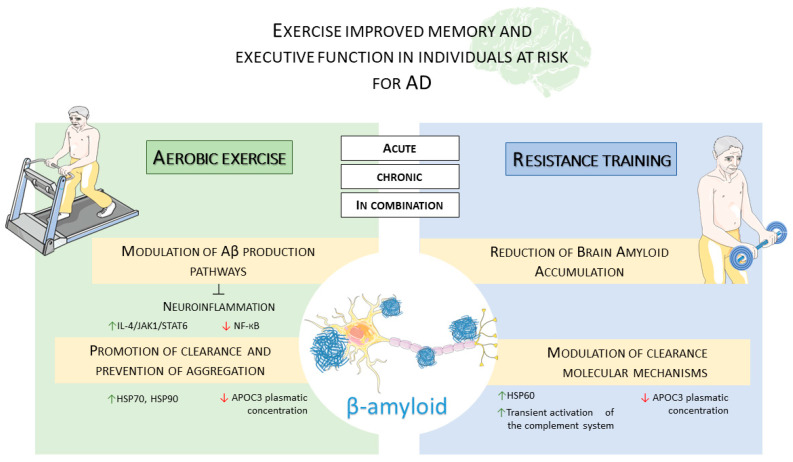 Figure 3
Peer Reviews
No public reviews on file for this paper yet. If you reviewed it on a platform where reviews are public (OpenReview, ICLR, NeurIPS, ICML), you can paste yours below so the community can read it here.
Videos
No videos yet. Explain this paper in a talk, walkthrough, or lecture? Add one.
Taxonomy
TopicsAlzheimer's disease research and treatments · Tryptophan and brain disorders · Stress Responses and Cortisol