NGLY1 as an Emerging Critical Modulator for Neurodevelopment and Pathogenesis in the Brain
Haiwei Zhang, Haipeng Xue, Yu-Chieh Wang, Ying Liu

TL;DR
This paper reviews the role of NGLY1 in brain development and disease, focusing on its impact when it's not functioning properly.
Contribution
The paper provides new insights into the neural functions of NGLY1 and emerging gene therapy approaches for its deficiency.
Findings
NGLY1 deficiency leads to neurodevelopmental and neurological symptoms in humans.
Animal and iPSC-based models reveal molecular mechanisms of NGLY1 deficiency in the CNS.
Gene therapy approaches are being explored to restore NGLY1 activity and treat neurological symptoms.
Abstract
N-glycanase 1 (NGLY1) is a cytoplasmic glycoenzyme that removes N-linked glycans from misfolded glycoproteins. It plays an important role in the endoplasmic reticulum-associated degradation (ERAD) pathway in mammalian cells. NGLY1 dysfunction in humans causes NGLY1 deficiency as a rare autosomal recessive disorder that is characterized by neurodevelopmental delay, hypotonia, movement disorders, seizures, and multi-system involvement. In this review, we summarize recent advances in understanding the neural functions of NGLY1 and the neuropathological phenotypes associated with its deficiency. We discuss the molecular basis of NGLY1 deficiency in the central nervous system (CNS) and pathophysiological insights from animal and human induced pluripotent stem cell (iPSC)-based models. We also highlight emerging gene therapy approaches aimed at restoring NGLY1 activity and alleviating…
Genes, proteins, chemicals, diseases, species, mutations and cell lines named across the full text — each resolved to its canonical identifier and authoritative record.
Click any figure to enlarge with its caption.
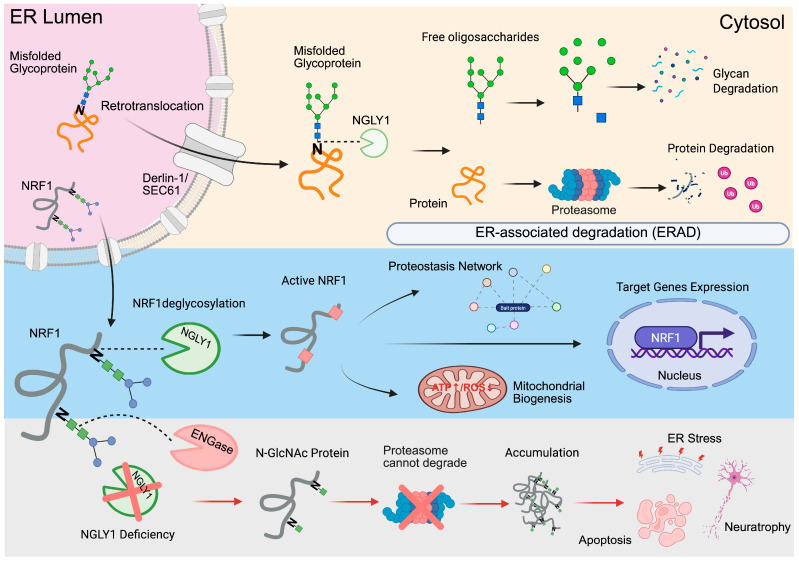 Figure 1
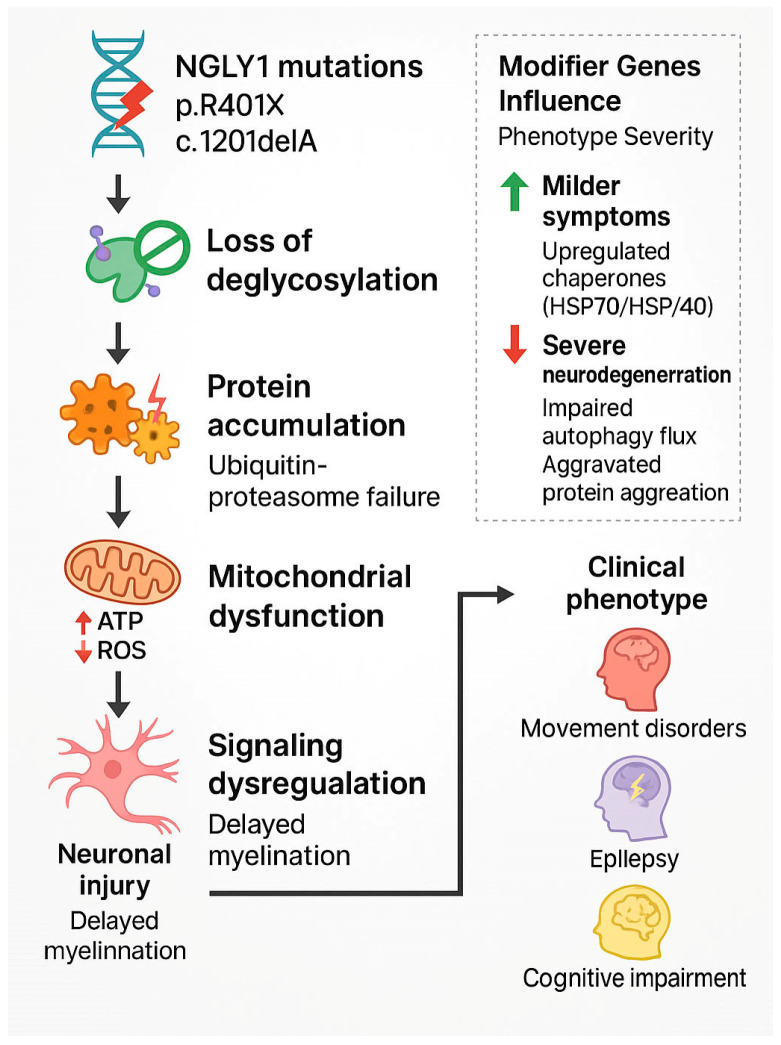 Figure 2
Peer Reviews
No public reviews on file for this paper yet. If you reviewed it on a platform where reviews are public (OpenReview, ICLR, NeurIPS, ICML), you can paste yours below so the community can read it here.
Videos
No videos yet. Explain this paper in a talk, walkthrough, or lecture? Add one.
Taxonomy
TopicsNuclear Receptors and Signaling · Adenosine and Purinergic Signaling · Endoplasmic Reticulum Stress and Disease