Efficacy of a Modified Superficial Temporal Artery–Middle Cerebral Artery Bypass Using Superficial Temporal Artery Side-Branch Donors in Adult Moyamoya Disease: A Technical Note
Shintaro Arai, Tatsuya Sugiyama, Tohru Mizutani, Kenji Sumi, Masaki Matsumoto, Kouzou Murakami, Ryo Irie, Yoichi Morofuji

TL;DR
A modified surgical technique for treating moyamoya disease in adults shows promise by reducing the risk of excessive blood flow to the brain.
Contribution
A modified STA-MCA bypass using small side branches of the STA is proposed as a safer alternative to conventional bypasses.
Findings
All five modified bypass procedures were completed successfully with 100% graft patency confirmed intraoperatively.
Postoperative imaging showed a mild increase in cerebral blood flow without cerebral hyperperfusion syndrome or complications.
All patients had stable or improved neurological outcomes with no new ischemic or hemorrhagic events during follow-up.
Abstract
Background: Adult moyamoya disease (MMD) is a progressive steno-occlusive cerebrovascular disorder for which surgical revascularization is the primary treatment. The standard direct superficial temporal artery–middle cerebral artery (STA-MCA) bypass uses the frontal and/or parietal branch of the STA as the donor. However, in some patients, conventional STA-MCA bypass may be suboptimal because of a large mismatch in caliber between the STA branch and the recipient artery, increasing the risk of cerebral hyperperfusion. This study aimed to investigate the impact of a modified STA-MCA bypass on MMD treatment. Methods: We retrospectively reviewed adult cases of MMD at our institution (2012–2025) for patients who underwent modified direct STA-MCA bypass using a small side branch of the STA as the donor artery. Surgical techniques and clinical outcomes of these cases were analyzed…
Genes, proteins, chemicals, diseases, species, mutations and cell lines named across the full text — each resolved to its canonical identifier and authoritative record.
Click any figure to enlarge with its caption.
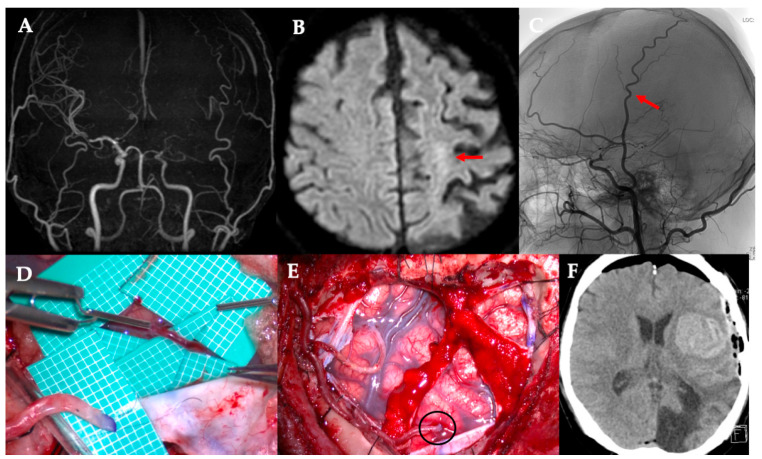 Figure 1
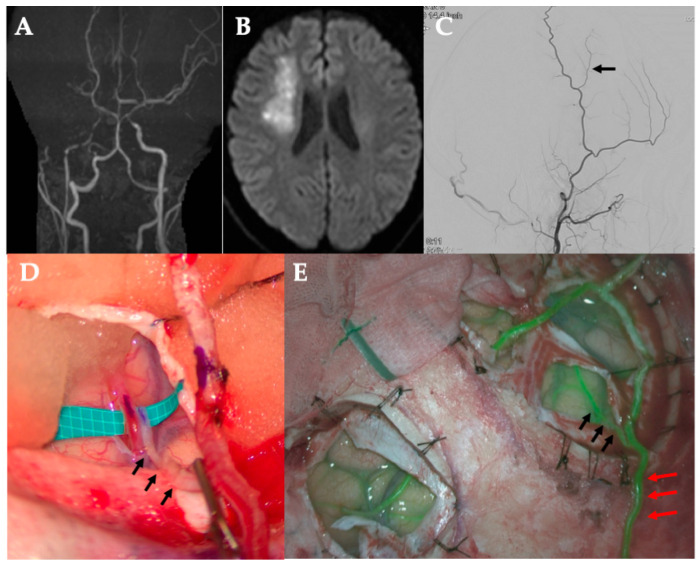 Figure 2
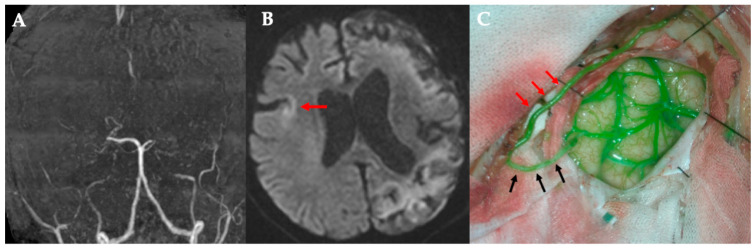 Figure 3
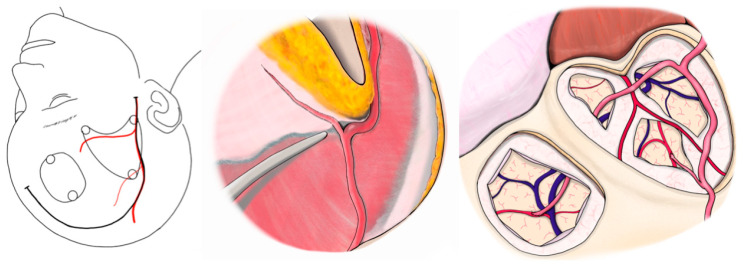 Figure 4
Peer Reviews
No public reviews on file for this paper yet. If you reviewed it on a platform where reviews are public (OpenReview, ICLR, NeurIPS, ICML), you can paste yours below so the community can read it here.
Videos
No videos yet. Explain this paper in a talk, walkthrough, or lecture? Add one.
Taxonomy
TopicsMoyamoya disease diagnosis and treatment · Intracranial Aneurysms: Treatment and Complications · Neurological Complications and Syndromes