Triple-Negative Apocrine Carcinoma: Largest Cohort Highlights Unique Biology and Survival Advantage
Tugba Basoglu, Ugur Ozkerim, Sila Oksuz, Oguzcan Kinikoglu, Sedat Yildirim, Sermin Kokten, Heves Surmeli, Deniz Isik, Ozlem Nuray Sever, Seval Ay Ersoy, Hatice Odabas, Nedim Turan

TL;DR
This study compares a specific type of breast cancer called apocrine carcinoma with other types, finding it has a better survival rate despite lower response to chemotherapy.
Contribution
The study presents the largest cohort of triple-negative apocrine carcinoma (TNAC) and identifies its unique biological and clinical features.
Findings
TNAC patients had lower pCR rates but better 5-year overall survival compared to non-apocrine TNBC.
AR positivity was observed in 64.4% of TNAC cases.
Carboplatin use was rare in TNAC but associated with higher pCR rates.
Abstract
Background/Objectives: Triple-negative breast cancer (TNBC) is a heterogeneous entity lacking ER, PR, and HER2, with aggressive biology and high recurrence risk. Neoadjuvant chemotherapy (NACT) is the standard of care, and a pathological complete response (pCR) is a surrogate marker for survival. Within TNBC, apocrine differentiation (TNAC) is a distinct subtype, often androgen receptor (AR)-positive, with lower chemosensitivity but a favorable prognosis. Comparative studies of TNAC versus classical TNBC remain limited. This study aimed to define clinical and biological differences between TNAC and non-apocrine TNBC (NA-TNBC), representing the largest TNAC cohort to date. Methods: This retrospective study included 129 non-metastatic TNBC patients treated with NACT and surgery (2010–2020). Patients were classified as TNAC or NA-TNBC. Demographic, clinicopathological, and…
Genes, proteins, chemicals, diseases, species, mutations and cell lines named across the full text — each resolved to its canonical identifier and authoritative record.
Click any figure to enlarge with its caption.
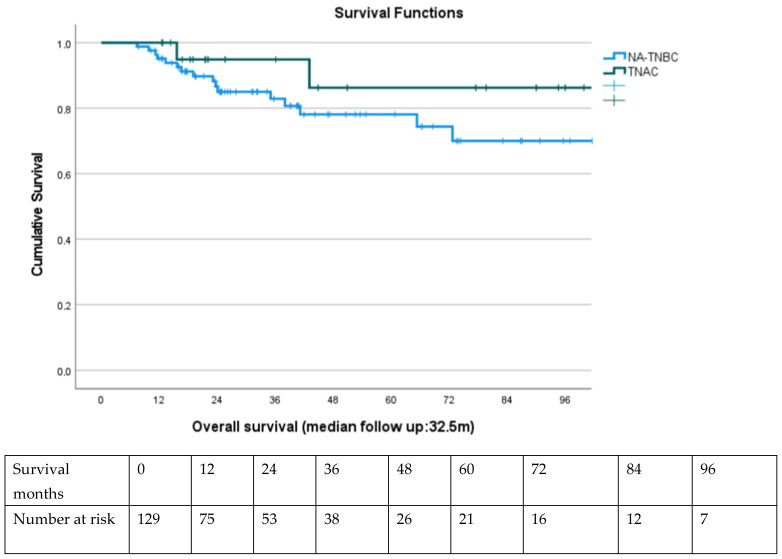 Figure 1
Peer Reviews
No public reviews on file for this paper yet. If you reviewed it on a platform where reviews are public (OpenReview, ICLR, NeurIPS, ICML), you can paste yours below so the community can read it here.
Videos
No videos yet. Explain this paper in a talk, walkthrough, or lecture? Add one.
Taxonomy
TopicsBreast Cancer Treatment Studies · Breast Lesions and Carcinomas · HER2/EGFR in Cancer Research