Lysosomal Network Defects in Early-Onset Parkinson’s Disease Patients Carrying Rare Variants in Lysosomal Hydrolytic Enzyme Genes
Alba Pascual, Thaleia Moulka, Oriol de Fàbregues, Roberta Repossi, Pedro J. García-Ruiz, Saida Ortolano, Marisel De Lucca, Lydia Vela-Desojo, Marta Alves-Villar, Marcos Frías, Cici Feliz-Feliz, Mònica Roldán, Jonathan Olival, Guerau Fernàndez, Francesc Palau, Jordi Pijuan

TL;DR
This study explores how rare genetic variants in lysosomal enzyme genes may contribute to early-onset Parkinson’s disease by disrupting lysosomal function and autophagy.
Contribution
The study identifies novel lysosomal gene variants in early-onset PD patients and demonstrates their functional impact on lysosomal and Golgi networks.
Findings
Rare variants in GLA and GLB1 genes were found to affect enzyme function and Golgi morphology in patient fibroblasts.
All patients showed lysosomal morphology defects, altered pH, and impaired autophagic flux.
These findings suggest that combined genetic and functional approaches are needed to understand EOPD mechanisms.
Abstract
Despite significant advances in understanding the genetics of Parkinson’s disease (PD) and Parkinsonism, the diagnostic yield remains low. Pathogenic variants of GBA1, which encodes the lysosomal enzyme β-glucocerebrosidase and causes recessive Gaucher dis-ease, are recognized as the most important genetic risk factor for PD in heterozygous carriers. This study focuses on the functional genomics of rare genetic variations in other lysosomal hydrolytic enzymes genes in patient-derived fibroblasts. We examined 49 early-onset PD patients using whole exome sequencing and in silico panel analysis based on a curated PD gene list. Two patients were found to carry the p.Asp313Tyr variant in the X-linked GLA gene (encoding GALA, typically associated with Fabry disease), and one patient carried the p.Arg419Gln variant in GLB1 (encoding β-Gal, linked to the recessive GM1 gangliosidosis and…
Genes, proteins, chemicals, diseases, species, mutations and cell lines named across the full text — each resolved to its canonical identifier and authoritative record.
Click any figure to enlarge with its caption.
 Figure 1
 Figure 2
 Figure 3
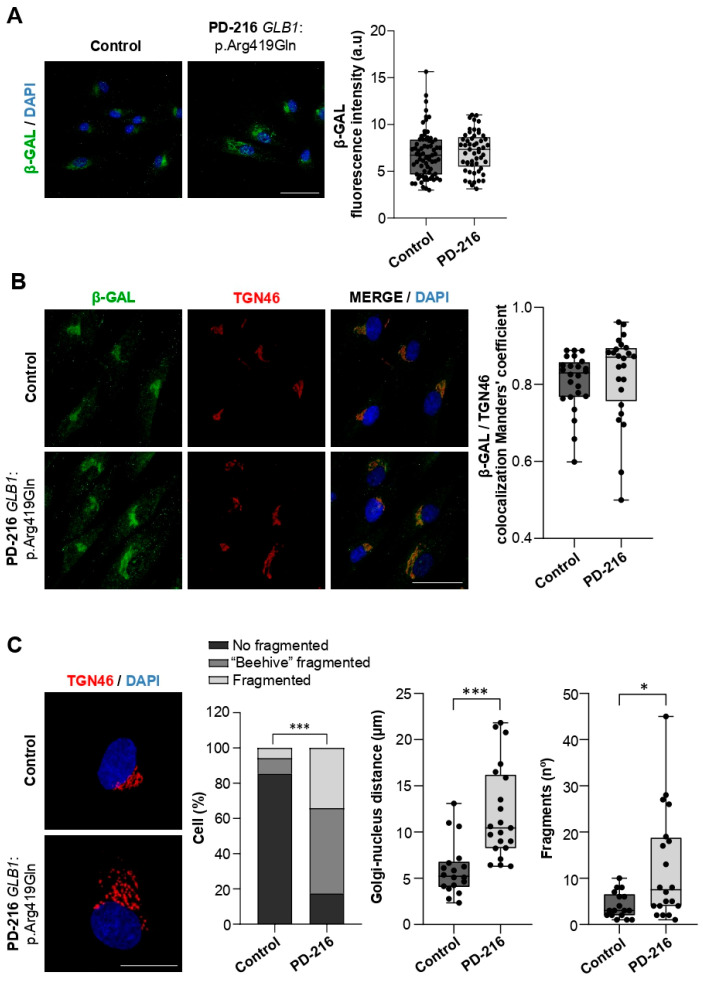 Figure 4
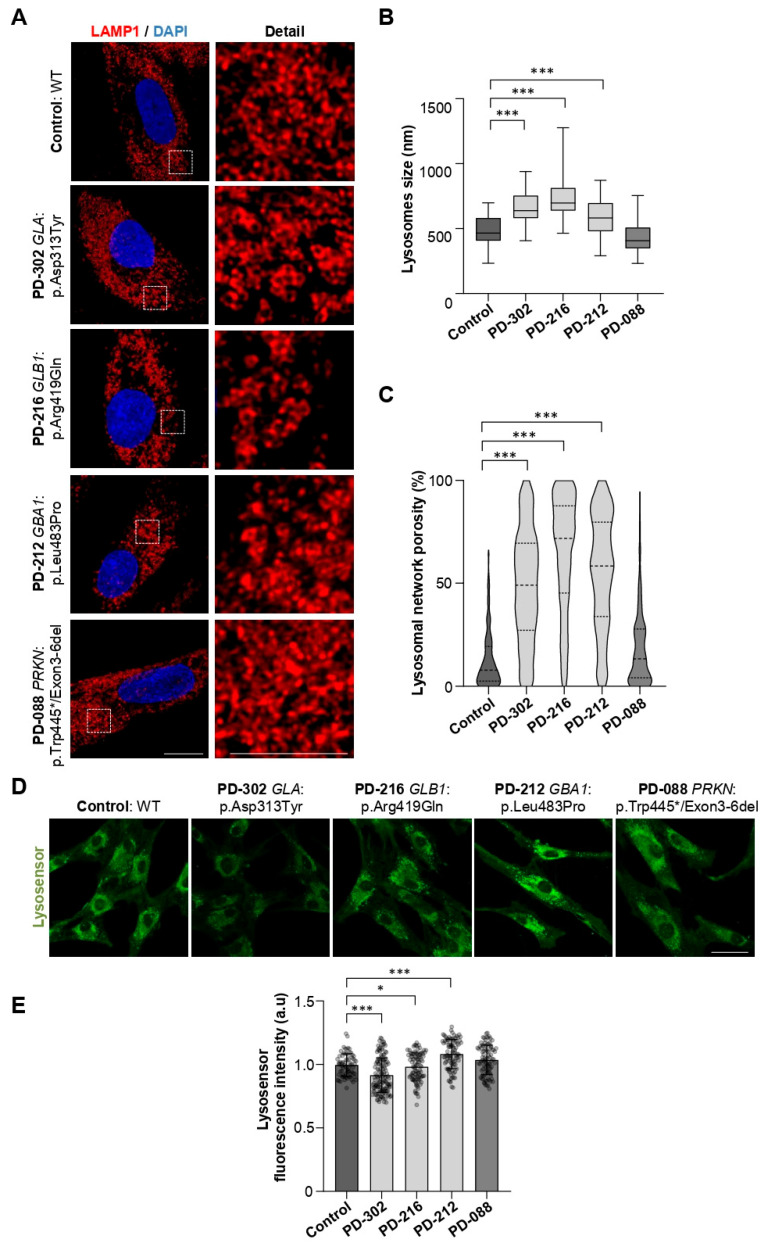 Figure 5
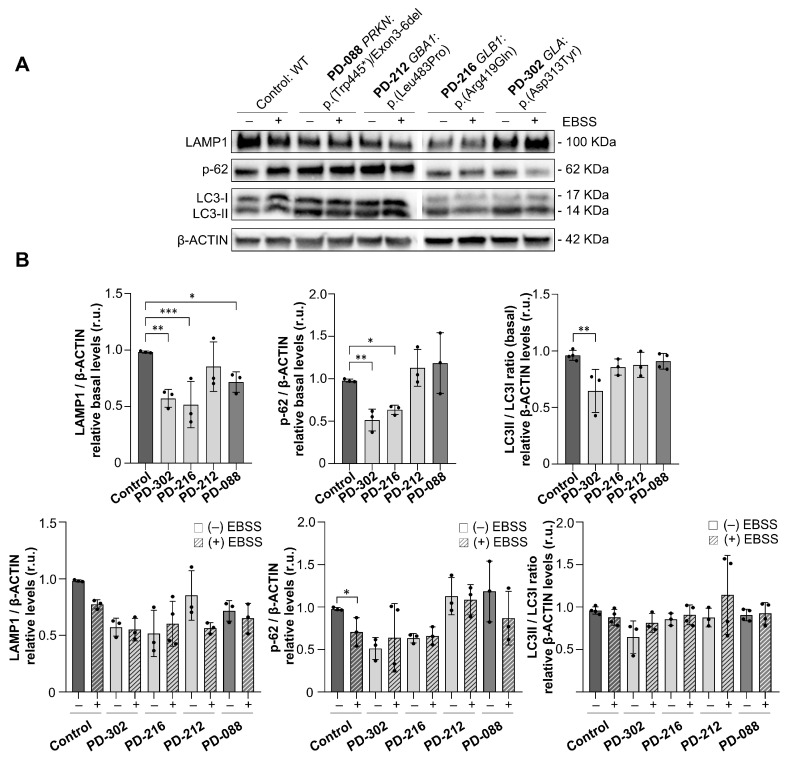 Figure 6
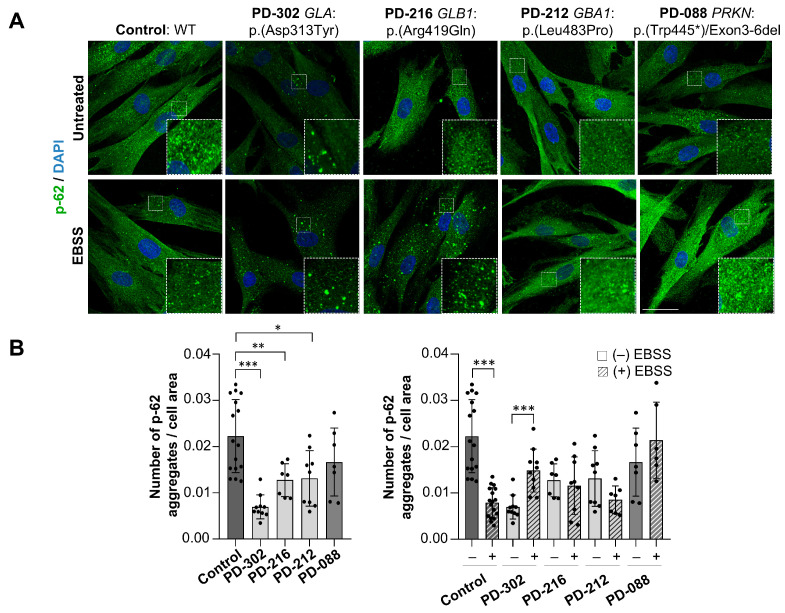 Figure 7
Peer Reviews
No public reviews on file for this paper yet. If you reviewed it on a platform where reviews are public (OpenReview, ICLR, NeurIPS, ICML), you can paste yours below so the community can read it here.
Videos
No videos yet. Explain this paper in a talk, walkthrough, or lecture? Add one.
Taxonomy
TopicsLysosomal Storage Disorders Research · Cellular transport and secretion · Parkinson's Disease Mechanisms and Treatments