Characterization of Rhesus Macaque Embryonic Stem Cells in Primed and Naïve-like Cell States of Pluripotency Using Fourier Transform Infrared (FTIR) Microspectroscopy
Jittanun Srisutush, Worawalan Samruan, Preeyanan Anwised, Anaïs Amzal, Cloé Rognard, Pierre Savatier, Irene Aksoy, Kanjana Thumanu, Rangsun Parnpai

TL;DR
This study uses FTIR microspectroscopy to distinguish between two states of rhesus macaque embryonic stem cells based on their biochemical profiles.
Contribution
The novel contribution is the use of FTIR microspectroscopy to non-invasively detect and classify pluripotent stem cell states in non-human primates.
Findings
FTIR spectra revealed distinct biochemical signatures between primed and naïve-like stem cell states.
PCA and PLS-DA analyses showed 100% specificity and sensitivity in classifying the cell states.
ALGöX-cultured cells showed higher nucleic acid and amide absorbance compared to FGF2/KOSR-cultured cells.
Abstract
We evaluated the potential of Fourier-transform infrared (FTIR) microspectroscopy for non-invasive biochemical profiling of rhesus macaque embryonic stem cells (rhESCs) cultured in either conventional FGF2/KOSR medium or a novel formulation, ALGöX. Cells from both conditions were analyzed by immunocytochemistry, RNA sequencing, and high-resolution FTIR profiling. Molecular marker expression patterns and transcriptional profiles revealed that rhESCs maintained in FGF2/KOSR were in the primed pluripotent state, whereas those cultured in ALGöX adopted a naïve-like state. FTIR spectra showed consistent differences in protein, lipid, and nucleic acid signatures, with ALGöX-cultured cells displaying higher amide I/II and nucleic acid absorbance and FGF2/KOSR-cultured cells exhibiting stronger lipid-associated bands. Principal component analysis (PCA) separated the two groups along PC−1 (64%…
Genes, proteins, chemicals, diseases, species, mutations and cell lines named across the full text — each resolved to its canonical identifier and authoritative record.
Click any figure to enlarge with its caption.
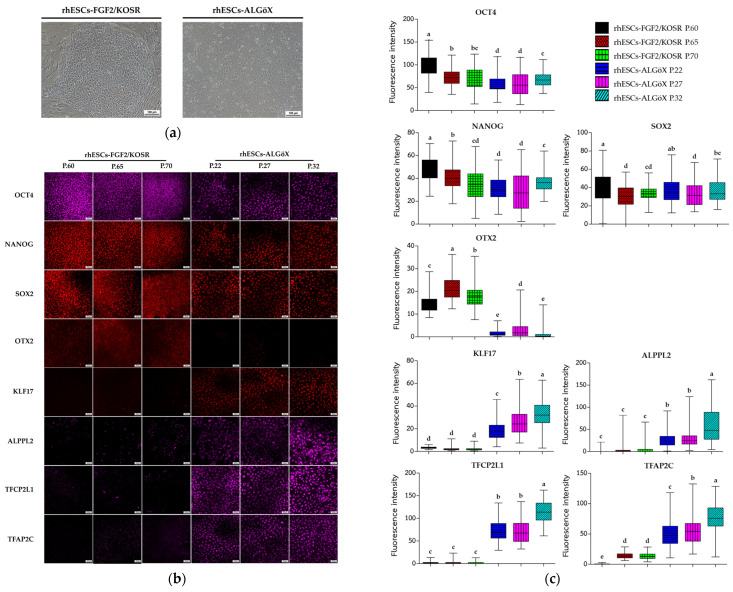 Figure 1
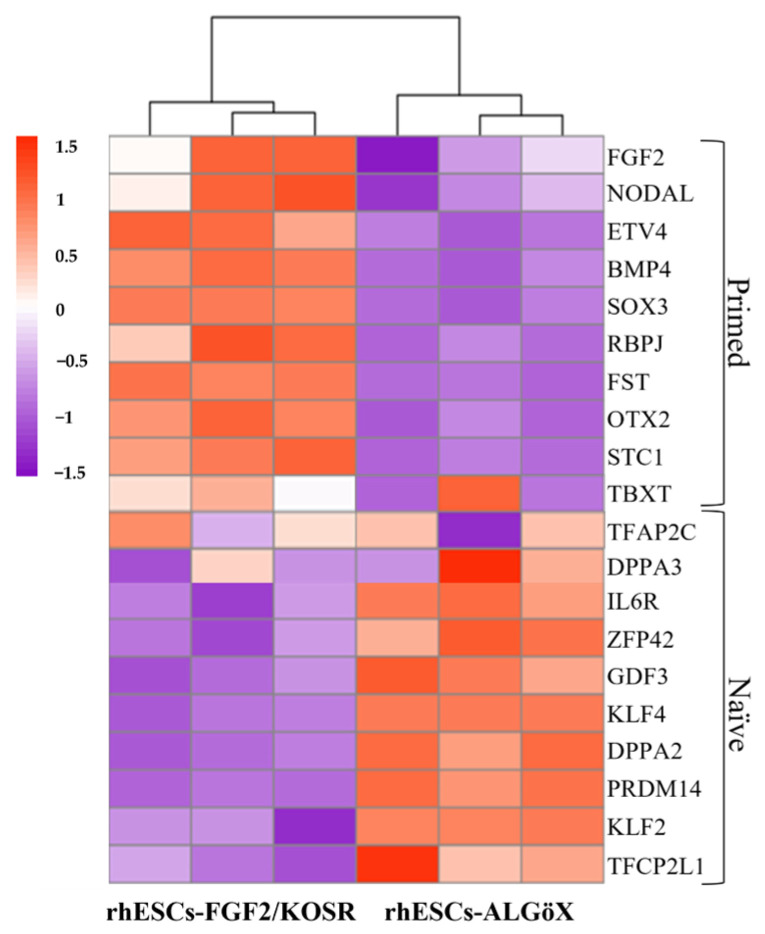 Figure 2
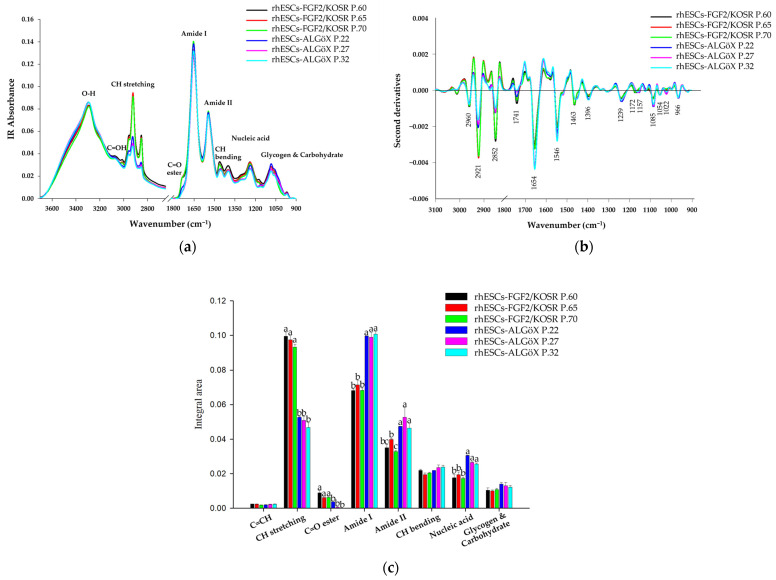 Figure 3
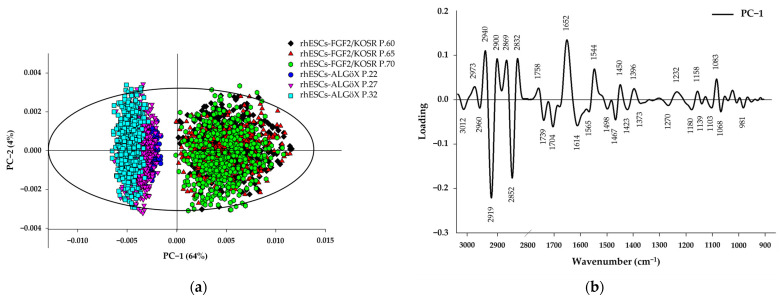 Figure 4
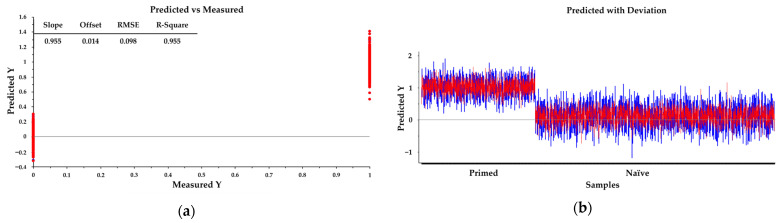 Figure 5
Peer Reviews
No public reviews on file for this paper yet. If you reviewed it on a platform where reviews are public (OpenReview, ICLR, NeurIPS, ICML), you can paste yours below so the community can read it here.
Videos
No videos yet. Explain this paper in a talk, walkthrough, or lecture? Add one.
Taxonomy
TopicsSpectroscopy Techniques in Biomedical and Chemical Research · Spectroscopy and Chemometric Analyses · 3D Printing in Biomedical Research