A High-Throughput Sequencing Strategy for Clinical Repertoire Profiling of T Cell Receptor Beta Chain: Development and Reference Values Across Healthy Adults, Paediatrics, and Cord Blood Units
Emma Enrich, Mireia Antón-Iborra, Carlos Hobeich, Rut Mora-Buch, Ana Gabriela Lara-de-León, Alba Parra-Martínez, Belén Sánchez, Francisco Vidal, Pere Soler-Palacin, Francesc Rudilla

TL;DR
This paper introduces a reliable DNA-based sequencing method for analyzing T cell receptor beta chains in healthy individuals and patients with immune deficiencies.
Contribution
A novel, high-throughput DNA-based TCRβ sequencing strategy with reference values for healthy and diseased populations is developed.
Findings
The sequencing strategy showed high specificity, reproducibility, and sensitivity with minimal PCR bias.
CBUs and paediatrics had greater TCRβ convergence and diversity compared to adults and CMV-positive donors.
RAG-SCID/CID patients exhibited significantly shorter CDR3 length and lower repertoire diversity than healthy paediatrics.
Abstract
T cell receptor (TCR) profiling using next-generation sequencing (NGS) enables high-throughput, in-depth analysis of repertoire diversity, offering numerous clinical applications. We developed a DNA-based strategy to analyse the TCRβ-chain using NGS and established reference values for T cell repertoire characteristics in 74 healthy donors, including 44 adults, 20 paediatrics, and 10 cord blood units (CBUs). Additionally, four paediatric patients with combined immunodeficiency (CID) or severe CID (SCID) due to deleterious mutations in recombination activating genes (RAG) were analysed. The developed strategy demonstrated high specificity, reproducibility, and sensitivity, and all functional variable and joining genes were detected with minimal PCR bias. All donors had a Gaussian-like distribution of complementary-determining region 3 length, with lower presence of non-templated…
Genes, proteins, chemicals, diseases, species, mutations and cell lines named across the full text — each resolved to its canonical identifier and authoritative record.
Click any figure to enlarge with its caption.
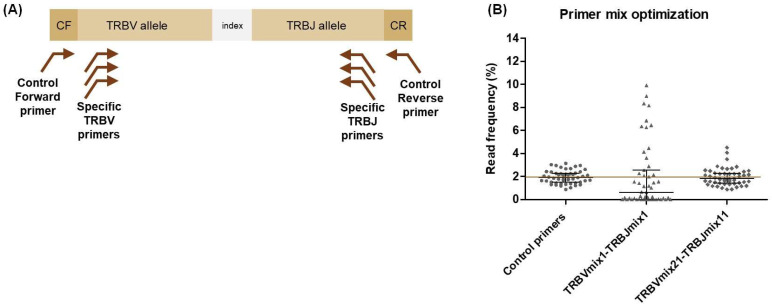 Figure 1
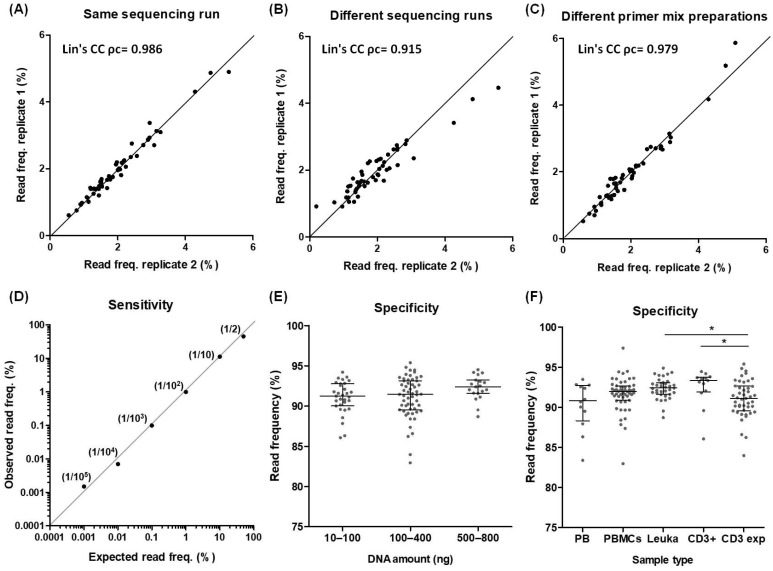 Figure 2
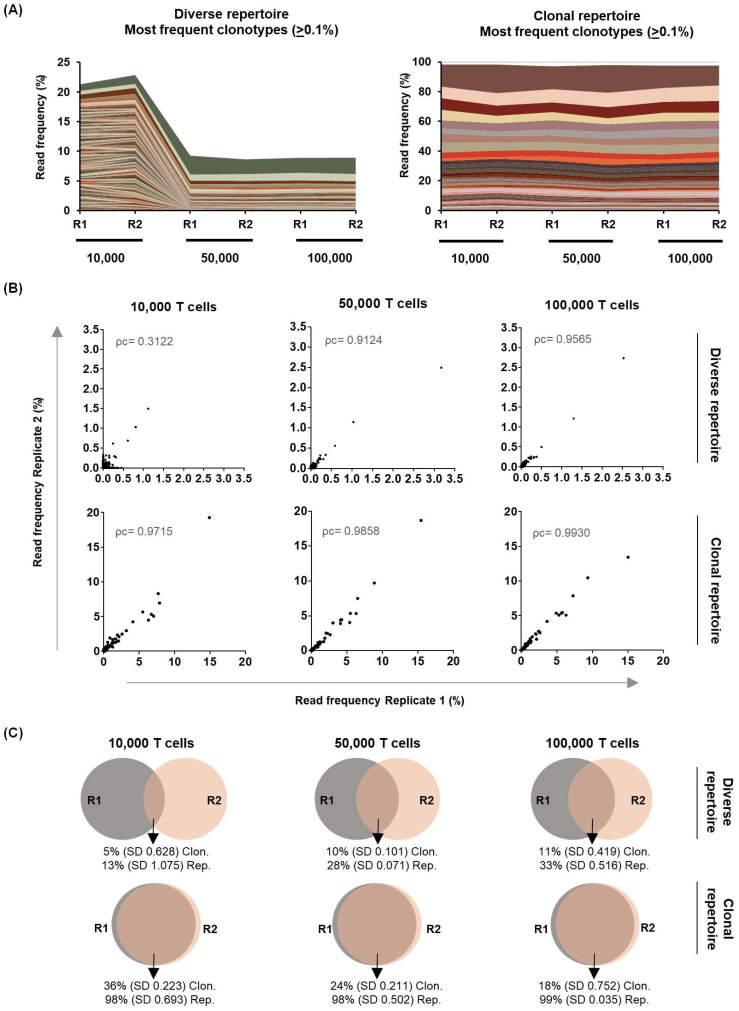 Figure 3
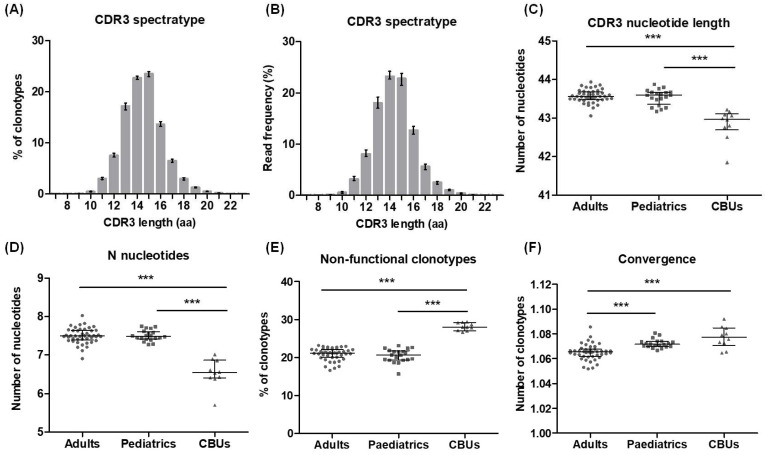 Figure 4
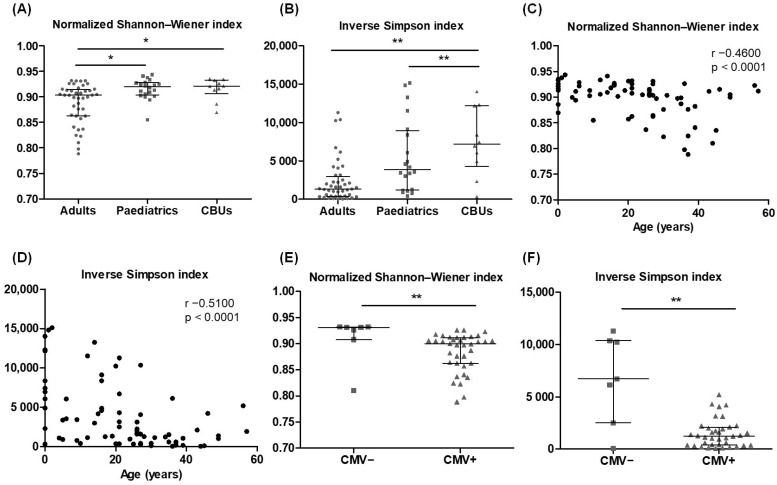 Figure 5
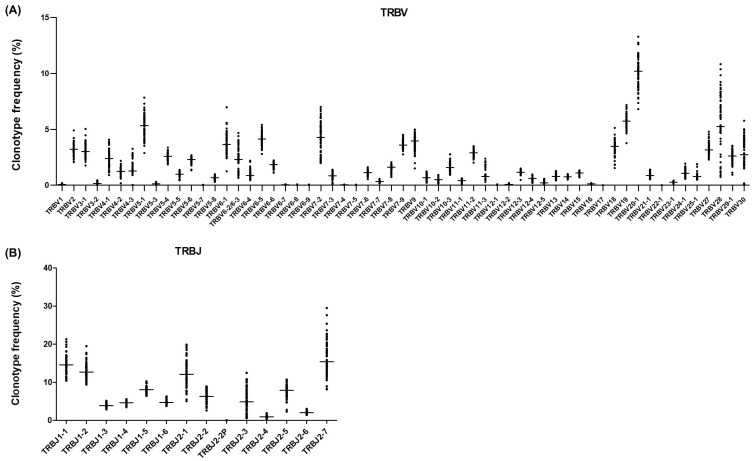 Figure 6
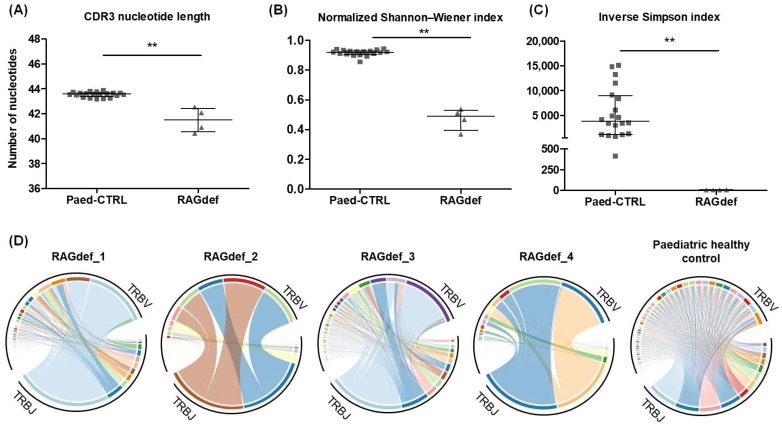 Figure 7
Peer Reviews
No public reviews on file for this paper yet. If you reviewed it on a platform where reviews are public (OpenReview, ICLR, NeurIPS, ICML), you can paste yours below so the community can read it here.
Videos
No videos yet. Explain this paper in a talk, walkthrough, or lecture? Add one.
Taxonomy
TopicsCytomegalovirus and herpesvirus research · Immunodeficiency and Autoimmune Disorders · Immune Cell Function and Interaction