Active Inclusion Bodies in the Multienzymatic Synthesis of UDP-N-acetylglucosamine
Romana Köszagová, Klaudia Palenčárová, Jozef Nahálka

TL;DR
This paper shows that bacterial inclusion bodies can be used as active enzyme aggregates to efficiently produce valuable biochemicals like UDP-N-acetylglucosamine.
Contribution
The study demonstrates a novel use of active inclusion bodies for multienzymatic synthesis with cofactor regeneration.
Findings
Active inclusion bodies of polyphosphate kinases achieved 10-fold ATP regeneration.
UTP was fully utilized without degradation when using active inclusion bodies.
The method enabled the synthesis of UDP-N-acetylglucosamine without enzyme purification.
Abstract
Bacterial inclusion bodies (IBs) are still generally considered to be waste products of recombinant protein production, despite various studies that have challenged this conventional view in the last two decades, and have been proposed for use as immobilized enzymes in vivo for biocatalysis. Current advances in genetic and molecular biology make it possible to perform multienzymatic reactions or enzymatic cascades to synthesize valuable products. When cascades need cofactor regener tion, it is difficult to use “cheap” whole cells or their lysates, and “expensive” enzyme purification is required. The capture of enzymatic activity into active IBs (aIBs), well-separable protein aggregates from cell lysate, could represent a usable compromise between purified enzymes and cell lysates. It is shown here that the combination of two polyphosphate kinases (PPKs) in the form of aIBs leads to…
Genes, proteins, chemicals, diseases, species, mutations and cell lines named across the full text — each resolved to its canonical identifier and authoritative record.
Click any figure to enlarge with its caption.
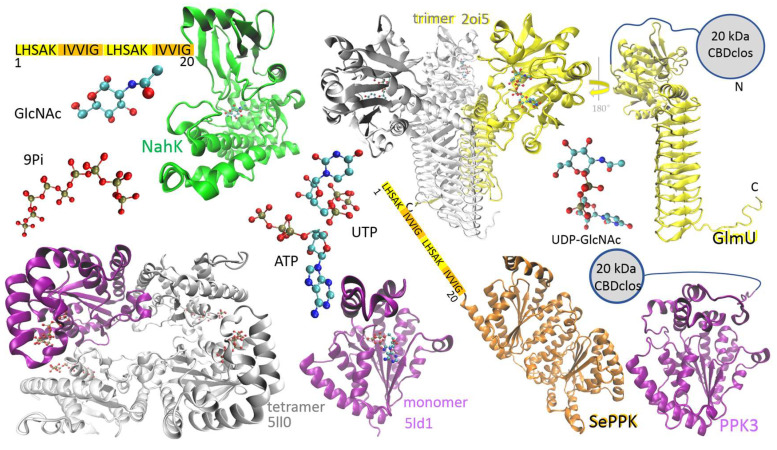 Figure 1
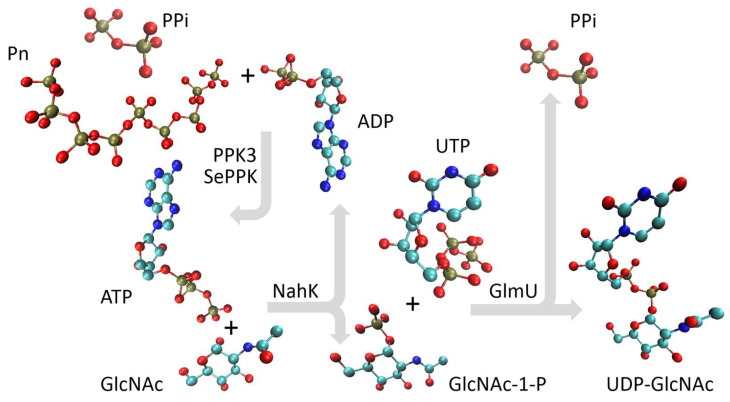 Figure 2
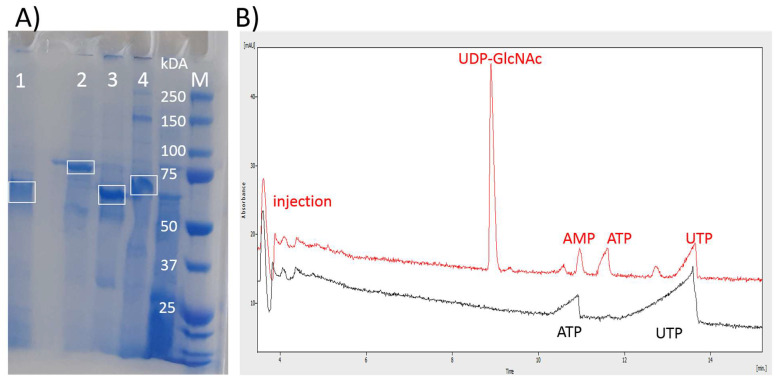 Figure 3
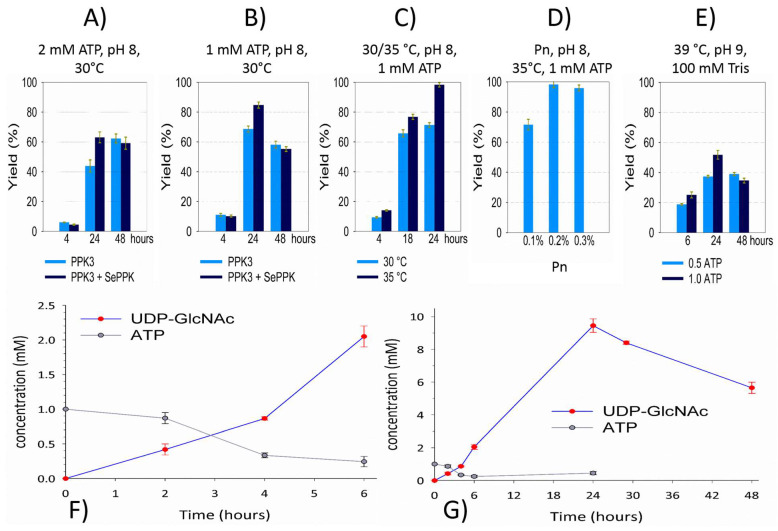 Figure 4
Peer Reviews
No public reviews on file for this paper yet. If you reviewed it on a platform where reviews are public (OpenReview, ICLR, NeurIPS, ICML), you can paste yours below so the community can read it here.
Videos
No videos yet. Explain this paper in a talk, walkthrough, or lecture? Add one.
Taxonomy
TopicsCarbohydrate Chemistry and Synthesis · Biochemical and Molecular Research · Glycosylation and Glycoproteins Research