Bisphenol A Interferes with Mast Cell-Mediated Promotion of Cellular Processes Critical for Spiral Artery Remodeling
Federica Romanelli, Ningjuan Zhang, Mario Bauer, Beate Fink, Ana Claudia Zenclussen, Anne Schumacher, Nicole Meyer

TL;DR
Bisphenol A disrupts mast cell support for critical pregnancy-related blood vessel changes, potentially harming reproductive health.
Contribution
This study identifies bisphenol A as a disruptor of mast cell-mediated processes essential for spiral artery remodeling during pregnancy.
Findings
BPA exposure reduced mast cell promotion of trophoblast invasion and vascular smooth muscle cell transition.
High BPA doses altered gene expression related to mast cell activation and trophoblast invasion.
Low BPA doses increased pro-inflammatory mediator expression in mast cells without affecting trophoblasts.
Abstract
Mast cells (MCs) belong to the cell network that regulates uterine spiral artery remodeling (uSAR), a critical vascular adaptation supporting placental development and fetal growth. Our previous in vitro study demonstrated that human MCs promote trophoblast invasion, as well as uterine vascular smooth muscle cells (uVSMCs) migration and transition to a synthetic phenotype—essential steps for a successful uSAR. Although MCs are known targets of bisphenol A (BPA), a widespread endocrine-disrupting chemical, its impact on their supportive role in uSAR is unknown. In this study, we used murine cell lines to investigate whether BPA (0.1–100 µM) affects MC-mediated promotion of cellular processes critical for uSAR. Our results showed that BPA exposure hindered MCs’ ability to promote trophoblast invasion and the switch in uVSMCs’ synthetic phenotype and migration. The highest concentrations…
Genes, proteins, chemicals, diseases, species, mutations and cell lines named across the full text — each resolved to its canonical identifier and authoritative record.
Click any figure to enlarge with its caption.
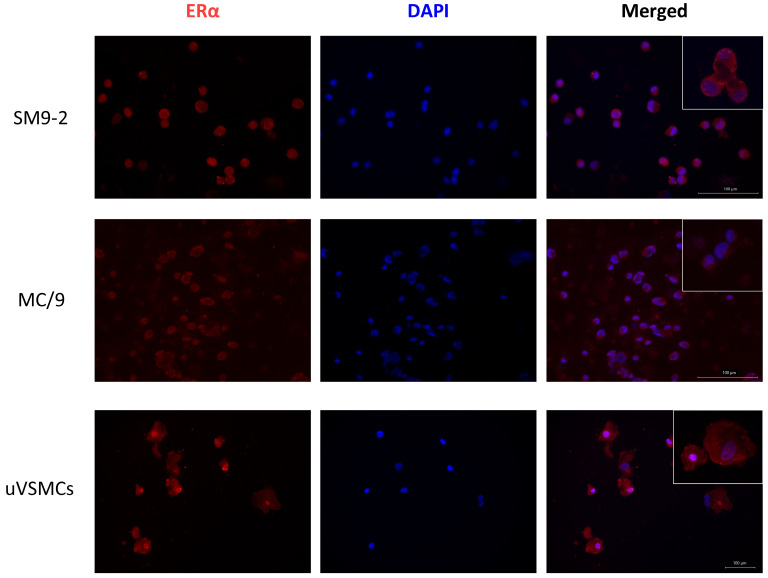 Figure 1
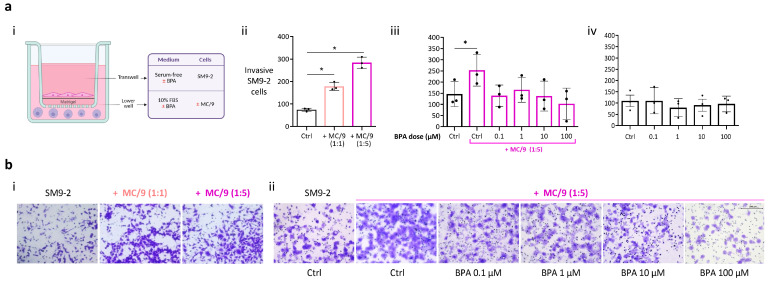 Figure 2
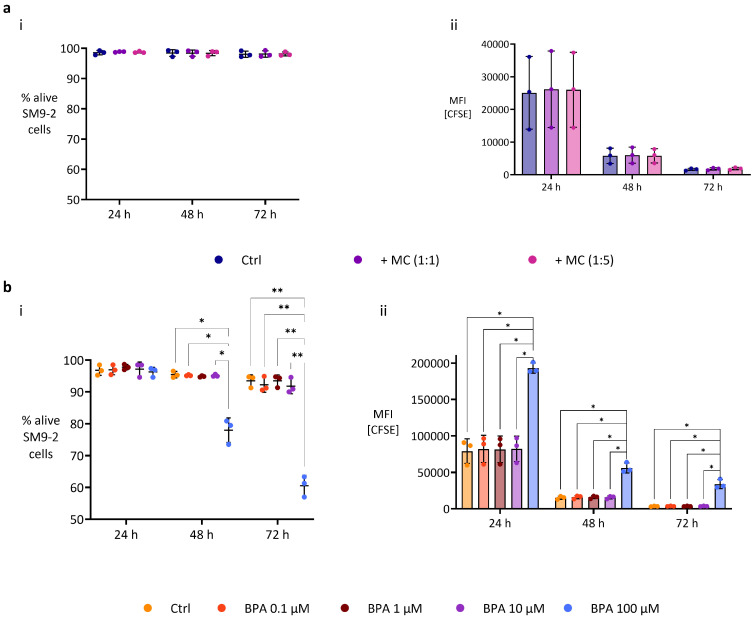 Figure 3
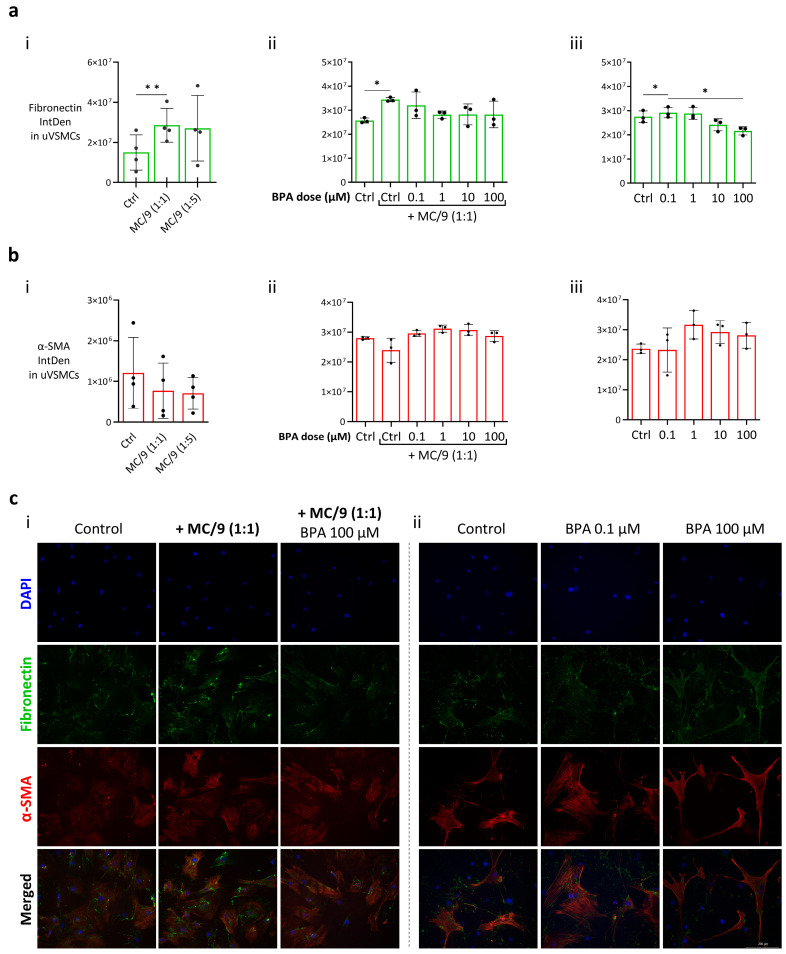 Figure 4
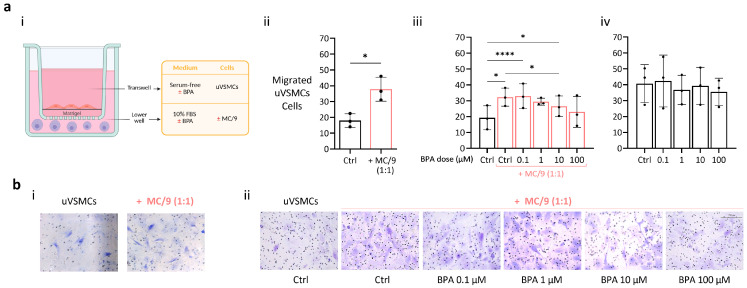 Figure 5
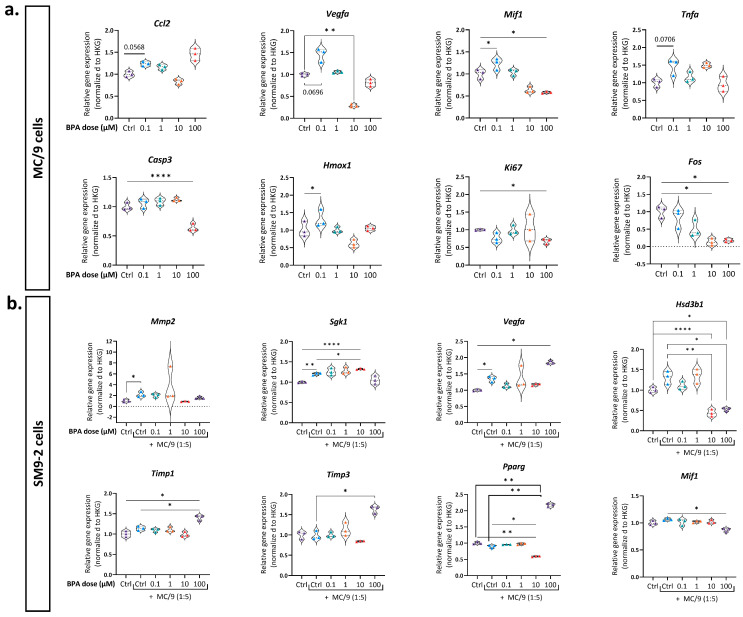 Figure 6
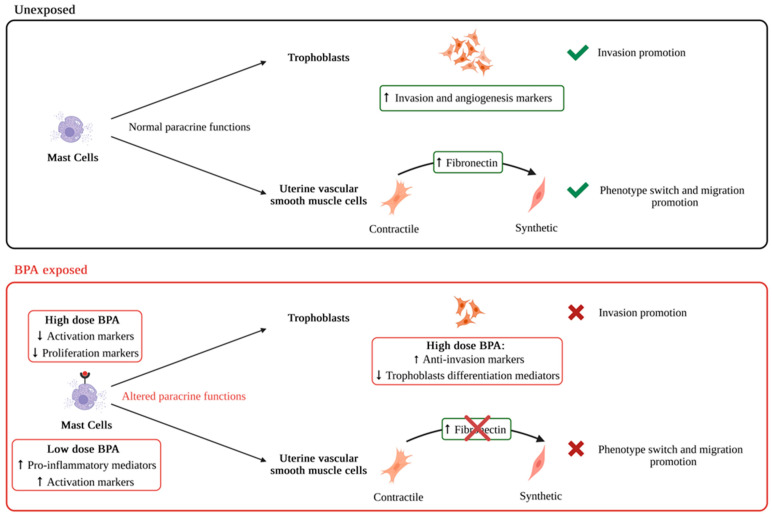 Figure 7
Peer Reviews
No public reviews on file for this paper yet. If you reviewed it on a platform where reviews are public (OpenReview, ICLR, NeurIPS, ICML), you can paste yours below so the community can read it here.
Videos
No videos yet. Explain this paper in a talk, walkthrough, or lecture? Add one.
Taxonomy
TopicsAngiogenesis and VEGF in Cancer · Click Chemistry and Applications · Nuclear Receptors and Signaling