Asymmetric Degenerative Changes Between Convex and Concave Sides in Symptomatic Adult Degenerative Scoliosis
Jun-Ho Lee, Sung Hyun Lee, Eun Ah Cho, Jin Hee Ahn, Jae-Geum Shim, Eun Jung Oh, Seunghyeon Lee, Ji Na Kim

TL;DR
This study finds that degenerative changes in the spine are more severe on the concave side in adult scoliosis patients.
Contribution
The study reveals asymmetric degeneration patterns in spinal muscles and structures between concave and convex sides in ADS.
Findings
Muscle volume is consistently lower on the concave side across all paraspinal muscles.
Fat infiltration is higher in the erector spinae and multifidus on the concave side.
Degenerative changes like foraminal stenosis and disc degeneration are more severe on the concave side.
Abstract
Background/Objectives: Adult degenerative scoliosis (ADS) is a three-dimensional spinal deformity caused by asymmetric degeneration of intervertebral discs, facet joints, and paraspinal muscles (PSM). Although previous studies have identified bilateral asymmetry in the multifidus (MF), the erector spinae (ES), and psoas (PS), the underlying mechanism remains unclear. This study aims to compare muscle volume (MV), fat infiltration (FI), and degenerative changes on the concave (CC) and convex (CV) sides in symptomatic ADS patients. Methods: This study included patients with ADS who visited Kangbuk Samsung Hospital between 2022 and 2024. MV and FI were measured by CT scans, and facet joint degeneration (FJD), disc degeneration (DD), and foraminal stenosis (FS) were assessed by MRI. The values of CV and CC side were compared. Results: 74 patients were enrolled with a mean age of 71.38 ± 8.6…
Genes, proteins, chemicals, diseases, species, mutations and cell lines named across the full text — each resolved to its canonical identifier and authoritative record.
Click any figure to enlarge with its caption.
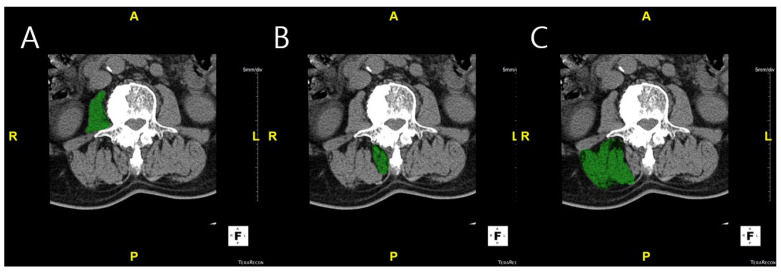 Figure 1
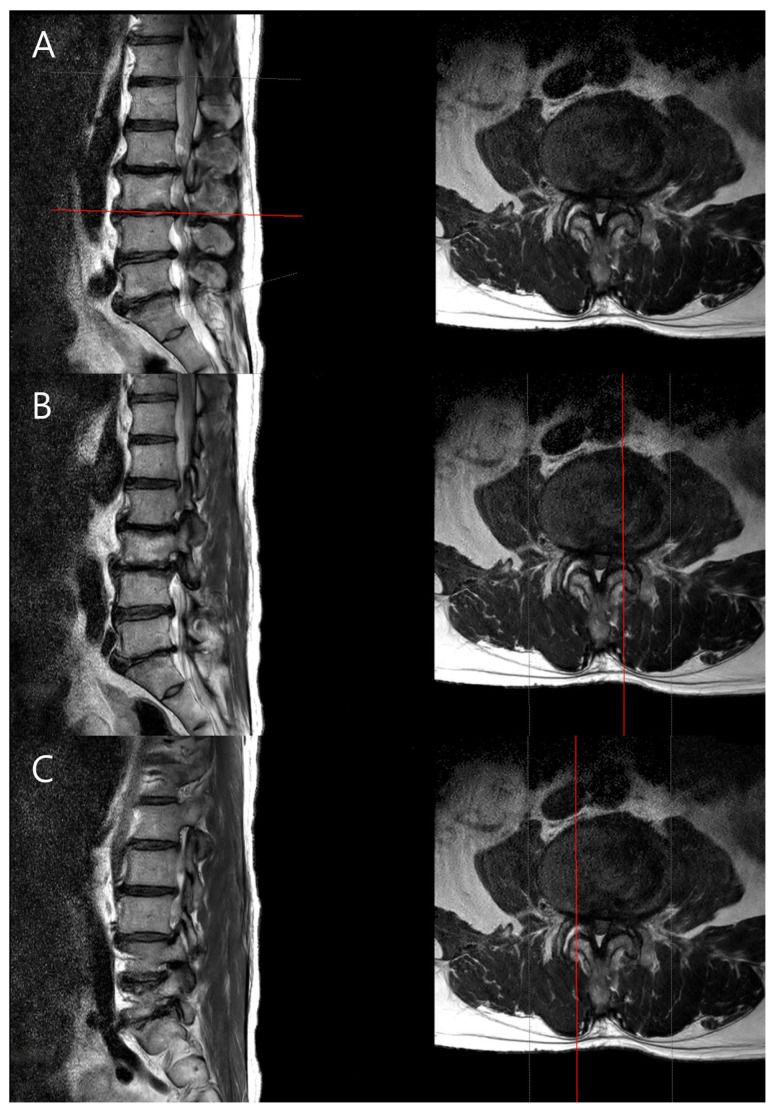 Figure 2
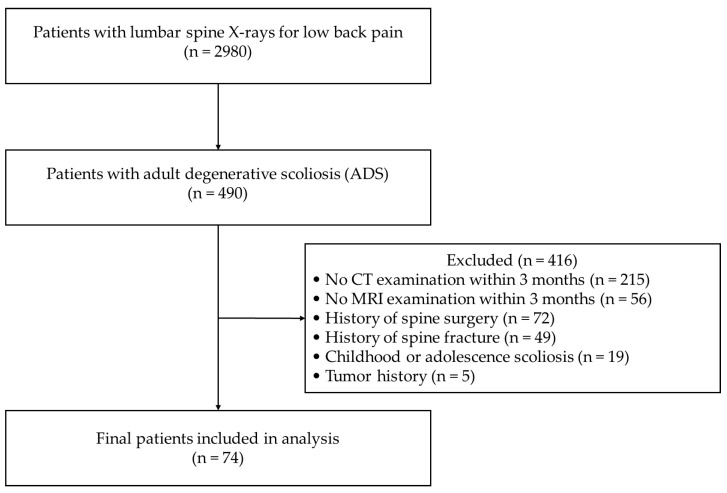 Figure 3
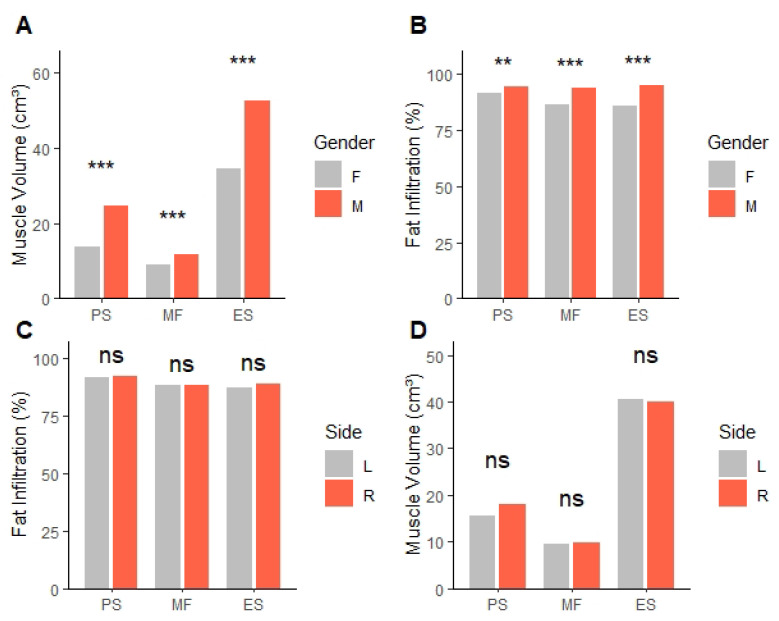 Figure 4
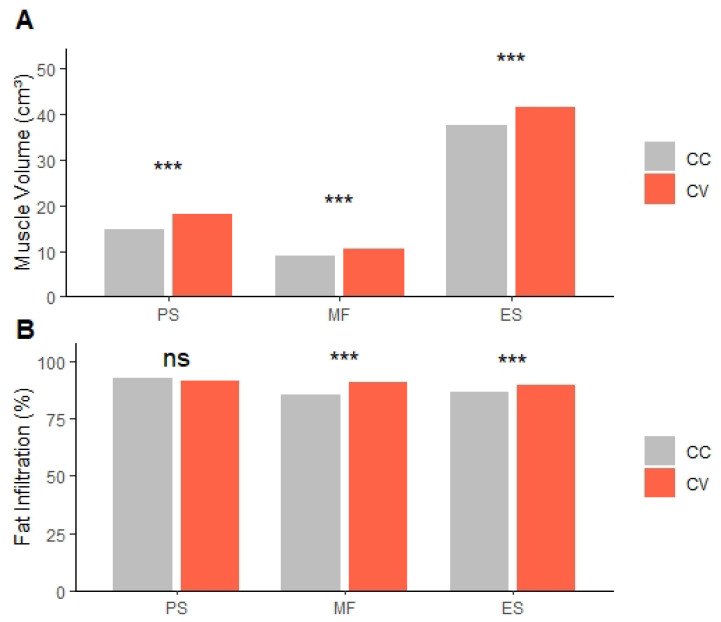 Figure 5
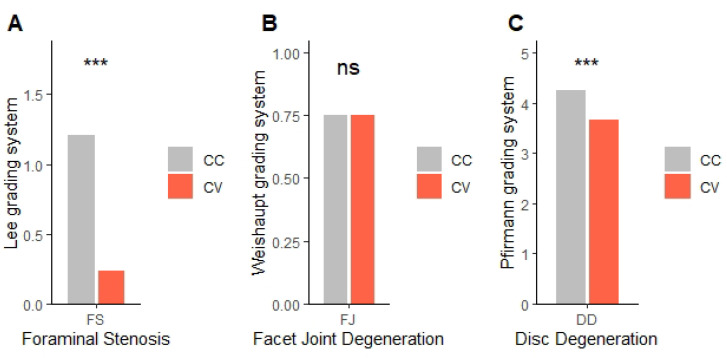 Figure 6
Peer Reviews
No public reviews on file for this paper yet. If you reviewed it on a platform where reviews are public (OpenReview, ICLR, NeurIPS, ICML), you can paste yours below so the community can read it here.
Videos
No videos yet. Explain this paper in a talk, walkthrough, or lecture? Add one.
Taxonomy
TopicsScoliosis diagnosis and treatment · Spine and Intervertebral Disc Pathology · Spinal Fractures and Fixation Techniques