Cerebellar Contributions to Spatial Learning and Memory: Effects of Discrete Immunotoxic Lesions
Martina Harley Leanza, Elisa Storelli, David D’Arco, Gioacchino de Leo, Giulio Kleiner, Luciano Arancio, Giuseppe Capodieci, Rosario Gulino, Antonio Bava, Giampiero Leanza

TL;DR
This study investigates how the cerebellum and basal forebrain work together to support spatial learning and memory in rats.
Contribution
The study uses targeted immunotoxic lesions to show functional interactions between the cerebellum and basal forebrain in cognitive processes.
Findings
Discrete cerebellar lesions alone did not impair spatial learning or memory in rats.
Double lesions (cerebellar and basal forebrain) caused severe impairments in reference and working memory.
Purkinje cell loss was observed in cerebellar-lesioned rats but not in basal forebrain-lesioned rats.
Abstract
Evidence of possible cerebellar involvement in spatial processing, place learning and other types of higher order functions comes mainly from clinical observations, as well as from mutant mice and lesion studies. The latter, in particular, have reported deficits in spatial learning and memory following surgical or neurotoxic cerebellar ablation. However, the low specificity of such manipulations has often made it difficult to precisely dissect the cognitive components of the observed behaviors. Likewise, due to conflicting data coming from lesion studies, it has not been possible so far to conclusively address whether a cerebellar dysfunction is sufficient per se to induce learning deficits, or whether concurrent damage to other regulatory structure(s) is necessary to significantly interfere with cognitive processing. In the present study, the immunotoxin 192 IgG-saporin, selectively…
Genes, proteins, chemicals, diseases, species, mutations and cell lines named across the full text — each resolved to its canonical identifier and authoritative record.
Click any figure to enlarge with its caption.
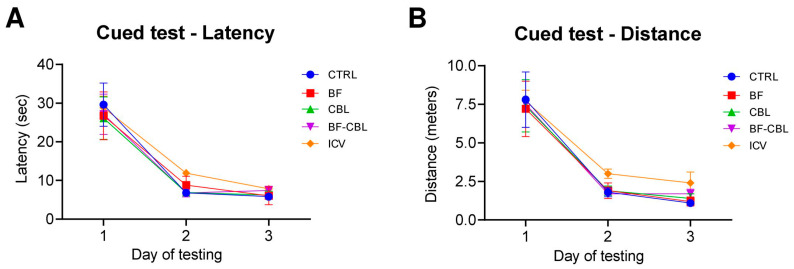 Figure 1
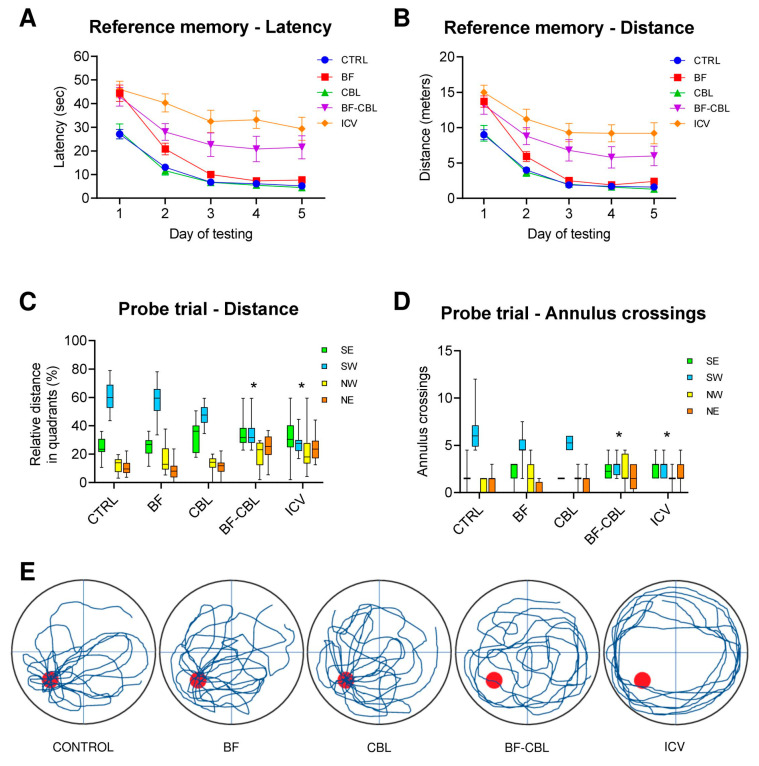 Figure 2
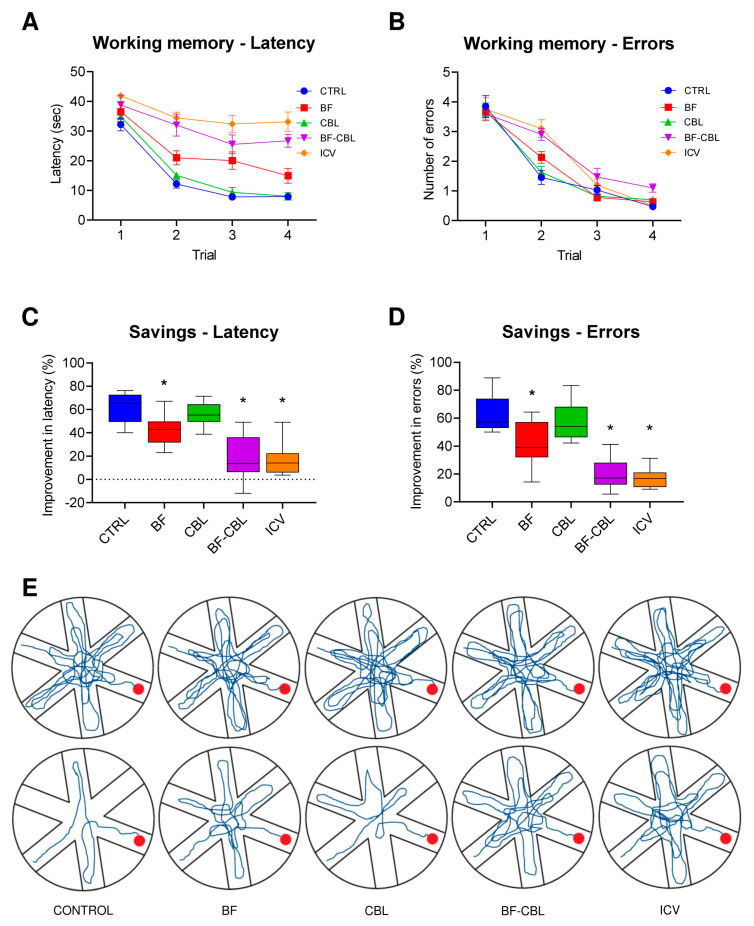 Figure 3
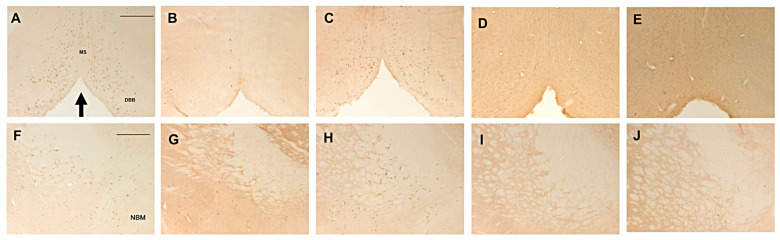 Figure 4
 Figure 5
 Figure 6
Peer Reviews
No public reviews on file for this paper yet. If you reviewed it on a platform where reviews are public (OpenReview, ICLR, NeurIPS, ICML), you can paste yours below so the community can read it here.
Videos
No videos yet. Explain this paper in a talk, walkthrough, or lecture? Add one.
Taxonomy
TopicsNicotinic Acetylcholine Receptors Study · Marine Toxins and Detection Methods · Vestibular and auditory disorders