Performance Asymmetry, the Risk for Ankle Sprain, and the Influence of an Intervention Program in New Male Infantry Recruits
Michal Shenhar, Gali Dar, Aharon S. Finestone, Jeremy Witchalls, Gordon Waddington, Avi Shina, Nili Steinberg

TL;DR
This study found that an ankle sprain prevention program reduced performance asymmetry in soldiers who sprained their ankles during training, but did not prevent sprains overall.
Contribution
The study introduces an effective intervention program that reduces interlimb asymmetry in balance and agility for soldiers who experience ankle sprains.
Findings
The intervention program decreased interlimb asymmetry in balance and agility tests for soldiers who sprained their ankles.
CAIT asymmetry increased during training in soldiers who sprained their ankles, regardless of the intervention.
No significant predictors for ankle sprains were identified through logistic regression analysis.
Abstract
Background: Functional performance interlimb asymmetry may increase the risk of ankle sprains during basic military training. We aimed to (1) evaluate interlimb balance, agility, and ankle instability asymmetry in soldiers in infantry training as a risk factor for acute ankle sprains; (2) evaluate the effect of ankle sprains and sprain prevention exercise program on performance asymmetry. Methods: Newly inducted infantry soldiers were recruited from two induction cycles (intervention [INT] n = 365, control [CON] n = 421). Participants were assessed at the beginning of infantry basic training (T0) and after four months (T1) for anthropometrics, balance, agility, and perceived ankle instability, and were monitored for ankle sprains (SPRAIN/NO-SPRAIN). The INT group performed an ankle sprain prevention program 5 days/week × 5 min/day. Results: at T0 there were differences in interlimb…
Genes, proteins, chemicals, diseases, species, mutations and cell lines named across the full text — each resolved to its canonical identifier and authoritative record.
Click any figure to enlarge with its caption.
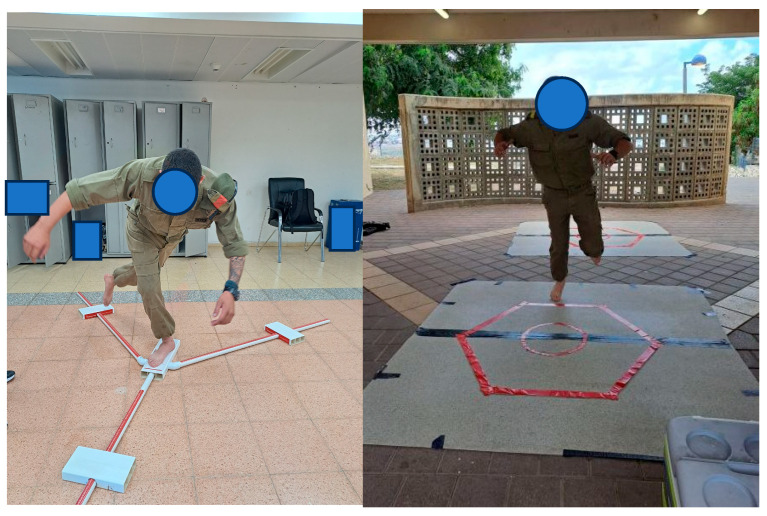 Figure 1
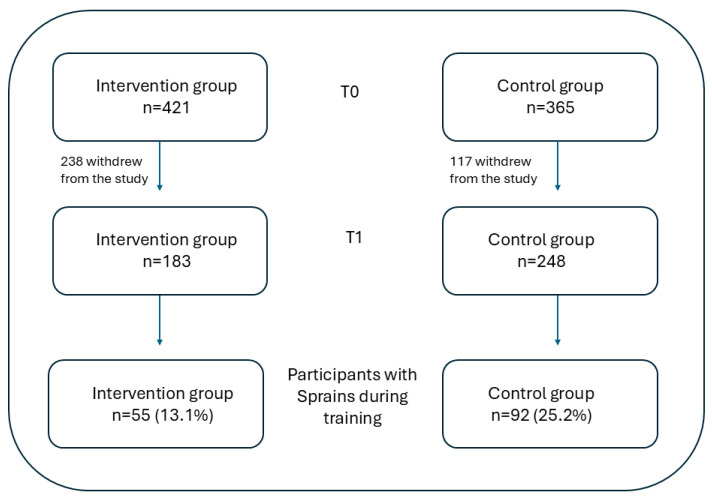 Figure 2
Peer Reviews
No public reviews on file for this paper yet. If you reviewed it on a platform where reviews are public (OpenReview, ICLR, NeurIPS, ICML), you can paste yours below so the community can read it here.
Videos
No videos yet. Explain this paper in a talk, walkthrough, or lecture? Add one.
Taxonomy
TopicsSports injuries and prevention · Occupational Health and Performance · Musculoskeletal pain and rehabilitation