Time-Restricted Eating, ANGPTL4, and Reduction in Residual Cardiovascular Risk
Alejandro Gugliucci

TL;DR
Time-restricted eating may reduce cardiovascular risk by affecting ANGPTL4 and lipid metabolism, offering a natural treatment approach.
Contribution
The paper proposes that TRE's cardiovascular benefits are linked to circadian regulation of ANGPTL4 and its impact on lipid metabolism.
Findings
TRE improves metabolic health and lipid profiles through mechanisms like metabolic switching and circadian synchronization.
ANGPTL4 activation by TRE inhibits fatty acid uptake in adipose tissue and stimulates fatty acid release.
TRE may enhance VLDL catabolism by muscle, reducing atherogenic remnant particles.
Abstract
Atherosclerotic cardiovascular disease treatment is being reevaluated, since a residual cardiovascular risk (RCR) persists even in patients who achieve optimal LDL-C values. Underlying causes are metabolic dysfunction, lipoprotein(a), inflammation, and triglyceride-rich lipoproteins and their remnants. Dietary treatment options like time-restricted eating (TRE) are becoming more widely acknowledged for their potential advantages in metabolic health and weight control, as a treatment of atherosclerosis expanding beyond LDL-C medication. Beyond weight loss, TRE (which restricts meals to a window of 6 to 8 h) appears as the most accessible treatment, and has been shown to improve blood pressure, lipid profiles, and glucose regulation through mechanisms like metabolic switching and circadian synchronization. We hypothesize, and will present our arguments, that a key mechanism underlying the…
Genes, proteins, chemicals, diseases, species, mutations and cell lines named across the full text — each resolved to its canonical identifier and authoritative record.
Click any figure to enlarge with its caption.
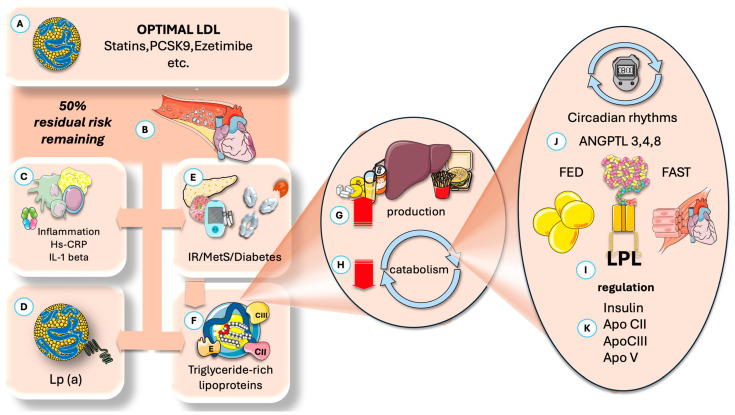 Figure 1
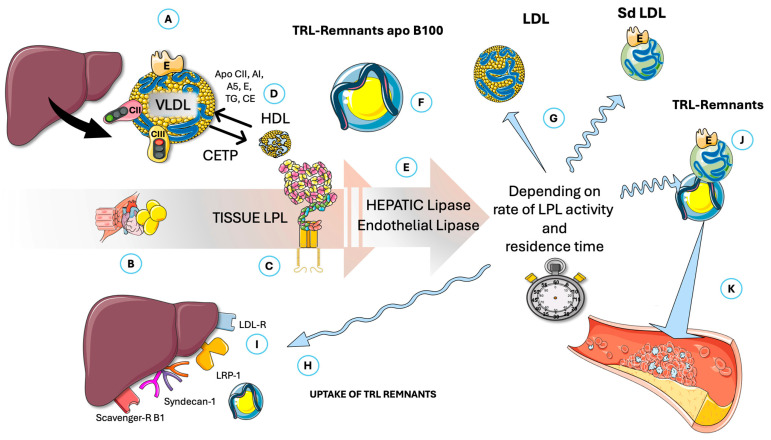 Figure 2
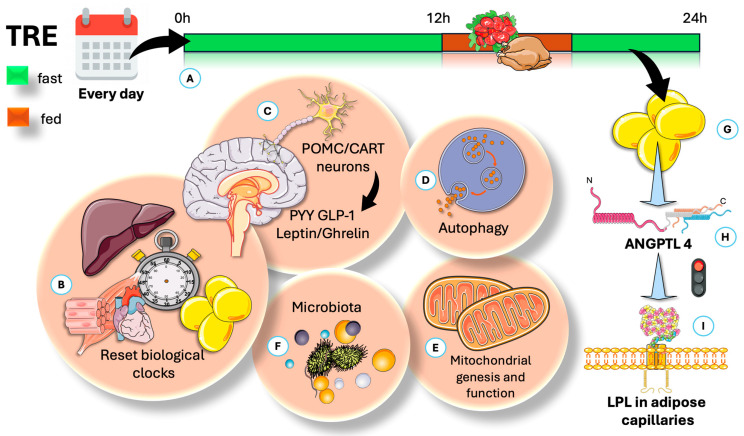 Figure 3
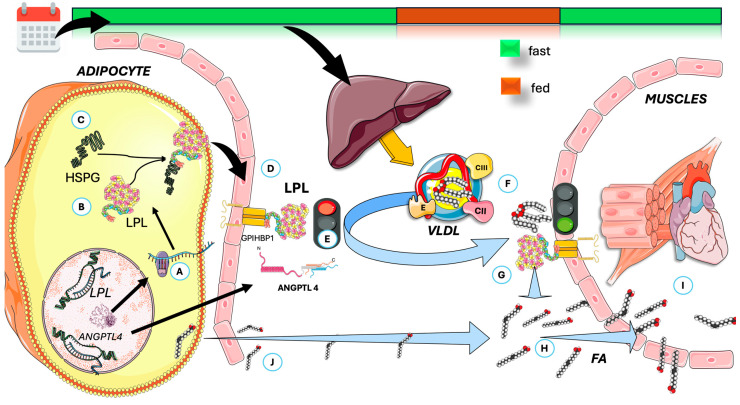 Figure 4
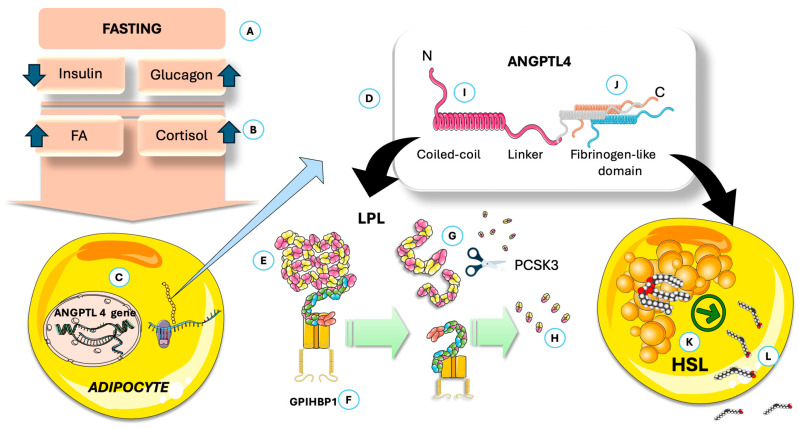 Figure 5
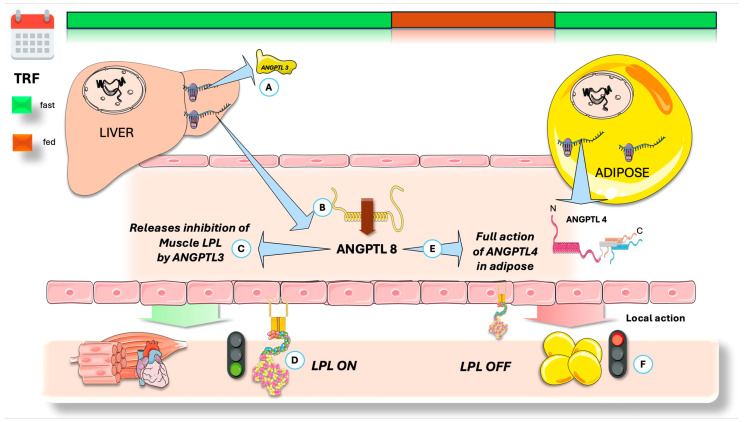 Figure 6
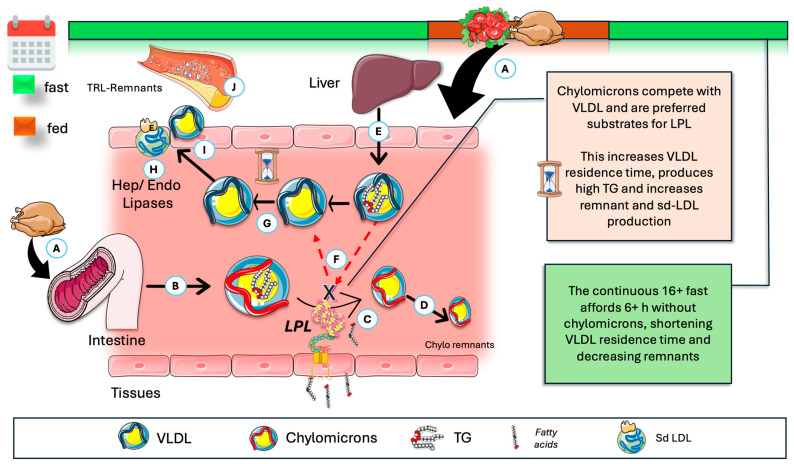 Figure 7
Peer Reviews
No public reviews on file for this paper yet. If you reviewed it on a platform where reviews are public (OpenReview, ICLR, NeurIPS, ICML), you can paste yours below so the community can read it here.
Videos
No videos yet. Explain this paper in a talk, walkthrough, or lecture? Add one.
Taxonomy
TopicsLipid metabolism and disorders · Diet and metabolism studies