Expansion of the Phenotypic Spectrum of MNGIE: Lipodystrophy and Metabolic Alterations Associated with a p.Arg393_Val400dup TYMP Variant
Donatella Gilio, Caterina Pelosini, Silvia Magno, Jacopo Maria Venanzi, Marta Daniotti, Melania Paoli, Lavinia Palladino, Maria Rita Sessa, Franco Ricci, Elena Procopio, Giovanni Ceccarini, Ferruccio Santini

TL;DR
A teenager with a TYMP gene mutation showed lipodystrophy and metabolic issues, expanding the known symptoms of MNGIE.
Contribution
This case is the first to link the p.Arg393_Val400dup TYMP variant to lipodystrophy and metabolic alterations.
Findings
A 16-year-old with the p.Arg393_Val400dup TYMP variant exhibited generalized lipodystrophy and metabolic complications.
Electroneurography revealed subclinical peripheral neuropathy despite no overt neurological symptoms.
The variant was previously associated only with classical MNGIE, not metabolic or adipose-related features.
Abstract
Mitochondrial neurogastrointestinal encephalomyopathy (MNGIE) is a rare autosomal recessive disorder caused by mutations in the TYMP gene, typically characterized by severe and progressive gastrointestinal and neurological manifestations. Recent reports have identified a subset of patients presenting with generalized lipodystrophy and metabolic abnormalities, suggesting that adipose tissue involvement may be an underrecognized feature of the disease. Herein, we report the case of a 16-year-old female carrying a previously described homozygous TYMP variant (c.1178_1201dup; p.Arg393_Val400dup), who presented during adolescence with generalized lipodystrophy, insulin resistance, hypertriglyceridemia, hepatic steatosis, and other metabolic complications. At diagnosis, she exhibited no overt neurological or gastrointestinal symptoms; however, electroneurography revealed subclinical…
Genes, proteins, chemicals, diseases, species, mutations and cell lines named across the full text — each resolved to its canonical identifier and authoritative record.
Click any figure to enlarge with its caption.
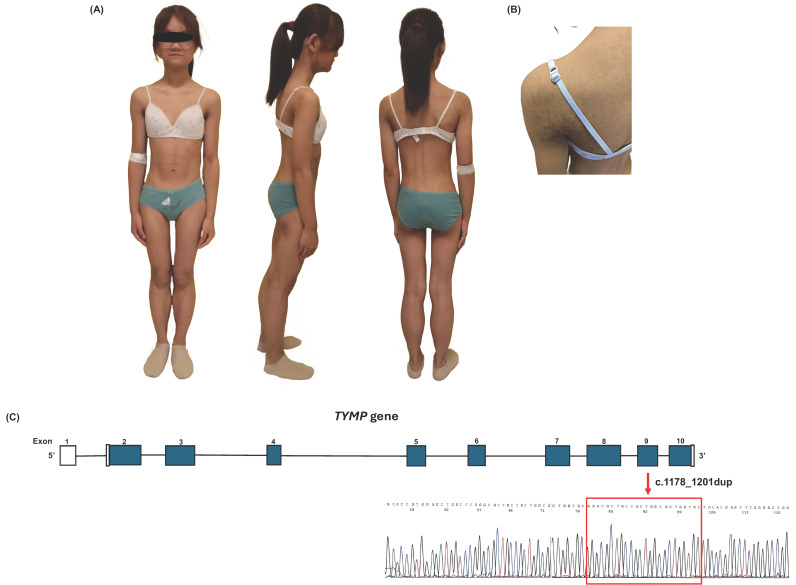 Figure 1
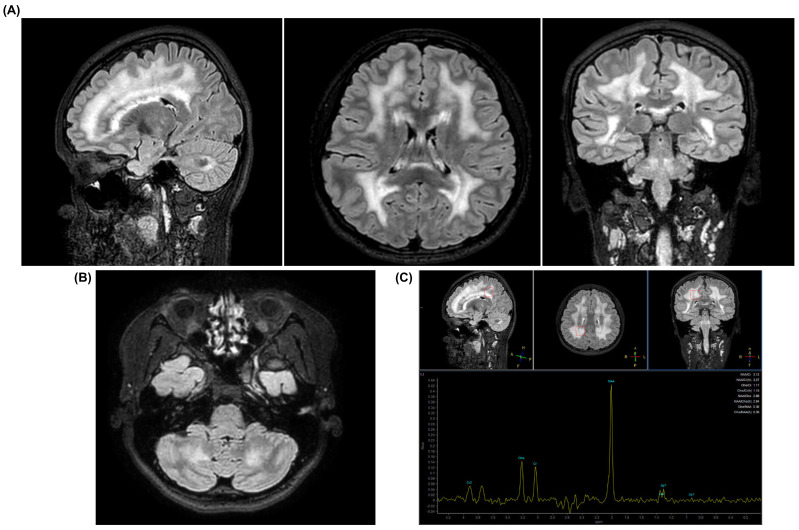 Figure 2
Peer Reviews
No public reviews on file for this paper yet. If you reviewed it on a platform where reviews are public (OpenReview, ICLR, NeurIPS, ICML), you can paste yours below so the community can read it here.
Videos
No videos yet. Explain this paper in a talk, walkthrough, or lecture? Add one.
Taxonomy
TopicsNuclear Structure and Function · Mitochondrial Function and Pathology · Ubiquitin and proteasome pathways